
10 Unforgettable Japanese Hotels That Teach You Culture and Language
Imagine checking into a hotel room named 愛人 (aijin - lover), surrounded by neon signs straight out of a retro Japanese nightlife district, or sleeping in a futuristic space pod for under 3,000 yen a night. If you’ve ever dreamed of experiencing Japan beyond the typical tourist spots, you’re in for a treat. A Japanese journalist from Rocket News, who spends over 50 nights a year exploring unique accommodations, has shared a list of 10 unforgettable hotels across Japan. For learners like you, this isn’t just a travel guide—it’s a chance to dive into authentic Japanese culture and pick up practical language skills along the way. Let’s explore these quirky stays and see what they teach us about Japan and its language!
A Journey Through Japan’s Most Unique Hotels
This isn’t your average “top 10” list. The reporter has personally stayed at each of these hotels, giving raw insights into their atmosphere, prices, and usability (使い勝手 - tsukaigatte). From nostalgic throwbacks to futuristic pods, these accommodations showcase Japan’s creativity and diversity in hospitality. Here are some highlights that’ll make you want to pack your bags—and your Japanese phrasebook.
Snack Street Nostalgia in Aomori: At GOOD OLD HOTEL in Hirosaki City, you’re transported to a Showa-era スナック街 (sunakku-gai
- snack bar street), where small bars were once social hubs for salarymen. Rooms named 愛人 (aijin
- lover) or ニューうさぎ (nyū usagi
- new rabbit) cost as little as 4,900 yen a night. It’s a cultural gem, though its lively 立地 (ricchi
- location) suits solo travelers or couples best.
- new rabbit) cost as little as 4,900 yen a night. It’s a cultural gem, though its lively 立地 (ricchi
- lover) or ニューうさぎ (nyū usagi
- snack bar street), where small bars were once social hubs for salarymen. Rooms named 愛人 (aijin
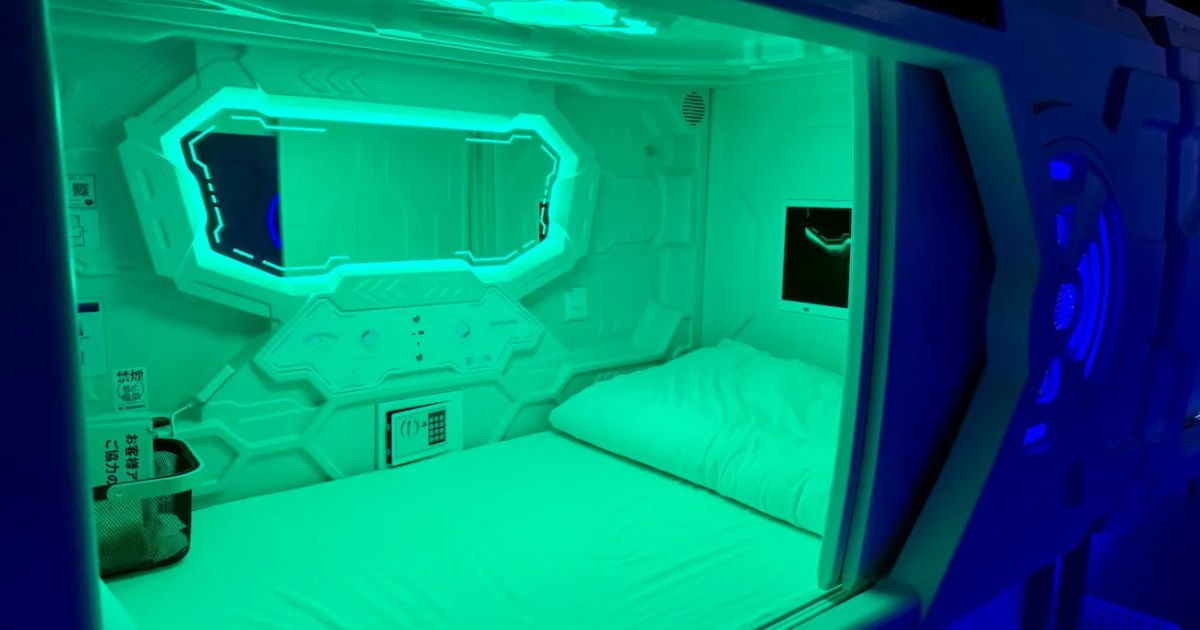
Futuristic Pods in Saitama: Near Koshigaya Station, HOTEL GALAXY POD offers spaceship-like capsules for a リーズナブル (riizunaburu
- reasonable) price of 2,980 yen. With customizable lighting and air conditioning, it’s a sci-fi experience that’s practical for budget travelers.
UFO Surprise in Chiba: ファミーINN幕張 (Famī Inn Makuhari) looks like a standard business hotel near Makuhari Messe (8,100 yen), but the nighttime view of a giant UFO structure outside your window is pure 衝撃 (shōgeki
- shock). It’s an unexpected twist on a typical 宿泊 (shukuhaku
- stay).
- shock). It’s an unexpected twist on a typical 宿泊 (shukuhaku
Train Enthusiast’s Dream in Yamanashi: Near Fuji-Q Highland, ハイランドリゾート ホテル&スパ (Hairando Rizōto Hoteru & Supa) has a train-themed room with real driver controls and Mt. Fuji views. It’s pricier, but perfect if you’ve ever wanted to try (〜てみる) living like a train conductor.
Container Innovation Nationwide: HOTEL R9 THE YARD turns shipping containers into private rooms along highways for 5,800 yen. With parking right outside, it’s ideal for road trippers, though shared facilities mean stepping out for amenities.
These are just a few from the list—others include a church guesthouse in Tokyo, an outrageously cheap stay tied to a Japanese crime film in Yokohama, and even a massive 24-mat tatami room in Saitama. Each ホテル (hoteru - hotel) offers a unique lens on Japanese life, from nostalgia to modern ingenuity.
Cultural Context: Hospitality and Ingenuity
These hotels aren’t just places to crash—they embody Japanese values like おもてなし (omotenashi - heartfelt hospitality) and an incredible attention to detail. Take the スナック街 vibe in Aomori: it reflects a post-war era when small bars were community hubs, often run by charismatic hostesses offering a warm escape for workers. Themed stays like the train room in Yamanashi tap into Japan’s love for railways, a symbol of precision and progress since the 1800s. Even budget container hotels show Japan’s resourcefulness—repurposing industrial materials into cozy spaces in a densely populated country. As a learner, seeing how these accommodations blend nostalgia, practicality, and quirks helps you understand how Japanese culture shapes even the simplest experiences, like a night’s 宿泊 (shukuhaku - stay).
Learn Japanese from This Article
Ready to turn this travel inspiration into language skills? Let’s break down some key words and grammar patterns you’ll encounter when exploring or discussing hotels in Japan. These are pulled straight from the way Japanese people talk about travel and accommodations—authentic and practical.
Essential Vocabulary
| Japanese | Romaji | Meaning |
|---|---|---|
| ホテル | hoteru | hotel |
| 宿泊 | shukuhaku | stay, lodging |
| スナック街 | sunakku-gai | snack bar street |
| リーズナブル | riizunaburu | reasonable (price) |
| 衝撃 | shōgeki | shock, impact |
| 使い勝手 | tsukaigatte | usability, convenience |
| 立地 | ricchi | location, site |
These words pop up everywhere in travel contexts. For example, when booking a ホテル (hoteru), you might ask about the 立地 (ricchi) or if the price is リーズナブル (riizunaburu). Hearing 衝撃 (shōgeki) could describe your reaction to a wild hotel feature like a UFO view!
Grammar Spotlight: Expressing Desires and Trying New Things
Let’s look at two useful patterns to talk about travel experiences like these hotel stays.
〜たい (want to do something) This pattern expresses your desire to do something. Attach 〜たい to the stem form of a verb (drop the ます from the polite form and add たい).
- Structure: Verb Stem + たい
- Example 1: 泊まりたい (tomaritai) - I want to stay (from 泊まる
- tomaru, to stay). "このホテルに泊まりたいです。" (Kono hoteru ni tomaritai desu.) - I want to stay at this hotel.
- Example 2: 見たい (mitai) - I want to see (from 見る
- miru, to see). "UFOが見たいです。" (Yūfō ga mitai desu.) - I want to see the UFO.
- When to use: Perfect for expressing your travel wishes, like wanting to stay at a quirky ホテル (hoteru).
〜てみる (try doing something) This pattern means “to try doing something” and is great for new experiences. Combine the て-form of a verb with みる (to see).
- Structure: Verb て-form + みる
- Example 1: 泊まってみる (tomatte miru) - try staying. "カプセルホテルに泊まってみます。" (Kapuseru hoteru ni tomatte mimasu.) - I’ll try staying at a capsule hotel.
- Example 2: 使ってみる (tsukatte miru) - try using. "このホテルの設備を使ってみます。" (Kono hoteru no setsubi o tsukatte mimasu.) - I’ll try using this hotel’s facilities.
- When to use: Ideal for talking about experimenting with something new, like a themed hotel stay or a unique feature.
Useful Expression
Here’s a bonus phrase you’ll hear or use when checking into a hotel: 予約があります。 (Yoyaku ga arimasu.) - I have a reservation. It’s a polite, straightforward way to start your 宿泊 (shukuhaku) experience. Pair it with your name or booking details for a smooth check-in.
Continue Learning
Want to build on what you’ve learned here? Check out these lessons for more skills to navigate travel and everyday situations in Japan:
- Ni, De, and E: Mapping Directions and Locations: Want to learn more about に? Check out our lesson on Ni, De, and E: Mapping Directions and Locations.
- Time and Dates: Tense-Free Expressions: To understand more about time, explore our Time and Dates: Tense-Free Expressions lesson.
- Basic Vocabulary Building: Embracing Words Without Latin Ties: To understand more about travel, explore our Basic Vocabulary Building: Embracing Words Without Latin Ties lesson.
Let’s Keep Exploring Together
From retro snack street vibes to spaceship pods, these hotels show how Japan turns even a simple 宿泊 (shukuhaku) into a cultural adventure. As you learn Japanese the authentic way—how it’s taught in Japan—you’ll discover that every word, every stay, opens a door to understanding the country deeper. So, which hotel makes you say, “泊まりたい!” (tomaritai!) - I want to stay there!? Keep practicing, keep exploring, and let’s uncover more of Japan together.
これからもよろしくお願いします。 Kore kara mo yoroshiku onegaishimasu.