
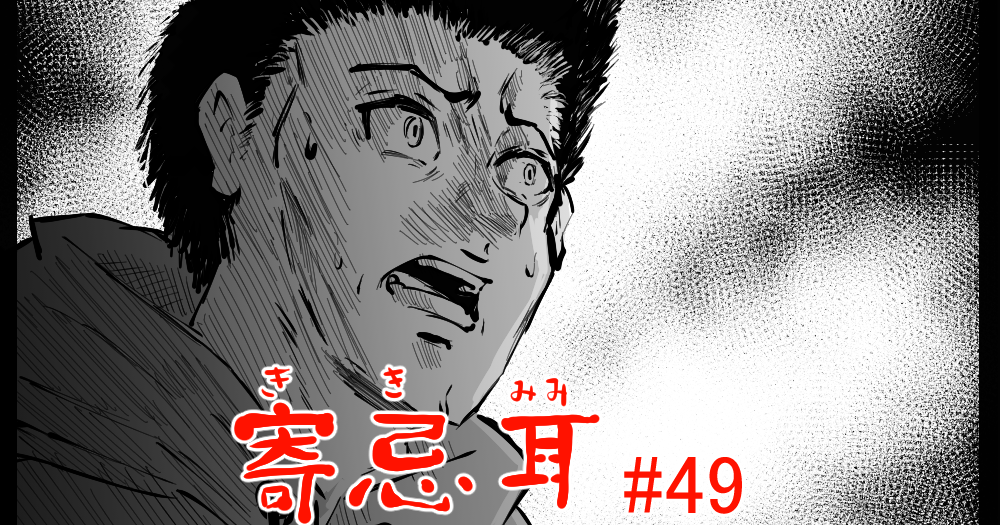
Japan's Eerie Tales: Rocket News' Kikimimi Series Haunts Readers
Have you ever felt a chill down your spine during a quiet, ordinary moment, like driving alone late at night? If you’ve ever wondered how the Japanese share and experience these unsettling stories, you’re in for a treat. Today, we’re diving into a haunting tradition from Rocket News with their series 寄忌耳 (Kikimimi), roughly translating to "Eerie Listening." In their 49th installment titled "The Passenger," published on February 1, 2026, a reader’s short but unforgettable story will make you question what’s real and what’s not. Let’s explore this creepy tale, uncover its cultural roots, and pick up some authentic Japanese along the way!
A Haunting Drive with "The Passenger"
Imagine driving through the 深夜 (shin'ya, late at night), the hum of your engine the only sound, when suddenly you feel a strange 存在 (sonzai, presence) in the car. This is the heart of "The Passenger," the latest story in Rocket News’ 寄忌耳 (Kikimimi) series. Without spoiling the full bone-chilling moment (trust me, you’ll want to read the original!), this reader’s 体験 (taiken, experience) captures a universal 恐怖 (kyoufu, fear) of the unknown. It’s the kind of 不思議 (fushigi, mysterious) encounter that lingers long after the story ends. Rocket News keeps this eerie tradition alive by encouraging readers to submit their own spooky tales through an 応募 (oubo, submission) process, building a community around shared chills.
Cultural Context: Japan's Fascination with the Supernatural
In Japan, creepy stories like those in 寄忌耳 (Kikimimi) aren’t just for Halloween—they’re a year-round cultural treasure. The tradition of sharing 怪談 (kaidan, ghost stories) stretches back centuries, often peaking in summer as a way to “cool off” with spine-tingling tales. Historically, these stories were told during gatherings, especially on hot summer nights, to evoke a refreshing chill. The word 寄忌耳 itself is a clever blend, combining ideas of gathering, eeriness (忌, ki), and listening (耳, mimi), perfectly capturing the act of huddling close to hear forbidden tales. This deep-rooted love for the supernatural reflects a uniquely Japanese perspective where the boundary between the living and the unseen often feels delightfully thin. Series like this one on Rocket News blend modern storytelling with ancient traditions, offering a window into the Japanese psyche.
Learn Japanese from This Article
If you’re captivated by these eerie tales, why not learn some authentic Japanese to dive deeper? Here, we’ve pulled out key vocabulary and grammar from the story and cultural context to help you speak and think like a native. Let’s break it down the way Japanese children learn—through context and real usage, not just textbook rules.
Key Vocabulary
| Japanese | Romaji | Meaning |
|---|---|---|
| 恐怖 | kyoufu | fear, terror |
| 不思議 | fushigi | mysterious, strange |
| 体験 | taiken | experience |
| 怪談 | kaidan | ghost story, strange tale |
| 応募 | oubo | application, submission |
| 深夜 | shin'ya | late at night |
| 存在 | sonzai | existence, presence |
Grammar Spotlight
Let’s focus on two useful grammar patterns inspired by this story and its context. These will help you express ideas naturally, just as native speakers do.
1. 〜を募集する (~ o boshuu suru) - To recruit, to call for (submissions, applications, etc.)
- Structure: Noun + を + 募集する
- Meaning: Used to indicate calling for or recruiting something, often seen in contexts like contests or submissions.
- Examples:
- ロケットニュースは怪談を募集しています。 (Roketto Nyuusu wa kaidan o boshuu shiteimasu.) Rocket News is calling for ghost stories.
- 会社は新しい社員を募集しています。 (Kaisha wa atarashii shain o boshuu shiteimasu.) The company is recruiting new employees.
- 学校はボランティアを募集します。 (Gakkou wa borantia o boshuu shimasu.) The school will call for volunteers.
- Usage Note: This pattern is formal yet common in announcements or invitations, like Rocket News asking for reader 応募 (oubo, submissions). Use it when talking about organized calls for participation.
2. 〜そうにない (~sou ni nai) - Does not seem likely to ~
- Structure: Verb (stem form) + そうにない
- Meaning: Expresses that something doesn’t seem likely to happen or be true, based on observation or feeling.
- Examples:
- 彼は怖がりそうにないです。 (Kare wa kowagari sou ni nai desu.) He doesn’t seem like he’d be scared.
- この話は本当じゃなさそうにない。 (Kono hanashi wa hontou ja na sa sou ni nai.) This story doesn’t seem like it could be true.
- 車の中に誰かいるそうにないのに、気配を感じた。 (Kuruma no naka ni dareka iru sou ni nai noni, kehai o kanjita.) Though it didn’t seem like anyone was in the car, I felt a presence.
- Usage Note: Perfect for expressing doubt or disbelief, especially in mysterious contexts like feeling a strange 存在 (sonzai, presence) when logic says there shouldn’t be one.
Useful Expression
Here’s a bonus phrase tied to storytelling or sharing experiences, something you might hear or use when discussing 怪談 (kaidan, ghost stories):
- 本当にあった話 (hontou ni atta hanashi) - A story that really happened Use this to emphasize the authenticity of a creepy tale, as many Japanese storytellers do to heighten the scare factor!
Continue Learning
Ready to build on what you’ve learned here? Check out these lessons from "Japanese from Japan" to deepen your skills:
- Time and Dates: Tense-Free Expressions: To understand more about time, explore our Time and Dates: Tense-Free Expressions lesson.
- Ni, De, and E: Mapping Directions and Locations: Ready to dive deeper? Our lesson on Ni, De, and E: Mapping Directions and Locations will help you master these concepts.
- Vocabulary Through Kanji Compounds: Lego-Like Word Building: Working on your reading skills? Our Vocabulary Through Kanji Compounds: Lego-Like Word Building lesson is a great next step.
Closing Thoughts
Whether you’re intrigued by Japan’s supernatural storytelling or just want to master phrases to share your own eerie 体験 (taiken, experience), learning Japanese through real cultural moments like 寄忌耳 (Kikimimi) brings the language to life. Keep exploring these chilling tales, and you’ll find yourself speaking and thinking more like a native every day.
これからもよろしくお願いします。 Kore kara mo yoroshiku onegaishimasu.