
Japanese Webcomics: Laugh and Learn with "The Demon King's Army"
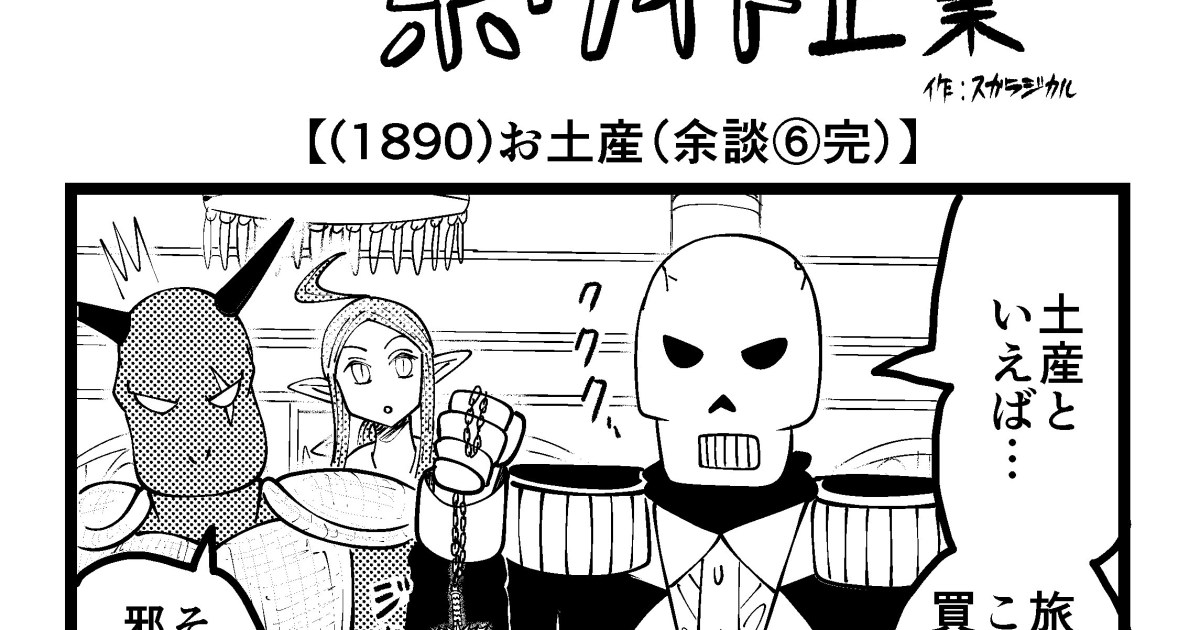
Ever wondered what happens when Japanese workplace culture collides with a fantasy demon army? If you’ve been curious about how humor and social norms blend in modern Japan, you’re in for a treat. Today, we’re diving into a hilarious webcomic from Rocket News called 魔王軍はホワイト企業 (Maou-gun wa Howaito Kigyou, "The Demon King's Army is a White Company"). This quirky 4-panel strip, in its 1890th episode released on February 4, 2026, offers a perfect mix of laughs and language learning. Let’s explore how even demons can’t escape the pressures of Japanese office etiquette—and how you can pick up authentic Japanese along the way.
A Funny Take on Workplace Norms
In this episode, titled お土産(余談⑥完) (Omiyage (Yodan ⑥ Kan), "Souvenir (Side Story ⑥ Complete)"), artist Sugara Jikaru wraps up a mini-arc with a relatable twist. The story follows characters in a demon army navigating the very human ritual of bringing back お土産 (omiyage), or souvenirs, after a trip. Imagine a fearsome demon debating whether a gift is “good enough” for their colleagues—it’s absurd, yet it mirrors real-life expectations in a Japanese 職場 (shokuba, workplace). The humor shines through mundane details set against a fantasy backdrop, showing how deeply social customs are embedded in Japanese life, no matter the setting.
Cultural Context: The Power of Omiyage and Harmony
If you’re new to Japanese customs, you might be surprised by how much weight something like お土産 (omiyage, souvenir) carries. In Japan, when someone travels—whether for work or leisure—it’s almost an unwritten rule to bring back small gifts, often local snacks or specialties, for coworkers, friends, or family. This isn’t just a nice gesture; it’s tied to the cultural value of 和 (wa, harmony), which prioritizes group cohesion and thoughtfulness. In the comic, applying this tradition to a 魔王 (maou, demon king) and his army pokes fun at the absurdity while highlighting how inescapable these norms are. It’s a brilliant window into how Japanese humor often plays with everyday obligations, even in a fictional world.
Why Webcomics Are Great for Learning Japanese
Reading something like 魔王軍はホワイト企業 (Maou-gun wa Howaito Kigyou) isn’t just entertaining—it’s a fantastic way to see how language and culture intertwine in modern, casual contexts. Terms like 企業 (kigyou, company) or the concept of a “white company” (a workplace with good conditions, unlike exploitative “black companies”) carry layers of meaning that deepen your understanding of Japan today. Plus, the 4-panel format of 漫画 (manga, comic) keeps the language simple and visual, making it an approachable way to practice reading authentic Japanese content straight from Japan.
Learn Japanese from This Article
Ready to pick up some useful words and grammar from this quirky comic? Let’s break down key vocabulary and a couple of essential grammar points that’ll help you sound more natural when speaking or reading Japanese.
Key Vocabulary
| Japanese | Romaji | Meaning |
|---|---|---|
| お土産 | omiyage | souvenir, gift |
| 職場 | shokuba | workplace |
| 魔王 | maou | demon king |
| 企業 | kigyou | company, corporation |
| 和 | wa | harmony |
| 漫画 | manga | comic, cartoon |
These words pop up not just in comics but in everyday conversations, especially if you’re talking about travel, work, or Japanese pop culture. Try using お土産 (omiyage) next time you chat about a trip—it’s a small word with a big cultural impact!
Grammar Spotlight: Topic and Subject Markers (~は and ~が)
Let’s look at two fundamental particles in Japanese grammar that you’ll see everywhere, including in simple 漫画 (manga) dialogue: は (wa) and が (ga).
〜は (wa): The topic marker, used to indicate what the sentence is about. It sets the context and often implies a contrast or general statement.
- Example 1: 私は学生です。 (Watashi wa gakusei desu.) - "As for me, I’m a student."
- Example 2: お土産はこれです。 (Omiyage wa kore desu.) - "As for the souvenir, it’s this."
- When to use: Use は when introducing a topic or making a statement about something already known in the conversation.
〜が (ga): The subject marker, often used to emphasize the subject or introduce new information.
- Example 1: 私が買いました。 (Watashi ga kaimashita.) - "I’m the one who bought it."
- Example 2: お土産が欲しいです。 (Omiyage ga hoshii desu.) - "I want a souvenir."
- When to use: Use が to highlight the subject or when answering a question about “who” or “what.”
Understanding the difference between は and が is crucial for sounding natural. In the comic, you might see a demon say something like 私はお土産を買った (Watashi wa omiyage o katta, "As for me, I bought a souvenir") to set the topic, while another might emphasize with 私が買った (Watashi ga katta, "I’m the one who bought it"). Practice spotting these in simple texts like 漫画 (manga) to get a feel for their nuance!
Continue Learning
Want to build on what you’ve learned from this comic? Check out these lessons from "Japanese from Japan" to deepen your skills:
- Reading and Writing in Japanese II: Hiragana and Katakana: Ready to dive deeper? Our lesson on Reading and Writing in Japanese II: Hiragana and Katakana will help you master these concepts.
- Basic Vocabulary Building: Embracing Words Without Latin Ties: To understand more about travel, explore our Basic Vocabulary Building: Embracing Words Without Latin Ties lesson.
- Verb Basics: Harnessing the Dictionary Form: Want to understand the verb forms used here? Check out Verb Basics: Harnessing the Dictionary Form.
Learning Japanese the way it’s taught in Japan means engaging with real content like this webcomic. Keep practicing, and you’ll be amazed at how much you pick up just by having fun with the language!
これからもよろしくお願いします。 Kore kara mo yoroshiku onegaishimasu.