
Blood Brothers Musical Unveiled: Dive into Japanese Theater
Hey there, language learner! If you’ve ever been curious about how global stories come to life on the Japanese stage, you’re in for a treat. On February 2, 2026, Tokyo buzzed with excitement as the cast of the musical ブラッド・ブラザーズ (Buraddo Burazāzu, Blood Brothers) held a press conference to announce their upcoming production. As an English speaker learning Japanese, this is more than just entertainment news—it’s a chance to explore the rich world of Japanese theater while picking up authentic language and cultural insights. Let’s dive into the highlights, uncover some cultural depth, and learn a few useful Japanese expressions along the way!
Press Conference Highlights: A Tale of Fate and Bonds
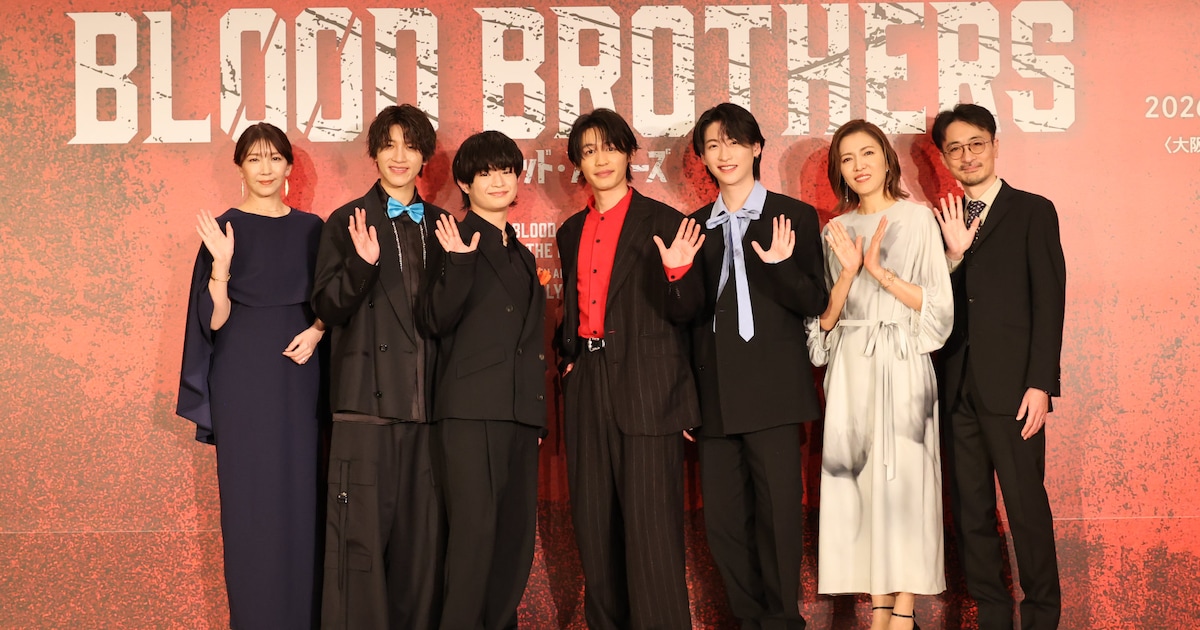
The announcement for ブラッド・ブラザーズ (Buraddo Burazāzu) introduced a powerful story of twin brothers, Mickey and Eddie, separated at birth and raised in starkly different worlds—one in poverty, the other in privilege. Originally written by Willy Russell and premiered in the UK in 1983, this musical is now being adapted with a Japanese flair. At the event, the double-cast leads for Mickey, 小林亮太 (Kobayashi Ryōta) and 渡邉蒼 (Watanabe Sō), and for Eddie, 山田健登 (Yamada Kento) and 島太星 (Shima Taisei), shared their passion for the roles. They were joined by veteran actresses like 瀬奈じゅん (Sena Jun) as Mrs. Lyons and 安蘭けい (Aran Kei) as Mrs. Johnston.
Director 日澤雄介 (Hizawa Yūsuke) described the story as a fable of twins caught in the grip of 運命 (unmei, fate), but he aims to focus on the raw emotions and choices of each character rather than just destiny. Kobayashi Ryōta spoke of Mickey’s resilience in the face of 苦難 (kunan, hardship), while Watanabe Sō highlighted Mickey’s bright yet stoic charm, mentioning how 稽古 (keiko, rehearsal) brought back childlike emotions. The event wrapped up with a moving performance of the song あいつに (Aitsu ni, “To Him”), showcasing the cast’s incredible 絆 (kizuna, bond). You can catch the show in Tokyo from March 9 to April 2 at Theatre Crea, and in Osaka from April 10 to 12 at Sankei Hall Breeze.
Veteran Insights and Modern Relevance
Veteran actresses Sena Jun and Aran Kei added emotional weight to the conference. Aran, who saw the musical over 20 years ago, wondered how audiences in the Reiwa era will connect with its tragic tone. Sena, drawing from personal experiences, spoke about the evolving societal views on adoption and the timeliness of this story. Their 意気込み (ikigomi, enthusiasm) for exploring these themes with the younger cast was palpable, showing the timeless 魅力 (miryoku, charm) of theater as a medium for reflection.
Cultural Context: Bonds and Theater Traditions
Japanese theater isn’t just about the performance—it’s a cultural experience. A key theme in ブラッド・ブラザーズ is 絆 (kizuna, bonds or connections), a concept deeply rooted in Japanese storytelling. Whether it’s family, friends, or unspoken loyalty, this idea often shapes narratives in Japan, adding layers of emotion that you’ll feel even if you’re new to the language. Another unique aspect is the practice of Wキャスト (daburu kyasto, double cast), where lead roles are played by two actors in alternating shows. This not only maximizes performance schedules but also lets audiences enjoy different interpretations, adding a playful ちゃめっ気 (chamekki, playfulness) to the theater-going experience. Understanding these elements will help you appreciate Japanese adaptations of global stories on a deeper level.
Learn Japanese from This Article
Ready to turn this news into a learning opportunity? Let’s break down some key vocabulary and grammar points inspired by the story and press conference. These are words and structures you’ll encounter in real Japanese conversations, especially if you’re exploring arts and emotions.
Key Vocabulary
| Japanese | Romaji | Meaning |
|---|---|---|
| 絆 | kizuna | bond, connection |
| 運命 | unmei | fate, destiny |
| 苦難 | kunan | hardship, adversity |
| 稽古 | keiko | rehearsal, practice |
| 魅力 | miryoku | charm, appeal |
| 意気込み | ikigomi | enthusiasm, determination |
| ちゃめっ気 | chamekki | playfulness, mischievousness |
Grammar Spotlight
Let’s focus on two useful grammar patterns that capture the emotions and actions discussed at the press conference.
〜と感じる (to kanjiru) - To feel that ~, to get the impression that ~
This structure is used to express personal feelings or impressions about something. It’s perfect for sharing emotional reactions, much like the actors did when discussing their roles.
- Structure: [Verb/Adjective in dictionary form or past tense] + と感じる
- Example 1: 彼の演技を見て、深い絆を感じる。(Kare no engi o mite, fukai kizuna o kanjiru.
- Watching his performance, I feel a deep bond.)
- Example 2: 稽古中に子供の頃を思い出して、懐かしく感じた。(Keiko-chū ni kodomo no koro o omoidashite, natsukashiku kanjita.
- During rehearsal, I remembered my childhood and felt nostalgic.)
- When to use: Use this when expressing subjective impressions or emotions, especially in reflective or artistic contexts.
〜ながら (nagara) - While doing ~, at the same time as ~
This pattern lets you describe two actions happening simultaneously, often used to show multitasking or contrasting emotions.
- Structure: [Verb stem form] + ながら
- Example 1: 歌いながら、感情を込める。(Utai nagara, kanjō o komeru.
- While singing, I put emotion into it.)
- Example 2: 笑いながら、涙を流した。(Warai nagara, namida o nagashita.
- While laughing, I shed tears.)
- When to use: Great for describing simultaneous actions, especially in dynamic settings like theater or daily life.
Useful Expression
Here’s a bonus phrase inspired by the cast’s camaraderie: 絆を深める (kizuna o fukameru, to deepen bonds). You’ll hear this in contexts where relationships grow stronger, whether through shared experiences like 稽古 (keiko, rehearsal) or personal moments. Try using it to talk about your own connections!
Continue Learning
Want to build on what you’ve learned here? Check out these lessons to level up your Japanese skills:
- Wa vs. Ga: Emphasizing Importance in Sentences: Ready to dive deeper? Our lesson on Wa vs. Ga: Emphasizing Importance in Sentences will help you master these concepts.
- Ni, De, and E: Mapping Directions and Locations: Want to learn more about に? Check out our lesson on Ni, De, and E: Mapping Directions and Locations.
- Katakana Essentials: Adapting Global Words to Japanese: Working on your reading skills? Our Katakana Essentials: Adapting Global Words to Japanese lesson is a great next step.
これからもよろしくお願いします。 Kore kara mo yoroshiku onegaishimasu.