
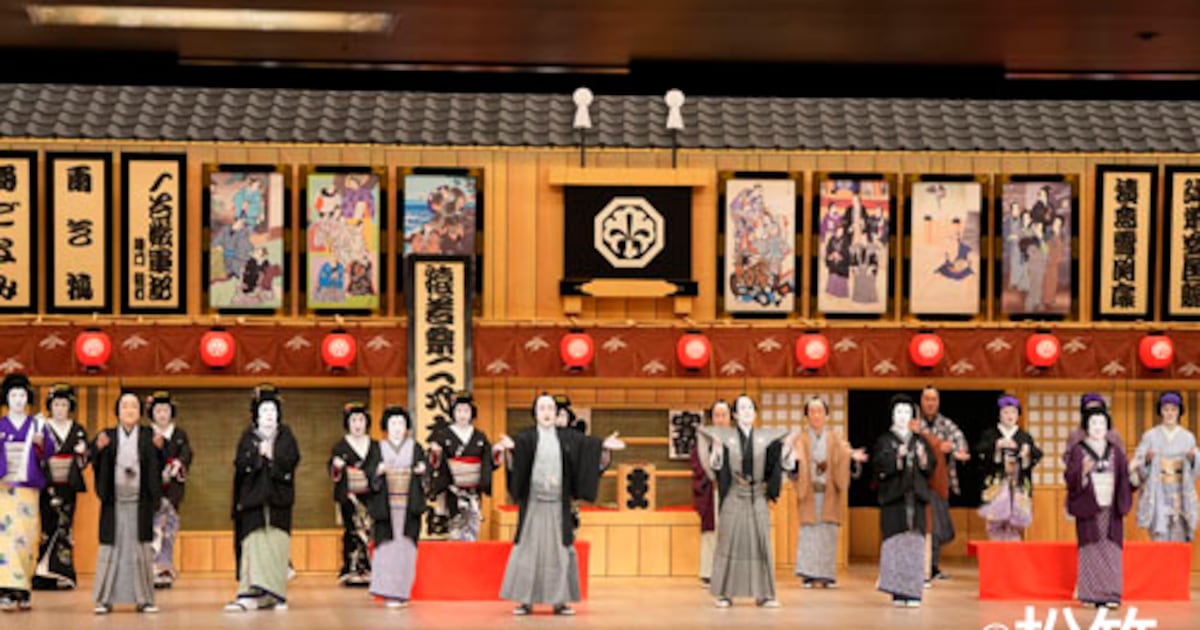
Kabuki-za’s Saruwaka Festival: A Cultural and Linguistic Journey
If you’ve ever dreamed of stepping into the vibrant world of traditional Japanese theater, the recent opening of the 猿若祭二月大歌舞伎 (Saruwaka-sai Nigatsu Ō-Kabuki) at Tokyo’s iconic Kabuki-za theater is your perfect gateway. On February 1, 2026, the curtains rose for a grand celebration marking 50 years of the Saruwaka Festival, an event that’s not just a feast for the eyes but also a treasure trove for anyone learning Japanese. This isn’t just a performance—it’s a living lesson in authentic Japanese culture and language, straight from the heart of Japan. Let’s dive into the highlights of this milestone event and uncover some linguistic gems along the way!
A Historic Celebration at Kabuki-za
The 猿若祭 (Saruwaka-sai), first launched in 1976 by the visionary 17th-generation actor Nakamura Kanzaburō, has grown into a beloved tradition at the 歌舞伎座 (Kabuki-za) in Tokyo’s Ginza district. This year’s 50th anniversary, running through February 26, 2026, is a landmark moment, with performances split into captivating daytime and evening programs. Each show offers a unique blend of humor, tragedy, and stunning choreography, bringing Edo-period stories to life with a 幕開け (makuake)—a curtain opening—that feels like stepping back in time.
The daytime lineup kicks off with お江戸みやげ (O-Edo Miyage), a playful story of two female peddlers exploring Edo (modern-day Tokyo), followed by the lively dance of 鳶奴 (Tobi Yakko). The highlight, 弥栄芝居賑 (Yasaka Shibai Nigiwai), bursts with にぎわい (nigiwai)—bustle and liveliness—as it celebrates 50 years of the festival with a vivid portrayal of Edo’s theater scene. It wraps up with the dramatic 積恋雪関扉 (Tsumi Koi Yuki Seki no To), packed with 立廻り (tachimawari)—stage combat—that leaves audiences breathless.
The evening program is equally mesmerizing, starting with the historical drama 一谷嫩軍記 陣門 組打 (Ichinotani Futaba Gunki Jinnon Kumitate), moving into the whimsical dance of 雨乞狐 (Amagoi Kitsune), and closing with the romantic and comedic 梅ごよみ (Ume Goyomi). Each performance is delivered with 迫真 (hakushin)—a realism and vividness—that makes you feel every emotion on stage.
Cultural Context: The Heart of Kabuki
Kabuki isn’t just theater; it’s a cultural artifact dating back to the early 17th century, recognized as UNESCO Intangible Cultural Heritage. Performed at the historic 歌舞伎座 (Kabuki-za), it blends stylized acting, elaborate costumes, and live music to tell tales of love, loyalty, and conflict, often set in the Edo period (1603–1868). The 祭 (matsuri)—festival—aspect of the Saruwaka-sai honors Saruwaka Kanzaburō, a pioneer who brought Kabuki to Edo, and reflects the deep-rooted tradition of hereditary roles passed down through families like the Nakamuras.
For learners of Japanese, Kabuki offers more than spectacle. The language used in these 公演 (kōen)—performances—is often classical, laced with historical references and regional nuances. Terms like 時代物 (jidaimono), or historical dramas, aren’t just vocabulary—they’re keys to understanding Japan’s past social hierarchies and storytelling traditions. Watching or reading about Kabuki while learning the language gives you a richer, more authentic grasp of how Japanese evolved, far beyond textbook phrases.
Learn Japanese from This Article
Ready to pick up some authentic Japanese from this cultural deep dive? Here, we’ve gathered key vocabulary and grammar patterns inspired by the Saruwaka Festival and Kabuki world. These are words and structures you’ll encounter in real Japanese contexts, whether you’re exploring theater or everyday conversations.
Key Vocabulary
| Japanese | Romaji | Meaning |
|---|---|---|
| 歌舞伎 | kabuki | traditional Japanese theater |
| 祭 | matsuri | festival |
| 公演 | kōen | performance, show |
| 幕開け | makuake | curtain opening, start of a performance |
| にぎわい | nigiwai | bustle, liveliness |
| 立廻り | tachimawari | stage combat, fight choreography |
| 迫真 | hakushin | realism, vividness (in acting) |
Grammar Spotlight
Let’s spotlight two useful grammar patterns that can help you describe experiences like watching a Kabuki 公演 (kōen) with native-like fluency.
1. 〜たっぷり (tappuri): Full of, Plenty of
This expression is used to describe something abundant or filled with a certain quality. It’s perfect for talking about experiences rich in emotion or content.
- Structure: Noun + たっぷり
Examples:
- 歌舞伎の公演は感動たっぷりでした。 (Kabuki no kōen wa kandō tappuri deshita.) The Kabuki performance was full of emotion.
- この祭は伝統たっぷりのイベントです。 (Kono matsuri wa dentō tappuri no ibento desu.) This festival is full of tradition.
- にぎわいたっぷりの舞台を見ました。 (Nigiwai tappuri no butai o mimashita.) I saw a stage full of liveliness.
When to Use: Use たっぷり to emphasize abundance, often with positive connotations like richness or fullness in experiences, time, or emotions.
2. 〜ながら (nagara): While Doing, At the Same Time As
This pattern lets you describe two actions happening simultaneously, a handy way to talk about multitasking or enjoying something while doing another activity.
- Structure: Verb (stem form) + ながら + Verb/Action
Examples:
- 歌舞伎を見ながら日本語を勉強しました。 (Kabuki o minagara nihongo o benkyō shimashita.) I studied Japanese while watching Kabuki.
- 幕開けを待ちながら友達と話しました。 (Makuake o machinagara tomodachi to hanashimashita.) I talked with a friend while waiting for the curtain opening.
- 舞台を見ながら感動しました。 (Butai o minagara kandō shimashita.) I felt moved while watching the performance.
When to Use: Use ながら to connect two simultaneous actions, often when one is the main focus (like watching Kabuki) and the other is secondary (like studying or talking). Note that the subject of both actions must be the same.
Useful Expression
Here’s a bonus phrase you might hear around cultural events like a 祭 (matsuri): 楽しかったです! (Tanoshikatta desu!) - It was fun! This simple past-tense expression is a natural way to share your enjoyment of a performance or festival with others.
Continue Learning
Want to build on what you’ve learned from this Kabuki journey? Check out these lessons to deepen your understanding of Japanese grammar and reading skills:
- To understand more about は, explore our Wa vs. Ga: Emphasizing Importance in Sentences lesson.
- Ready to dive deeper into location and direction terms that might come up in theater settings? Our lesson on Ni, De, and E: Mapping Directions and Locations will help you master these concepts.
- Want to learn more about reading Japanese scripts like those in Kabuki programs? Check out our lesson on Reading and Writing in Japanese II: Hiragana and Katakana.
Closing
I hope this glimpse into the 猿若祭 (Saruwaka-sai) has inspired you to explore both the art of Kabuki and the beauty of the Japanese language. Whether you’re captivated by the 立廻り (tachimawari) on stage or the にぎわい (nigiwai) of a festival, every step into Japanese culture is a step toward fluency. Keep learning, keep exploring, and let’s uncover more of Japan together!
これからもよろしくお願いします。 Kore kara mo yoroshiku onegaishimasu.