
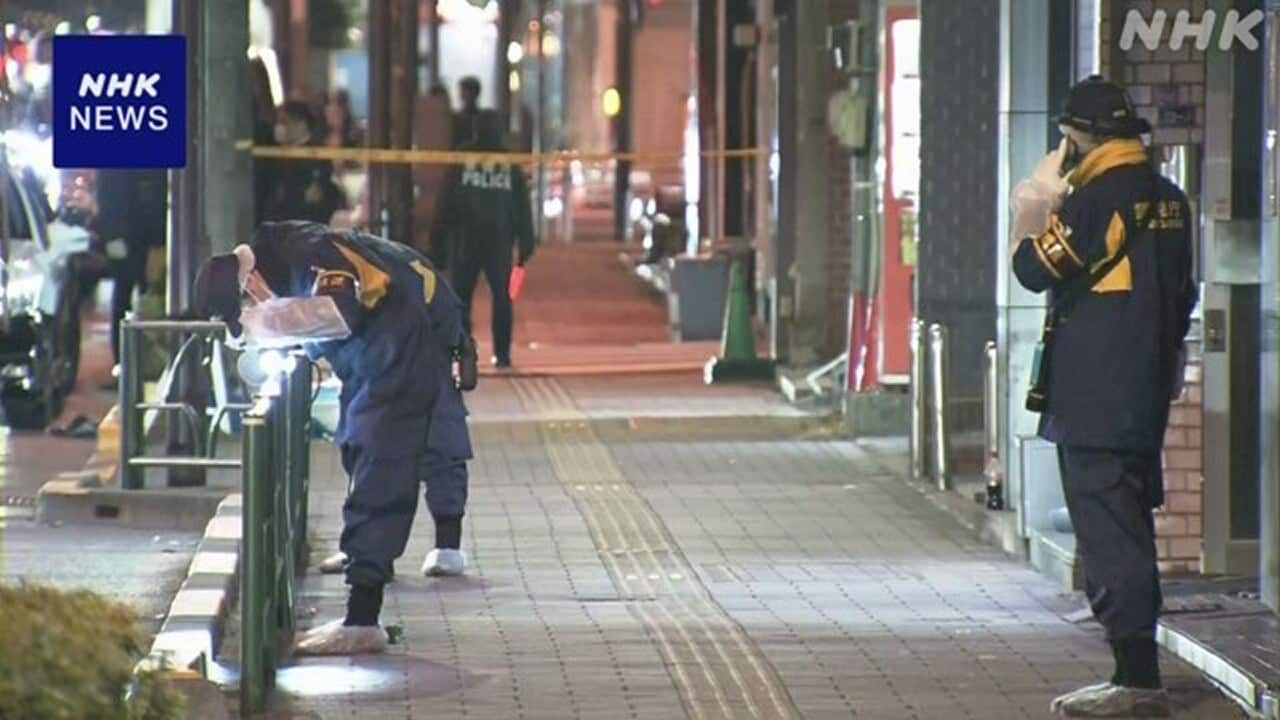
Tokyo Robbery Shocks Taitō-ku: Learn Japanese from Real News
Imagine walking through the historic streets of Tokyo, surrounded by ancient temples and bustling markets, when suddenly, a daring crime unfolds right before your eyes. On January 29, 2026, a shocking robbery took place in 台東区 (Taitō-ku), a district known for its traditional charm. This incident, involving over 400 million yen, isn’t just a headline—it’s a window into real Japanese language and culture. If you’ve ever wanted to learn Japanese the way it’s used in Japan, let’s dive into this story and uncover some authentic vocabulary and grammar along the way.
A Daring Heist on the Streets of Taitō-ku
Late at night on January 29, 2026, a group of five individuals was loading a staggering amount of cash—over 400 million yen (roughly 2.7 million USD)—into a car on a roadside in 台東区 (Taitō-ku). This area, famous for landmarks like Senso-ji Temple, is a blend of old and new Tokyo. Just as they were carrying out their task, three assailants ambushed them, using what is believed to be 催涙スプレー (sairui supurē - tear gas spray) to incapacitate the group before fleeing with the money. According to NHK reports, the police are now conducting a thorough 捜査 (sōsa - investigation) to determine if this 事件 (jiken - incident) is linked to another recent crime at Haneda Airport’s parking lot. Could this be part of a larger wave of organized crime in Tokyo?
Cultural Context: Understanding Taitō-ku and Shitamachi
If you’re picturing Tokyo as all skyscrapers and neon lights, think again. 台東区 (Taitō-ku) is part of what’s known as 下町 (shitamachi - downtown or old working-class neighborhood), a term that carries a deep cultural weight. Shitamachi areas represent the heart of old Tokyo, where narrow streets are lined with small family-run shops, and a sense of community still thrives. It’s a stark contrast to the fast-paced, modern districts like Shinjuku. So why would such a massive sum of 現金 (genkin - cash) be handled in a quiet, traditional area like this? It’s a reminder that Japan’s urban landscape is a complex mix of history and modernity, where unexpected events can unfold on any 路上 (rojō - roadside). This incident also hints at Japan’s intricate economic connections, as the cash was reportedly being prepared for transport to Hong Kong.
Learn Japanese from This Article
Let’s turn this real-life news story into a learning opportunity. Below, you’ll find key vocabulary, grammar patterns, and expressions pulled directly from the context of this robbery. These aren’t just textbook words—they’re terms you’d hear on Japanese news or in conversations about current events.
Key Vocabulary
| Japanese | Romaji | Meaning |
|---|---|---|
| 事件 | jiken | incident, case, event (often negative, like a crime) |
| 路上 | rojō | on the street, roadside |
| 催涙スプレー | sairui supurē | tear gas spray |
| 現金 | genkin | cash, money |
| 襲われる | osowareru | to be attacked, to be assaulted |
| 捜査 | sōsa | investigation, search |
| 下町 | shitamachi | downtown, old working-class neighborhood |
These words are incredibly useful if you’re following Japanese news or discussing real-world events. For example, 事件 (jiken) is a term you’ll hear constantly in crime reports, while 下町 (shitamachi) gives you insight into the cultural geography of Japan.
Grammar Spotlight: 〜とみられる and 〜ところを
To help you understand the nuances of this news story, let’s look at two grammar patterns that often appear in Japanese reporting.
〜とみられる (is thought to be, is considered to be)
This structure is used to express speculation or a widely held assumption, often in formal or news contexts. It’s like saying “is believed to be” in English.
- Structure: Verb (plain form) + とみられる
- Example 1: 犯人は催涙スプレーを使ったとみられる。
(Hanin wa sairui supurē o tsukatta to mirareru.
- The culprits are thought to have used tear gas spray.)
- Example 2: この事件は組織犯罪と関連があるとみられる。
(Kono jiken wa soshiki hanzai to kanren ga aru to mirareru.
- This incident is considered to be related to organized crime.)
- When to use: Use this when reporting something that isn’t confirmed but is a strong possibility, often in formal writing or speech.
〜ところを (just as, at the moment of)
This pattern captures an action interrupted by another event, often with a sense of surprise or unfortunate timing. It’s like saying “just as [something was happening]” in English.
- Structure: Verb (plain form) + ところを
- Example 1: 現金を車に積んでいるところを襲われた。
(Genkin o kuruma ni tsunde iru tokoro o osowareta.
- Just as they were loading the cash into the car, they were attacked.)
- Example 2: 話をしているところを邪魔された。
(Hanashi o shite iru tokoro o jama sareta.
- Just as I was talking, I was interrupted.)
- When to use: This is great for storytelling or describing an event that happens at a critical moment, often with a negative outcome.
Useful Expression
Here’s a bonus phrase you might hear in news or conversations about crime: 襲われる (osowareru - to be attacked). It’s a passive form of the verb 襲う (osou - to attack), and it’s commonly used to describe being the victim of an assault or ambush, as in this robbery. For example:
- 夜道で襲われた。
(Yomichi de osowareta.
- I was attacked on the street at night.)
Continue Learning
Want to dive deeper into Japanese grammar and vocabulary? Here are some lessons from “Japanese from Japan” to help you build on what you’ve learned today:
- Wa vs. Ga: Emphasizing Importance in Sentences: To understand more about は, explore our Wa vs. Ga: Emphasizing Importance in Sentences lesson.
- Ni, De, and E: Mapping Directions and Locations: Want to learn more about に? Check out our lesson on Ni, De, and E: Mapping Directions and Locations.
- Vocabulary Through Kanji Compounds: Lego-Like Word Building: Working on your reading skills? Our Vocabulary Through Kanji Compounds: Lego-Like Word Building lesson is a great next step.
Learning Japanese through real-world stories like this one helps you grasp not just the language, but also the culture and context behind it. Keep practicing, and you’ll be amazed at how much you can pick up from everyday news!
これからもよろしくお願いします。 Kore kara mo yoroshiku onegaishimasu.