
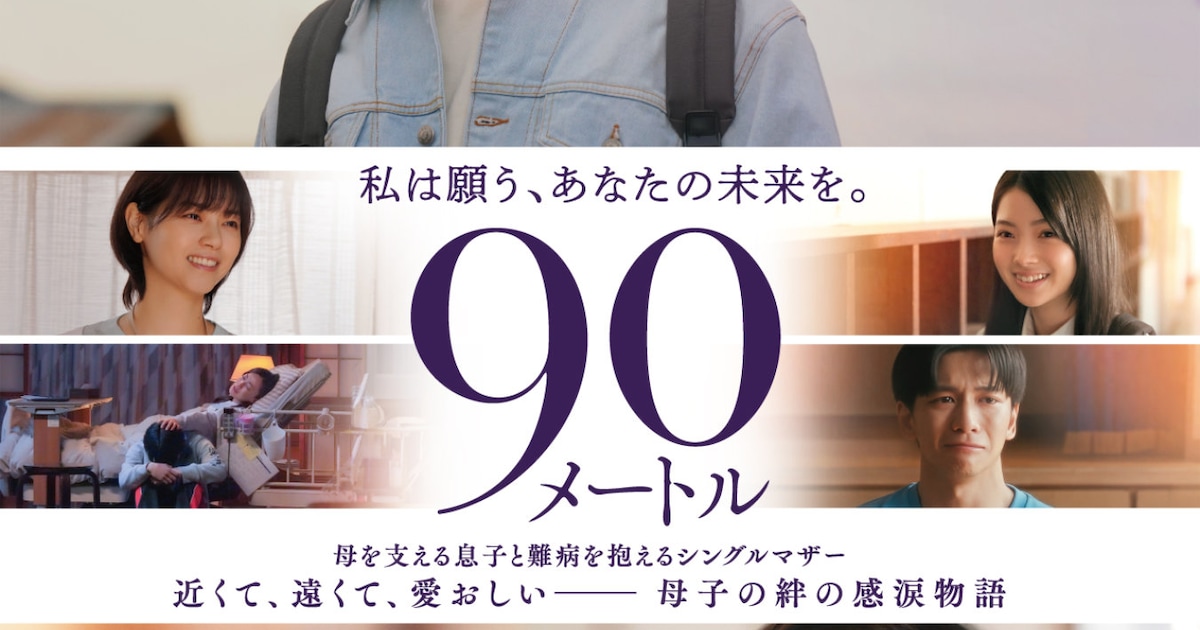
"90 Meters": A Japanese Film to Learn Emotional Language From
If you’ve ever been moved by a story of family bonds or the quiet struggles of everyday life, the upcoming Japanese film 90メートル (kyūjū mētoru, 90 Meters) will tug at your heartstrings. Announced on January 28, 2026, by the entertainment news outlet Natalie, this movie isn’t just a cinematic experience—it’s a window into the emotional depth of Japanese storytelling and a fantastic opportunity to learn authentic Japanese as it’s spoken in Japan. Let’s dive into the heart of this film, explore its cultural significance, and pick up some powerful language along the way.
The Emotional Core of "90 Meters"
At the center of 90メートル (kyūjū mētoru) is Yū Fujimura, a third-year high school student played by Sōma Yamatoki, who dreams of 上京 (joukyou, moving to Tokyo) while caring for his mother, Misaki, portrayed by Miho Kanno. Misaki suffers from a 難病 (nanbyou, serious illness), and their unbreakable 絆 (kizuna, bond) forms the soul of the story. Directed by Shun Nakagawa, who infuses the film with personal experiences, 90 Meters explores themes of love, sacrifice, and resilience. Set for a nationwide ロードショー (rōdoshō, theatrical release) on March 27, 2026, this film is already generating buzz for its raw emotion.
New Cast Brings Depth to the Story
The latest casting news introduces three talented actors who add layers to this heartfelt narrative. Nana Seino plays Kaori Shimomura, a care manager at the facility supporting Misaki. Kaori embodies ケア (kea, care) as she watches over Yū and Misaki, often feeling a sense of もどかしさ (modokashisa, frustration) at their limited communication. Seino herself reflected on the role, wondering about the warmth care managers bring to families even beyond their professional duties. Director Nakagawa praised her ability to balance emotion with restraint, mirroring real-life complexities.
Kina Minami, known from We Still Don’t Know the Rules of That Star, takes on the role of Annka Matsuda, Yū’s classmate and basketball team manager. She strives to 寄り添う (yorisou, stand by or support emotionally) Yū as he wrestles with his future. Lastly, Ito Tanaka, from Nameless Life, plays Shōta Ōhira, Yū’s former teammate with unresolved feelings after Yū quits the team. Tanaka’s tearful reaction to the script hints at the emotional punch this story will deliver.
Cultural Context: Family and Society in Japanese Cinema
For learners like you, 90 Meters offers more than just a plot—it’s a glimpse into the cultural nuances of Japan. Japanese cinema often prioritizes subtle emotion over dramatic outbursts, especially when depicting family dynamics. The parent-child 絆 (kizuna, bond) is a recurring theme, portrayed with quiet strength and unspoken understanding. The title, 90メートル (kyūjū mētoru), likely symbolizes a meaningful distance—perhaps a literal or emotional gap—reflecting Japan’s cultural emphasis on perseverance.
The film also sheds light on societal issues, like Japan’s aging population and the critical role of caregiving, as seen through Kaori’s ケア (kea, care) work. Additionally, Yū’s struggles as a third-year student highlight the intense pressure of Japan’s education system, where life-defining decisions about university and career paths loom large. These elements ground the story in real Japanese experiences, making it a rich resource for understanding both language and culture.
Learn Japanese from This Article
Let’s turn this emotional story into a learning opportunity. Below, you’ll find key vocabulary, grammar patterns, and expressions inspired by 90 Meters to help you speak and think like a native Japanese speaker.
Key Vocabulary
| Japanese | Romaji | Meaning |
|---|---|---|
| 絆 | kizuna | bond, connection |
| 難病 | nanbyou | serious or incurable illness |
| 上京 | joukyou | moving to Tokyo |
| ケア | kea | care (as in caregiving) |
| もどかしさ | modokashisa | frustration, impatience |
| 寄り添う | yorisou | to stand by, to support emotionally |
| ロードショー | rōdoshō | roadshow (theatrical release) |
Grammar Spotlight: 〜ている (Ongoing Action or State)
The 〜ている form is used to describe ongoing actions or states, much like the English present continuous (“is doing”) or a resulting state. It’s incredibly common in Japanese storytelling to show what characters are experiencing right now.
- Structure: Verb (stem form) + ている
Examples:
- ユウは母親をケアしている。(Yū wa hahaoya o kea shiteiru.
- Yū is caring for his mother.)
- 香織は二人の関係を見ている。(Kaori wa futari no kankei o miteiru.
- Kaori is watching over their relationship.)
- 私は映画の話を楽しみにしている。(Watashi wa eiga no hanashi o tanoshimi ni shiteiru.
- I am looking forward to the movie.)
- ユウは母親をケアしている。(Yū wa hahaoya o kea shiteiru.
When to Use: Use 〜ている to describe actions happening now or states that persist, like emotions or conditions. In 90 Meters, it could reflect Yū’s ongoing struggle or Kaori’s continuous support.
Grammar Spotlight: 〜ながら (While Doing Something)
The 〜ながら form lets you express doing two actions at the same time, similar to “while” in English. It’s perfect for describing complex emotions or multitasking, as characters in 90 Meters often do.
- Structure: Verb (stem form) + ながら + second action
- Examples:
- ユウは勉強しながら母親の世話をする。(Yū wa benkyou shi-nagara hahaoya no sewa o suru.
- Yū takes care of his mother while studying.)
- 香織は笑いながら心配していた。(Kaori wa warai-nagara shinpai shiteita.
- Kaori was worried while smiling.)
- ユウは勉強しながら母親の世話をする。(Yū wa benkyou shi-nagara hahaoya no sewa o suru.
- When to Use: Use 〜ながら to show simultaneous actions, often highlighting a character’s emotional or physical balancing act, like Yū juggling dreams and responsibilities.
Useful Expression: 寄り添う (yorisou)
The verb 寄り添う (yorisou, to stand by or support emotionally) is a beautiful word you’ll hear in heartfelt contexts like 90 Meters. It conveys being there for someone, not just physically but emotionally, much like Annka’s role for Yū. Use it when you want to express deep empathy or companionship.
- Example: 友達に寄り添うことが大切だ。(Tomodachi ni yorisou koto ga taisetsu da.
- It’s important to stand by your friends.)
Continue Learning
Ready to build on what you’ve learned from 90 Meters? Check out these lessons to deepen your understanding of Japanese grammar and expressions:
- Wa vs. Ga: Emphasizing Importance in Sentences: To understand more about は, explore our Wa vs. Ga: Emphasizing Importance in Sentences lesson.
- Time and Dates: Tense-Free Expressions: Curious about the Japanese used here? Our Time and Dates: Tense-Free Expressions lesson covers this in depth.
- Ni, De, and E: Mapping Directions and Locations: Ready to dive deeper? Our lesson on Ni, De, and E: Mapping Directions and Locations will help you master these concepts.
Closing Thoughts
Stories like 90 Meters remind us why learning Japanese is so rewarding—not just for the language, but for the emotions and cultural insights it unlocks. By exploring the 絆 (kizuna, bond) between characters and the real-life struggles they face, you’re learning Japanese the way it’s lived in Japan. Keep practicing with these words and patterns, and let every story bring you closer to fluency.
これからもよろしくお願いします。 Kore kara mo yoroshiku onegaishimasu.