
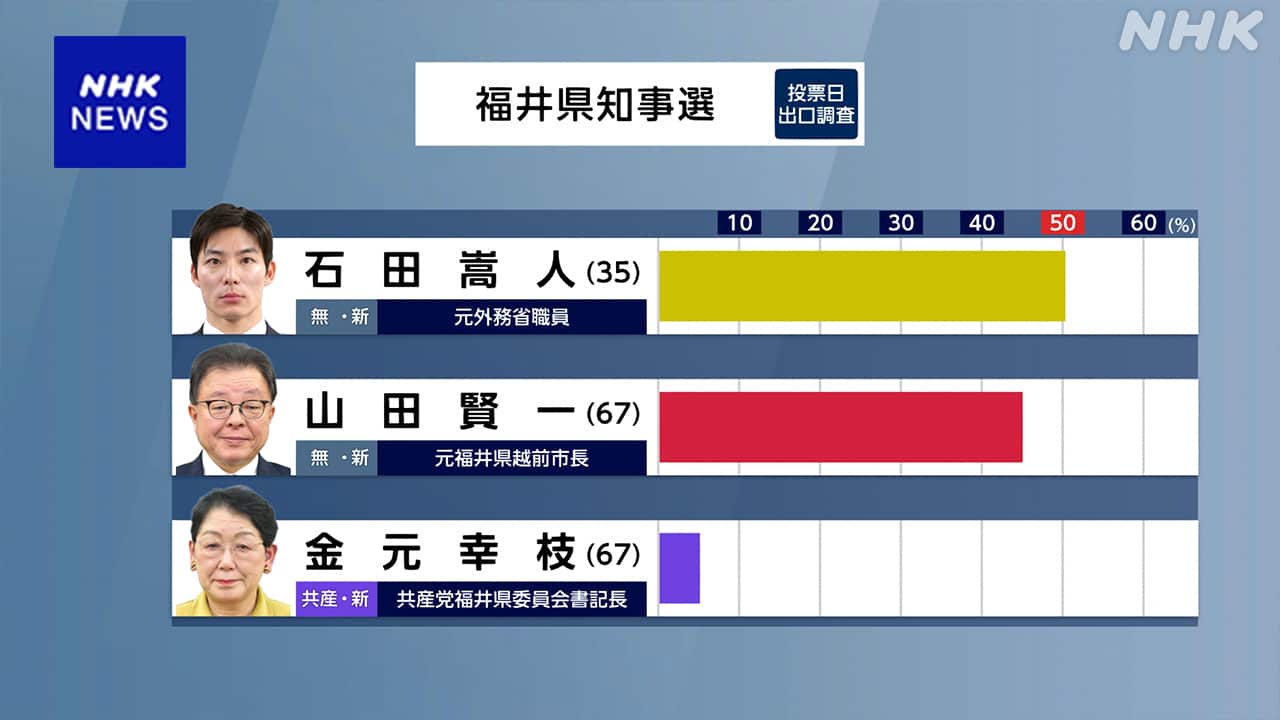
Fukui Election: New Governor Ishida Takato Wins
If you’ve ever wondered how the heartbeat of Japanese democracy pulses beyond the neon lights of Tokyo, here’s a story that will pull you right into the action. On January 23rd at 7:07 PM, the results of the Fukui Prefecture gubernatorial election came in, crowning a new leader for this coastal region. A fresh face, 石田嵩人 (Ishida Takato), has emerged victorious, and for learners like you, this is a perfect chance to dive into the world of Japanese regional politics while picking up authentic language skills. Let’s unpack this moment and see what it teaches us about Japan—and how it can boost your Japanese journey.
A New Chapter for Fukui Prefecture
In 福井県 (Fukui-ken), a prefecture nestled along the Sea of Japan, the recent 選挙 (senkyo, election) has brought 石田嵩人 (Ishida Takato) into the spotlight as the new 知事 (chiji, governor). As a newcomer to the political arena, Ishida’s 勝利 (shōri, victory) hints at a possible shift in how things are run in this 地域 (chiiki, region). While detailed reports on his campaign or voter turnout are still pending, what’s clear is that the people of Fukui have opted for change, a common theme in local 政治 (seiji, politics) when communities seek new perspectives. For you as a learner, this isn’t just news—it’s a window into how local governance shapes everyday life in Japan, from schools to roads, far beyond the national stage.
Cultural Context: Why Regional Politics Matter in Japan
To truly appreciate an event like this, let’s zoom out a bit. Japan is divided into administrative units called 都道府県 (todōfuken, prefectures), each led by a governor and assembly. Fukui might not be as globally famous as Tokyo or Kyoto, but it’s a treasure trove of traditional crafts and history, with a strategic spot on Japan’s western coast. Elections in places like Fukui aren’t mere formalities; they reflect the heartbeat of community needs—think revitalizing rural areas or supporting aging populations. The role of a 知事 (chiji, governor) is pivotal, often serving as a launchpad to national influence. By understanding these local dynamics, you’ll start to see how Japan balances its deep-rooted traditions with modern challenges, a perspective that textbooks often miss but that native speakers grow up with.
Learn Japanese from This Article
Ready to turn this news into a language lesson? Here at "Japanese from Japan," we believe in learning the way Japanese kids do—through real-life context and immersion. Let’s break down some key vocabulary and grammar from this story that you can start using today.
Key Vocabulary
| Japanese | Romaji | Meaning |
|---|---|---|
| 知事 | chiji | governor |
| 選挙 | senkyo | election |
| 都道府県 | todōfuken | prefectures (administrative divisions of Japan) |
| 勝利 | shōri | victory |
| 地域 | chiiki | region, area |
| 政治 | seiji | politics |
These words aren’t just for reading news—they’re part of everyday conversations in Japan. Whether you’re chatting about local events or discussing broader 政治 (seiji, politics), these terms will help you sound more natural.
Grammar Spotlight
Let’s spotlight two grammar patterns that pop up in discussions like this election result. These are taught to Japanese students in school and are incredibly useful for expressing outcomes and impressions.
〜が決まる (~ga kimaru) - to be decided, to be determined This structure is used when something, like a result or decision, is finalized.
- 知事が決まりました。 (Chiji ga kimarimashita.) - The governor has been decided.
- 選挙の結果が決まった。 (Senkyo no kekka ga kimatta.) - The election result has been determined.
- 会議の日が決まりましたか? (Kaigi no hi ga kimarimashita ka?) - Has the date of the meeting been decided? Use this when talking about outcomes or decisions in any context, from elections to personal plans.
〜らしい (~rashii) - seems like, appears to be (based on information heard) This is perfect for reporting something you’ve heard or read, adding a sense of “apparently” or “it seems.”
- 石田さんが知事になったらしいです。 (Ishida-san ga chiji ni natta rashii desu.) - It seems Ishida became the governor.
- 選挙はとても競争が激しかったらしい。 (Senkyo wa totemo kyōsō ga hageshikatta rashii.) - Apparently, the election was very competitive.
- 新しい政策があるらしいよ。 (Atarashii seisaku ga aru rashii yo.) - I heard there’s a new policy. This pattern is great for sharing news or rumors while keeping a neutral tone, something you’ll hear often in Japanese conversations.
Useful Expression
Here’s a bonus phrase tied to this topic:
- 当選確実 (tōsen kakujitsu) - “election victory confirmed” You might see or hear this in news reports, as it was used in the original Japanese title of this story. It’s a formal way to say someone’s win is assured, often before final tallies are complete.
Continue Learning
Want to dive deeper into the Japanese language used in contexts like this? Check out these lessons from "Japanese from Japan" to build on what you’ve learned today:
- Ni, De, and E: Mapping Directions and Locations: Want to learn more about に? Check out our lesson on Ni, De, and E: Mapping Directions and Locations.
- Wa vs. Ga: Emphasizing Importance in Sentences: Curious about the Japanese used here? Our Wa vs. Ga: Emphasizing Importance in Sentences lesson covers this in depth.
- Chinese Influence on Japanese: Kanji and Borrowed Vocabulary: Working on your reading skills? Our Chinese Influence on Japanese: Kanji and Borrowed Vocabulary lesson is a great next step.
We’re thrilled to have you learning with us, and we can’t wait to see how far you’ll go in mastering Japanese the authentic way. これからもよろしくお願いします。 Kore kara mo yoroshiku onegaishimasu.