
Japan’s Winter Warning: Heavy Snow Alert in Ishikawa and Shiga
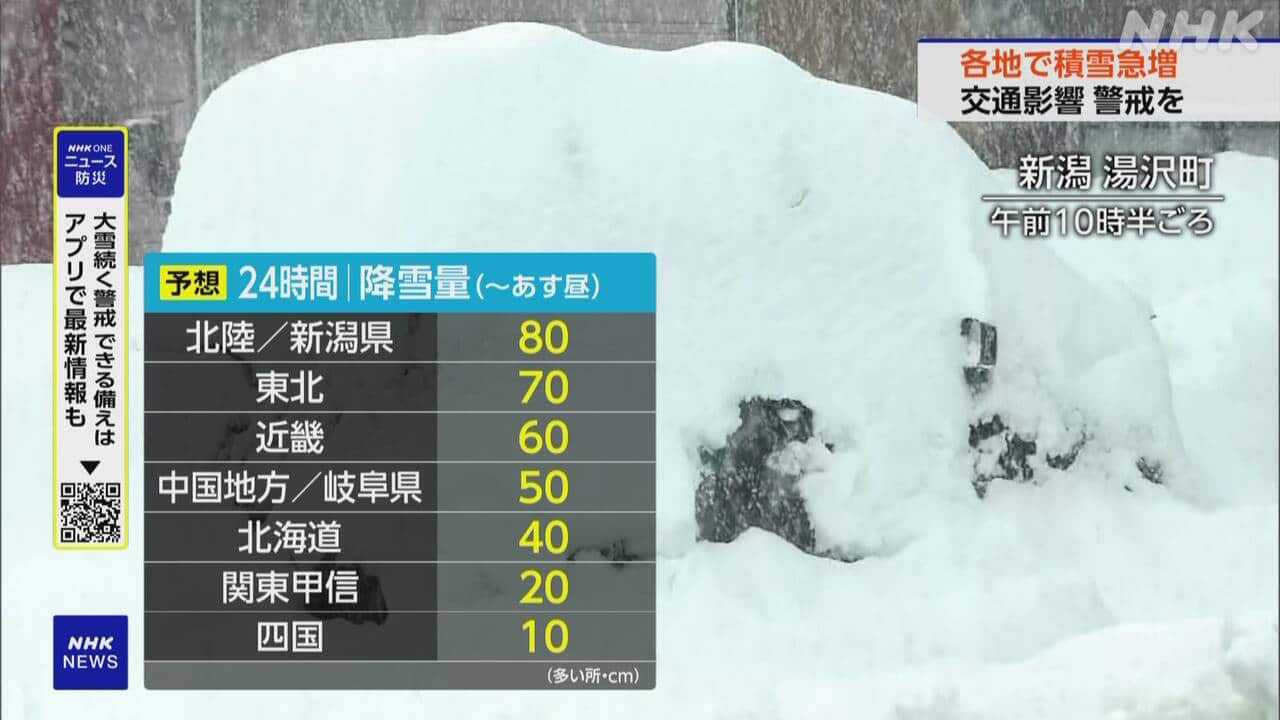
If you’ve ever marveled at Japan’s ability to face nature’s challenges with precision and grace, this latest weather alert will give you a front-row seat to that resilience. On January 20th, the Japan Meteorological Agency issued a stark warning for 顕著な大雪 (kencho na ooyuki), or "remarkable heavy snowfall," in Ishikawa and Shiga prefectures. This isn’t just a weather update—it’s a glimpse into how Japan communicates urgency through language and culture. Let’s dive into the news, explore the cultural context, and pick up some authentic Japanese along the way.
Urgent Weather Alert: A Call to Vigilance
On the evening of January 20th at 6:06 PM, the 気象庁 (kishouchou), Japan’s Meteorological Agency, sounded the alarm for 顕著な大雪 (kencho na ooyuki) in Ishikawa and Shiga. This rare term signals an extraordinary level of snowfall, with active snow clouds expected to pour into these regions. The potential 影響 (eikyou), or impact, on daily life is significant—think stranded vehicles, delayed transportation, and disrupted routines. Authorities are urging everyone to exercise 警戒 (keikai), meaning caution or vigilance, and to avoid unnecessary travel as conditions could change rapidly.
Live cameras in the affected areas are broadcasting real-time updates, showing snow piling up and giving us a direct look at how winter can transform Japan overnight. This alert isn’t just about staying informed; it’s a reminder of how precise language, like 顕著な大雪 (kencho na ooyuki), helps convey the seriousness of the situation to the public.
Cultural Context: Snow as a Way of Life
For many in Japan, heavy snowfall isn’t just a seasonal hassle—it’s a defining part of life, especially in regions along the Sea of Japan coast like Ishikawa. This area often experiences 豪雪 (gousetsu), or heavy snow, due to a phenomenon called the 日本海側効果 (nihonkai-gawa kouka), the "Sea of Japan side effect." Cold air masses pick up moisture over the sea, dumping meters of snow on coastal towns in a matter of hours.
Japan’s response to such weather reflects a deep-rooted cultural emphasis on preparation and community. From organized snow removal teams to detailed public alerts, the country demonstrates a systematic approach to natural challenges. The use of specific terms in warnings isn’t just linguistic—it’s a reflection of Japan’s value of foresight and collective responsibility. As a learner, paying attention to how these words are used in real news helps you grasp not just vocabulary, but the mindset behind it.
Learn Japanese from This Article
Let’s turn this weather alert into a learning opportunity. Below, you’ll find key vocabulary, grammar patterns, and useful expressions pulled straight from the context of this news story. These are words and structures you’d hear in Japan, taught the way native speakers learn them—through real-life usage.
Key Vocabulary
| Japanese | Romaji | Meaning |
|---|---|---|
| 顕著な大雪 | kencho na ooyuki | remarkable heavy snowfall |
| 豪雪 | gousetsu | heavy snow |
| 日本海側効果 | nihonkai-gawa kouka | Sea of Japan side effect |
| 警戒 | keikai | caution, vigilance |
| 影響 | eikyou | impact, influence |
| 気象庁 | kishouchou | Japan Meteorological Agency |
Grammar Spotlight
Here are two grammar patterns that often appear in news and warnings like this one. They’re practical, widely used, and will help you sound more natural when discussing possibilities or urging action.
1. 〜を促す (~ o unagasu) - To urge or encourage someone to do something
- Structure: Noun/Object + を + 促す
- Usage: This pattern is often used in formal or official contexts to encourage or urge action, like in public announcements or news reports.
Examples:
- 当局は住民に警戒を促しています。 (Toukoku wa juumin ni keikai o unagashiteimasu.) Authorities are urging residents to stay vigilant.
- 旅行者に不要な移動を避けるよう促す。 (Ryokousha ni fuyou na idou o sakeru you unagasu.) Travelers are being urged to avoid unnecessary movement.
- 安全のために準備を促します。 (Anzen no tame ni junbi o unagashimasu.) We urge preparation for safety.
2. 〜可能性がある (~ kanousei ga aru) - There is a possibility that...
- Structure: Verb (plain form) + 可能性がある
- Usage: This is a common way to express likelihood or possibility, often used in weather forecasts or warnings to indicate potential risks.
Examples:
- 大雪が降る可能性があります。 (Ooyuki ga furu kanousei ga arimasu.) There is a possibility that heavy snow will fall.
- 交通に影響が出る可能性がある。 (Koutsuu ni eikyou ga deru kanousei ga aru.) There is a possibility that transportation will be affected.
- 状況が急に変わる可能性があります。 (Joukyou ga kyuu ni kawaru kanousei ga arimasu.) There is a possibility that the situation will change suddenly.
Useful Expression
When discussing weather or emergencies, you’ll often hear phrases that combine caution with action. Here’s one to keep in your toolkit:
- 警戒してください。 (Keikai shite kudasai.) - Please be cautious. This polite request is a go-to in formal or urgent situations, showing respect while emphasizing the need for care.
Continue Learning
Ready to build on what you’ve learned here? Check out these lessons to deepen your understanding of Japanese language and culture:
- Basic Vocabulary Building: Embracing Words Without Latin Ties: Ready to dive deeper? Our lesson on Basic Vocabulary Building: Embracing Words Without Latin Ties will help you master these concepts.
- Time and Dates: Tense-Free Expressions: Ready to dive deeper? Our lesson on Time and Dates: Tense-Free Expressions will help you master these concepts.
- Greetings and Self-Introductions: Authentic Entry Phrases: Want to learn more about culture? Check out our lesson on Greetings and Self-Introductions: Authentic Entry Phrases.
Thank you for joining us on this journey through Japan’s winter challenges and the language that shapes its response. Keep practicing, and let’s continue learning together!
これからもよろしくお願いします。 Kore kara mo yoroshiku onegaishimasu.