
Unraveling the Mystery of Kingu Ōyama: Japan’s Urban Enigma
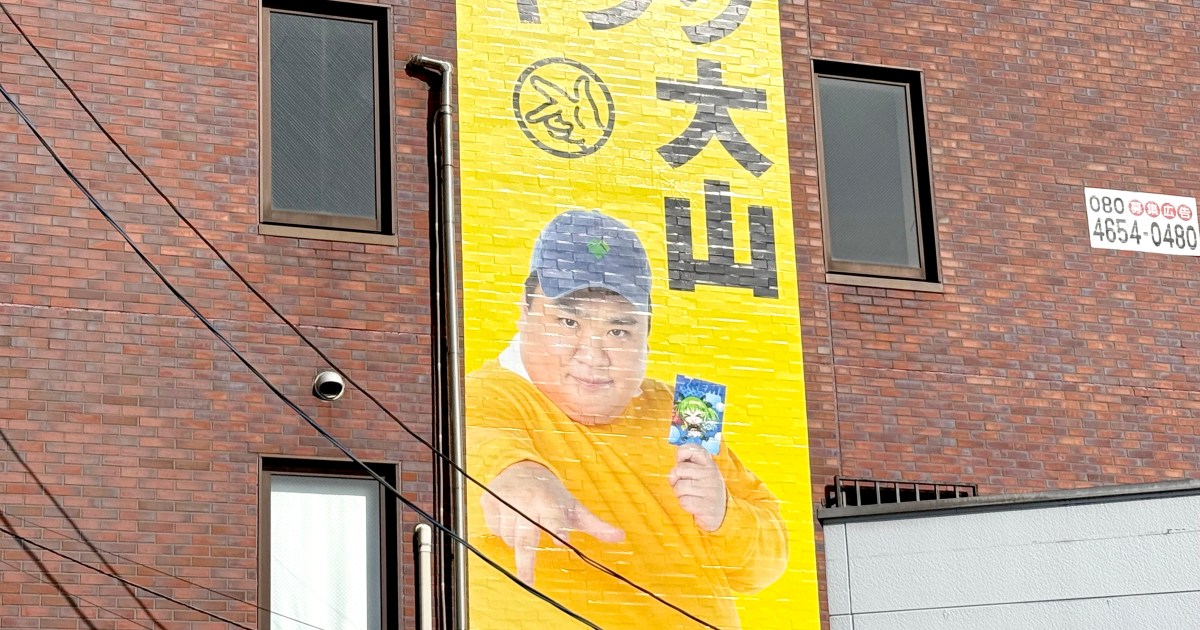
Imagine strolling through the vibrant streets of Tokyo or Chiba, surrounded by neon lights and endless energy, when a peculiar yellow sign stops you in your tracks. It showcases a middle-aged man in a blue cap and yellow T-shirt, striking an odd pose with a mysterious card in his hand. The only text on the sign? キング大山 (Kingu Ōyama)—a name that rings no bells. You snap a photo, search online, and… nothing. Welcome to one of Japan’s latest urban mysteries, a phenomenon baffling locals across the Kanto region.
The Strange Case of Kingu Ōyama
Just a couple of weeks ago, reports began surfacing about bizarre signs appearing throughout the 関東地方 (Kantou chihou), the bustling region encompassing Tokyo and surrounding prefectures like Chiba and Kanagawa. These identical signs feature a man known as キング大山 (Kingu Ōyama), or "King Ōyama." He’s portrayed as a middle-aged figure in a blue cap and yellow T-shirt, making a peculiar hand gesture while holding what seems to be a card. There’s even a symbol mimicking his pose on the 看板 (kanban, signboard), but beyond the name, there’s no clue—no website, no QR code, not even a hint of purpose.
These mysterious sightings have been reported in multiple spots: Tokyo’s Chuo, Adachi, and Edogawa Wards, Matsudo and Ichikawa Cities in Chiba, Totsuka Ward in Yokohama, and Urayasu City, also in Chiba. With the internet’s knack for uncovering almost anything in seconds, you’d think someone would have cracked this 謎 (nazo, mystery) by now. Yet, searches for キング大山 (Kingu Ōyama) only turn up vague social media posts like “Saw this weird sign in Matsudo, anyone know what it is?” Even AI tools stumble, confusing the name with 大山倍達 (Ōyama Masutatsu), the legendary founder of Kyokushin Karate. Spoiler: there’s no connection. The 正体 (shoutai, true identity) of King Ōyama remains completely unknown.
A Public Plea for Answers
What makes this story even more captivating is how elusive it is. In a world where nothing stays hidden for long, how can a figure with signs scattered across a major metropolitan area remain a total enigma? The original reporter from Rocket News, after a personal 目撃 (mokugeki, sighting) of the sign in Matsudo, admitted even their team is stumped. They’ve now turned to the public, openly requesting any 情報 (jouhou, information) or rumors about who or what is behind this odd 設置 (secchi, installation). They’ve even extended an invitation to キング大山 (Kingu Ōyama) himself to come forward!
Speculation abounds—could this be a clever marketing stunt, an avant-garde art project, or something else entirely? For now, it’s a small but intriguing puzzle, reminding us that even in hyper-connected Japan, a bit of anonymity can still spark curiosity.
Cultural Context: Signs and Mysteries in Japan
If you’ve ever wandered through Japan’s urban landscapes, especially in areas like Tokyo, you’ll know that public signs and advertisements are everywhere. Bright, eye-catching 看板 (kanban, signboards) promote everything from ramen shops to quirky local campaigns. What’s so unusual about the キング大山 (Kingu Ōyama) signs is their complete lack of context or actionable information. In a culture that often prioritizes clarity and accessibility in communication, especially in public spaces, this stands out as odd.
The 関東地方 (Kantou chihou, Kanto region), where these signs have popped up, is the beating heart of Japan’s economic and cultural life, home to over 40 million people. That such a mystery can unfold in a densely populated, tech-savvy area only adds to the intrigue. It also reflects a playful side of Japanese culture, where oddities—be it urban legends or viral internet phenomena—often capture the public’s imagination, even if just for a fleeting moment. This little 謎 (nazo, mystery) is a perfect example of how even small curiosities can become a shared point of wonder.
Learn Japanese from This Article
Let’s turn this mystery into a learning opportunity! Here, you’ll find key vocabulary, grammar patterns, and useful expressions inspired by the story of キング大山 (Kingu Ōyama). Dive in and pick up some authentic Japanese you can use to discuss mysteries, sightings, or even ask for information.
Key Vocabulary
| Japanese | Romaji | Meaning |
|---|---|---|
| 看板 | kanban | signboard, billboard |
| 謎 | nazo | mystery, puzzle |
| 正体 | shoutai | true identity, true nature |
| 目撃 | mokugeki | witnessing, sighting |
| 関東地方 | Kantou chihou | Kanto region |
| 設置 | secchi | installation, setting up |
| 情報 | jouhou | information |
Grammar Spotlight
Let’s focus on two useful grammar patterns that tie into the theme of asking for help and describing moments, just like the reporters did when seeking clues about キング大山 (Kingu Ōyama).
1. 〜ないか (Won’t you...?, How about...?)
This pattern is used to make a polite request or suggestion, often when asking someone to do something or provide information. It’s softer than a direct question and fits perfectly in situations like asking for help with a mystery.
- Structure: Verb (negative form) + か
Examples:
- キング大山について何か知らないか? (Kingu Ōyama ni tsuite nani ka shiranai ka?) - Don’t you know something about King Ōyama?
- この看板を見たことを教えてくれないか? (Kono kanban o mita koto o oshiete kurenai ka?) - Won’t you tell me if you’ve seen this sign?
- 一緒に調べてみないか? (Issho ni shirabete minai ka?) - How about we look into it together?
When to Use: Use this in casual or semi-polite situations when you’re seeking cooperation or information. It’s a friendly way to ask without sounding demanding.
2. 〜ところ (Just as, At the point of)
This pattern describes something happening “just as” or “at the point of” a specific moment. It’s great for storytelling, like describing the moment you spotted a strange sign.
- Structure: Verb (dictionary form or past tense) + ところ
Examples:
- 駅を出るところで看板を見た。 (Eki o deru tokoro de kanban o mita.) - Just as I was leaving the station, I saw the sign.
- 調べようとしたところで友達が来た。 (Shirabeyou to shita tokoro de tomodachi ga kita.) - Just as I was about to look it up, my friend arrived.
- 写真を撮るところで看板が消えた。 (Shashin o toru tokoro de kanban ga kieta.) - At the point of taking a photo, the sign disappeared.
When to Use: Use this to describe events happening simultaneously or to set the scene for a specific moment. It adds a vivid, narrative touch to your story.
Useful Expression
Here’s a handy phrase inspired by the public plea for information about キング大山 (Kingu Ōyama):
- 何か情報はありませんか? (Nani ka jouhou wa arimasen ka?) - Do you have any information?
- Use this polite question when asking someone if they know anything about a topic. It’s perfect for situations where you’re seeking help or clues, just like the reporters in this story.
Continue Learning
Ready to build on what you’ve learned here? Check out these lessons to deepen your understanding of Japanese grammar and expressions used in real-life contexts like navigating cities or asking questions:
- Ni, De, and E: Mapping Directions and Locations: Ready to dive deeper? Our lesson on Ni, De, and E: Mapping Directions and Locations will help you master these concepts.
- Masu Form: Mastering Polite Everyday Speech: Want to understand the verb forms used here? Check out Masu Form: Mastering Polite Everyday Speech.
- Wa vs. Ga: Emphasizing Importance in Sentences: Ready to dive deeper? Our lesson on Wa vs. Ga: Emphasizing Importance in Sentences will help you master these concepts.
Closing Thoughts
The mystery of キング大山 (Kingu Ōyama) is a fun reminder that even in a world of instant information, some puzzles still linger. As you learn Japanese, you’ll uncover not just the language but also the quirks and wonders of Japan’s culture. Keep your eyes peeled for odd signs or hidden stories on your own journey—and who knows, maybe you’ll be the one to solve the next big 謎 (nazo, mystery)!
これからもよろしくお願いします。 Kore kara mo yoroshiku onegaishimasu.