
Japan’s Railgun Unveiled: A Sci-Fi Weapon Comes to Life
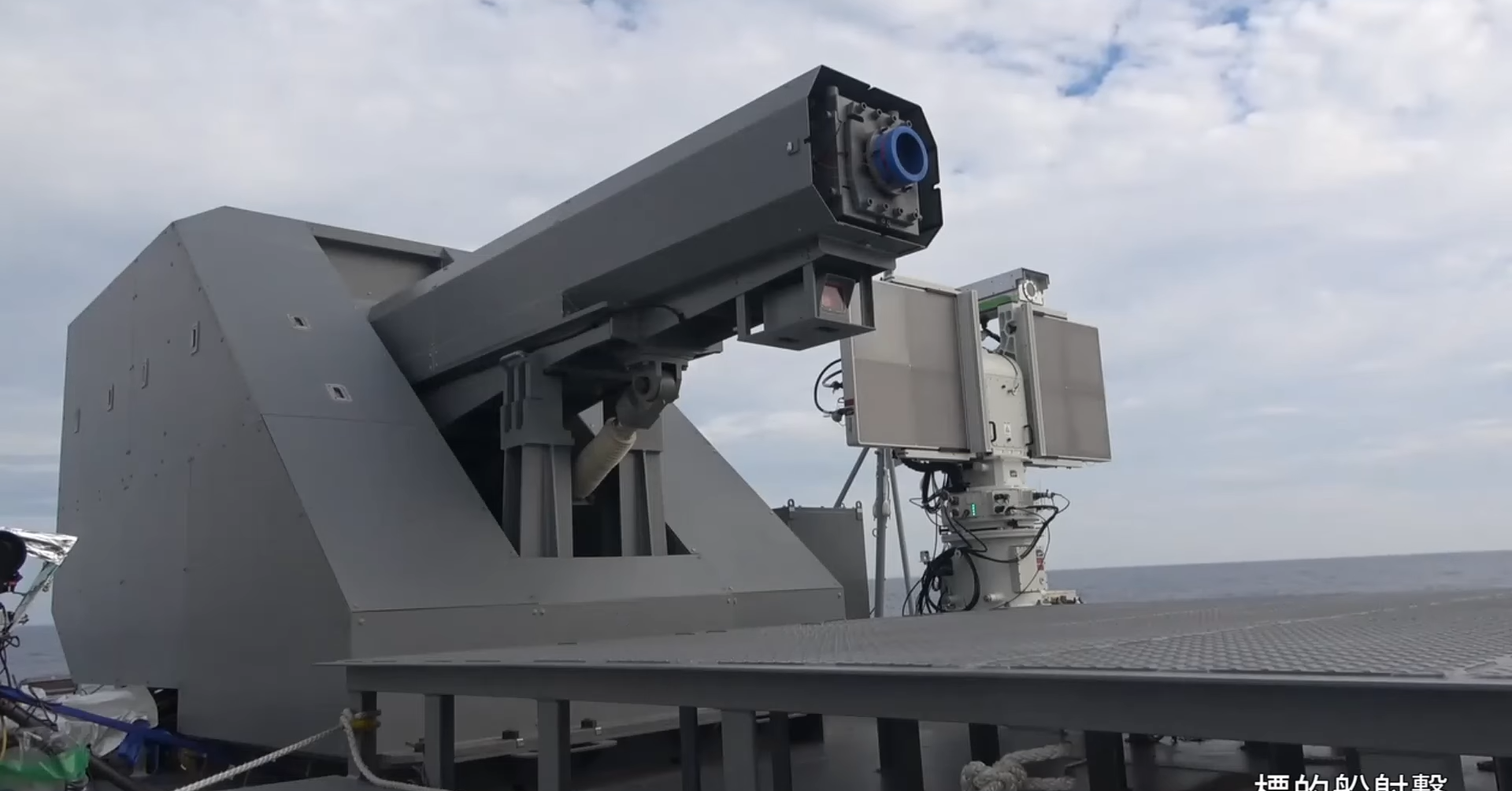
Imagine a weapon straight out of a sci-fi movie, firing projectiles at unimaginable speeds using pure electrical energy. If you’ve ever been fascinated by Japan’s knack for blending tradition with cutting-edge technology, you’re in for a treat. On January 16, 2026, Japan’s Defense Technology Agency revealed a jaw-dropping video of their latest innovation: the レールガン (reerugan), or railgun, in action. This isn’t just a glimpse into military tech—it’s a window into how Japan continues to push boundaries while staying true to its cultural roots. Let’s dive into this futuristic development and uncover some authentic Japanese language lessons along the way.
A Glimpse of the Future: Railgun in Action
The video, shared on YouTube alongside footage from a November 2025 technical symposium, showcases the レールガン (reerugan) during a maritime firing test aboard the test ship あすか (Asuka). Likely conducted between June and July 2025, these 洋上 (youjou - on the sea) experiments highlight the weapon’s precision and power. High-speed cameras captured every moment of the 射撃 (shageki - shooting, firing), showing projectiles hitting designated targets with pinpoint accuracy, even at long range. The Defense Technology Agency, or 防衛装備庁 (Bouei Soubi Chou), confirmed that the tests met two key goals: verifying accuracy against target ships and gathering ballistic data using advanced trajectory radars.
What makes this レールガン (reerugan) so unique? Unlike traditional cannons, it doesn’t rely on gunpowder. Instead, it uses electrical energy to launch a 弾丸 (dangan - bullet, projectile) at incredible speeds, with adjustable power and a longer range. The smaller projectiles are also harder to detect or intercept, giving this tech a strategic edge. Watching the 映像 (eizou - video, footage), you can’t help but feel like you’re witnessing the future of defense technology—something Japan is actively shaping through 研究開発 (kenkyuu kaihatsu - research and development).
Cultural Context: Balancing Peace and Innovation
If you’ve studied Japan’s history, you might wonder how a pacifist nation develops something as advanced as a railgun. Under Article 9 of its Constitution, Japan renounces war and the use of force in international disputes. Yet, in recent decades, the government has shifted to allow self-defense technologies under the banner of national security. The 防衛装備庁 (Bouei Soubi Chou) walks this fine line, innovating while adhering to Japan’s commitment to peace—a duality that often sparks debate both inside and outside the country.
This project also mirrors Japan’s cultural obsession with precision and excellence. Think about the bullet trains or robotics that define modern Japan. The same meticulous spirit drives this military tech, showing how deeply ingrained values of craftsmanship and innovation shape every aspect of Japanese society. For language learners, this is a reminder that understanding Japanese isn’t just about words—it’s about grasping the “why” behind the culture, even in unexpected areas like defense.
Learn Japanese from This Article
Let’s turn this fascinating news into a learning opportunity. Below, you’ll find key vocabulary from the railgun story, along with grammar patterns that will help you express ongoing actions and reasons in Japanese—just like native speakers do.
Key Vocabulary
| Japanese | Romaji | Meaning |
|---|---|---|
| レールガン | reerugan | railgun |
| 防衛装備庁 | bouei soubi chou | Defense Technology Agency |
| 研究開発 | kenkyuu kaihatsu | research and development |
| 洋上 | youjou | on the sea, maritime |
| 射撃 | shageki | shooting, firing |
| 弾丸 | dangan | bullet, projectile |
| 映像 | eizou | video, footage |
Grammar Spotlight: 〜ている (Ongoing Action or State)
The pattern 〜ている (~te iru) is used to describe an action that is currently happening or a state that continues over time. It’s similar to the English present continuous tense (“is doing”) but can also describe a resulting state depending on the verb.
- Structure: Verb (て-form) + いる
Examples:
- レールガンを研究開発している。 (Reerugan o kenkyuu kaihatsu shite iru.) - They are researching and developing the railgun.
- 船が洋上を航海している。 (Fune ga youjou o koukai shite iru.) - The ship is navigating on the sea.
- 映像を見ている。 (Eizou o mite iru.) - I am watching the video.
When to Use: Use this to talk about something happening right now or a continuous state. For instance, when discussing ongoing projects like the railgun tests, 〜ている helps convey that the work is still in progress.
Grammar Spotlight: 〜ことから (Because of, Due to)
The pattern 〜ことから (~koto kara) is a formal way to express a reason or cause, often used in written or official contexts. It’s like saying “due to the fact that” in English.
- Structure: Verb (plain form) / Noun + ことから
Examples:
- 精度を確認することから、実験が行われた。 (Seido o kakunin suru koto kara, jikken ga okonawareta.) - Due to the need to confirm accuracy, the experiment was conducted.
- 長距離射撃の必要性があることから、レールガンが開発された。 (Choukyori shageki no hitsuyousei ga aru koto kara, reerugan ga kaihatsu sareta.) - Because of the need for long-range firing, the railgun was developed.
When to Use: This is great for explaining reasons behind actions, especially in formal discussions like news or reports about technology and defense.
Continue Learning
Ready to build on what you’ve learned? Check out these lessons to deepen your understanding of Japanese grammar and usage:
- O and Wo: Marking Objects Without Prepositions: Ready to dive deeper? Our lesson on O and Wo: Marking Objects Without Prepositions will help you master these concepts.
- Ni, De, and E: Mapping Directions and Locations: Curious about the Japanese used here? Our Ni, De, and E: Mapping Directions and Locations lesson covers this in depth.
- Wa vs. Ga: Emphasizing Importance in Sentences: Curious about the Japanese used here? Our Wa vs. Ga: Emphasizing Importance in Sentences lesson covers this in depth.
Closing Thoughts
Japan’s railgun isn’t just a technological marvel—it’s a reflection of a nation that harmonizes its peaceful principles with a drive for innovation. As you’ve seen, learning Japanese isn’t just about memorizing words; it’s about connecting with the culture and values behind them. Keep exploring, keep practicing, and you’ll uncover even more about this fascinating language and country.
これからもよろしくお願いします。 Kore kara mo yoroshiku onegaishimasu.