
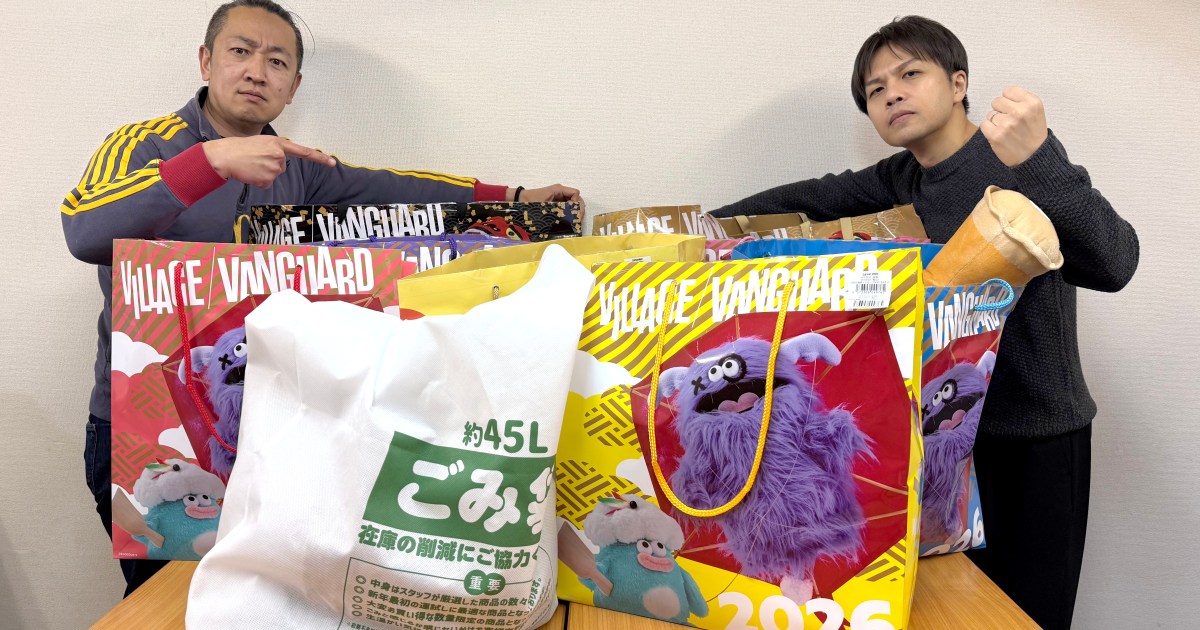
Unpacking the 2026 Village Vanguard Lucky Bag: Trash or Treasure?
Imagine yourself knee-deep in a pile of the weirdest, most random items you’ve ever seen, laughing so hard you can barely breathe over a bear figurine with comically long legs. This is the hilarious chaos that unfolded as the team at Rocket News took on their annual tradition of sorting through the ヴィレヴァン福袋 (Virevan Fukubukuro)—the Village Vanguard Lucky Bag—for 2026. For Japanese learners like you, this isn’t just a funny story; it’s a perfect window into a beloved New Year tradition that showcases the quirky, unpredictable side of Japanese pop culture.
The 2026 Village Vanguard Lucky Bag Challenge
Every year, the folks at Rocket News dive headfirst into the world of 福袋 (fukubukuro), or "lucky bags," sold by Village Vanguard, a popular chain in Japan famous for its eccentric and novelty items. These mystery bags are a New Year staple, filled with random goods at a discounted price. For 2026, the team—led by writers Sanjun and Ahiruneko—tackled nine different bags, uncovering a whopping 50 items. Their mission was simple yet daunting: sort everything into two categories, "trash" (ゴミ, gomi) and "not trash" (非ゴミ, hi-gomi). Spoiler alert: the results were hilariously one-sided.
The 仕分け (shiwake), or sorting process, wasn’t about physical strength but pure メンタル (mentaru)—mental endurance. As Sanjun put it, you need a tough spirit to push through the sinking realization that “this is all just junk.” Among the standout bags were the infamous “Purple Lucky Bag,” which Ahiruneko claimed crossed a new line of absurdity, and the aptly named “Trash Bag,” which didn’t disappoint. The team bantered endlessly during the 仕分け (shiwake): Sanjun grumbled about useless kitchen tools doomed to become 粗大ゴミ (sodaigomi), or bulky waste, while Ahiruneko couldn’t stop laughing at items like a giant toothbrush, declaring it “pure, undeniable trash.”
The Laughs and the Loot
The sorting turned into a full-on comedy show. At one point, Ahiruneko—known in the office as the cool and composed “Prince of the White Night”—completely lost it over a bear figurine with bizarrely long legs, wheezing with laughter at its unbalanced design. Even Sanjun had to admit it was a one-of-a-kind oddity, though still trash. After nearly 30 minutes of sifting through the chaos, the verdict was clear: 45 items—90% of the haul—were deemed ゴミ (gomi). Only five items made the “not trash” cut, including a coffee maker (valued at nearly 15,000 yen, a true お宝, otakara, or treasure) and a set of stickers Sanjun thought his daughter would love.
While the “trash” items weren’t fully detailed, the team couldn’t resist sharing their personal “King of Trash” picks. Ahiruneko crowned a giant triangular ruler and the infamous giant toothbrush as utterly meaningless, while Sanjun pointed to a massive kendama stuffed animal, admitting it had some 迫力 (hakuryoku), or impact, despite being innovative junk. Despite the overwhelming junk ratio, their affection for the ヴィレヴァン福袋 (Virevan Fukubukuro) is undeniable—they love the absurdity and can’t wait to dive in again next year.
Cultural Context: The Magic of Fukubukuro
If you’re new to Japanese traditions, 福袋 (fukubukuro), literally “lucky bag,” is a New Year custom where stores bundle random items into bags sold at a discount, often on January 1st or 2nd. It’s a gamble—buyers don’t know what’s inside until they open it, making it a thrilling (or disappointing) surprise. Village Vanguard, or ヴィレッジヴァンガード (Virejji Vangādo), is a unique retailer in Japan, often described as a treasure trove of quirky, niche, and sometimes downright weird products, from gag gifts to pop culture merchandise. Their lucky bags amplify this eccentricity, often leaning into humor and absurdity, which is why Rocket News’ annual sorting ritual has become a fan-favorite feature. This tradition also reflects a broader Japanese value of お楽しみ (otanoshimi), the joy of anticipation and surprise, deeply embedded in seasonal events. For learners like you, stories like this offer a glimpse into how humor, consumerism, and tradition blend in modern Japan.
Learn Japanese from This Article
Let’s turn this hilarious story into a learning opportunity! Below, you’ll find key vocabulary, grammar patterns, and expressions pulled straight from the context of the 福袋 (fukubukuro) challenge. These will help you speak and think about Japanese culture more authentically.
Key Vocabulary
| Japanese | Romaji | Meaning |
|---|---|---|
| 福袋 | fukubukuro | lucky bag, mystery bag sold at New Year |
| ゴミ | gomi | trash, garbage |
| 仕分け | shiwake | sorting, classification |
| メンタル | mentaru | mental (state or strength) |
| お宝 | otakara | treasure, valuable item |
| 迫力 | hakuryoku | impact, force, intensity |
| 粗大ゴミ | sodaigomi | bulky waste, oversized garbage |
Grammar Spotlight
Here are two grammar patterns that popped up in the spirit of this story. They’re super useful for everyday conversations, especially when expressing disappointment or inevitability—perfect for a 福袋 (fukubukuro) haul!
1. 〜しかねえ / 〜しかない (Nothing but, only)
- Structure: [Noun/Verb stem] + しか + negative verb
- Usage: This pattern emphasizes limitation, often with a casual or slightly negative tone. It’s common in spoken Japanese to express “there’s only” or “nothing but.”
Examples:
- ゴミしかないよ。 (Gomi shika nai yo.) - There’s nothing but trash.
- お宝なんて一つしかねえ。 (OtAKara nante hitotsu shika nē.) - There’s only one treasure.
- 見る価値すらしかなかった。 (Miru kachi sura shika nakatta.) - There was only barely any value in looking.
Use this when you want to stress how limited or disappointing something is, just like Sanjun and Ahiruneko did with their haul!
2. 〜てしまう (To end up doing, to do unintentionally/regrettably)
- Structure: Verb (te-form) + しまう
- Usage: This expresses completing an action, often with a sense of regret, inevitability, or unintended consequence.
Examples:
- ゴミを買ってしまった。 (Gomi o katte shimatta.) - I ended up buying trash.
- 笑ってしまった。 (Waratte shimatta.) - I ended up laughing (couldn’t help it).
- 全部捨ててしまった。 (Zenbu sutete shimatta.) - I ended up throwing everything away.
This is perfect for situations like the 福袋 (fukubukuro) sorting, where actions (like laughing uncontrollably or buying junk) happen almost against your will.
Useful Expression
- ヒィヒィ笑う (Hīhī warau) - To laugh hysterically, to wheeze with laughter. This captures Ahiruneko’s reaction to the long-legged bear figurine. Use it when something is so funny you can’t hold back!
Continue Learning
Want to build on what you’ve learned here? Check out these lessons to deepen your understanding of Japanese grammar and expressions:
- Ni, De, and E: Mapping Directions and Locations: Ready to dive deeper? Our lesson on Ni, De, and E: Mapping Directions and Locations will help you master these concepts.
- Time and Dates: Tense-Free Expressions: Curious about the Japanese used here? Our Time and Dates: Tense-Free Expressions lesson covers this in depth.
- Wa vs. Ga: Emphasizing Importance in Sentences: Want to learn more about は? Check out our lesson on Wa vs. Ga: Emphasizing Importance in Sentences.
Closing
I hope this peek into the wild world of 福袋 (fukubukuro) has inspired you to explore more about Japanese traditions—and maybe even try your luck with a lucky bag someday! Keep practicing, keep laughing, and remember that learning Japanese is all about embracing the surprises along the way.
これからもよろしくお願いします。 Kore kara mo yoroshiku onegaishimasu.