
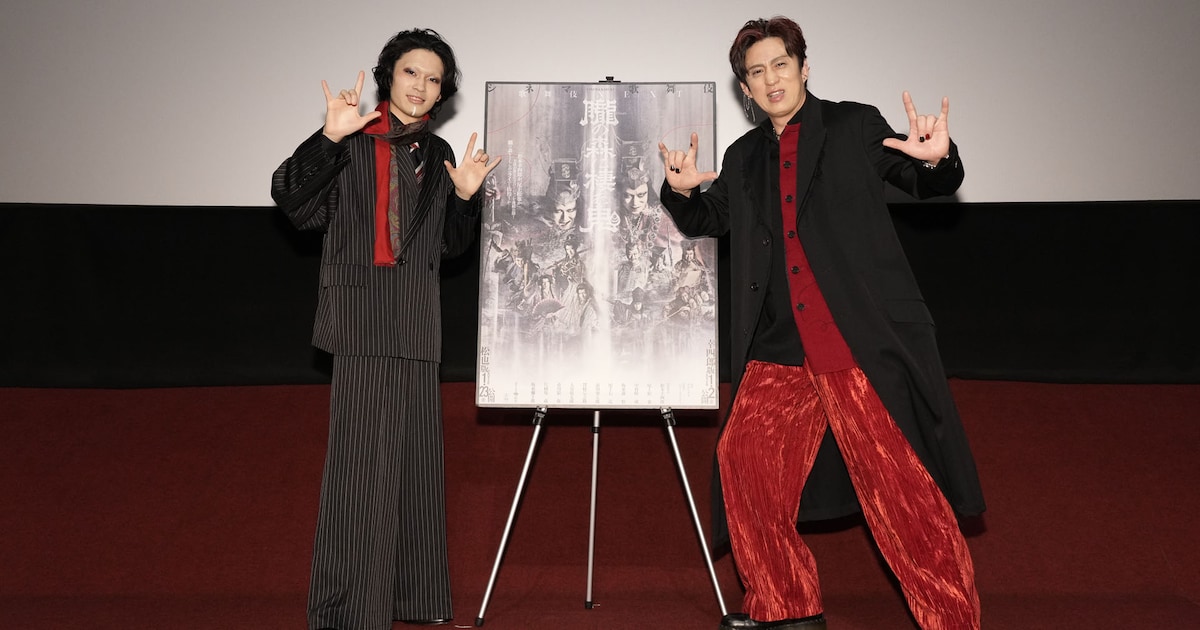
Kabuki Goes Cinematic: A Stage Greeting for "Oboro no Mori ni Sumu Oni"
Have you ever wondered how traditional Japanese arts like Kabuki can come alive on the big screen? On January 10, 2026, fans gathered at Tokyo’s Tōgeki theater for a special 舞台挨拶 (butai aisatsu, stage greeting) to celebrate the cinematic release of シネマ歌舞伎 歌舞伎NEXT 朧の森に棲む鬼 幸四郎版 (Shinema Kabuki Kabuki NEXT Oboro no Mori ni Sumu Oni Kōshirō-ban, Cinema Kabuki: Kabuki NEXT The Demon Dwelling in the Hazy Forest, Kōshirō Version). This event wasn’t just a treat for Kabuki enthusiasts—it’s a fantastic opportunity for Japanese learners like you to dive into a centuries-old art form while picking up authentic language and cultural insights. Let’s explore what happened at this event and how it can enrich your learning journey.
A Historic Screening Event
The event marked the 公開 (koukai, release) of a filmed Kabuki play that premiered in theaters on January 2, 2026. Titled 朧の森に棲む鬼 (Oboro no Mori ni Sumu Oni, The Demon Dwelling in the Hazy Forest), this production stars Matsumoto Kōshirō as the protagonist Rai and Onoe Matsuya as Sadamitsu. A second version, the 松也版 (Matsuya-ban, Matsuya Version), with the roles reversed, is set for 上映 (jouei, screening) on January 23. Both versions are cinematic captures of live performances from Tokyo’s Shinbashi Enbujō theater, bringing the raw energy of Kabuki to audiences far beyond the stage.
During the 30-minute stage greeting after the screening, Matsumoto Kōshirō shared his gratitude for シネマ歌舞伎 (Shinema Kabuki), emphasizing how it preserves the fleeting magic of live theater. “I’m truly thankful that this doesn’t disappear after the curtain falls but remains for the future,” he said. Ichikawa Somegorō added that this format is like a new genre, allowing Kabuki to “be reborn and reach everyone.” Their words show how tradition and innovation can blend beautifully.
One charming highlight was Somegorō’s story about his character Shuten’s 拵え (koshirae, costume preparation). He painted his nails purple with unique green patterns on each finger—a detail most theatergoers might miss. But thanks to the close-up shots in シネマ歌舞伎, you can spot these hidden touches. Kōshirō playfully challenged fans to 足を運ぶ (ashi o hakobu, make the effort to visit) the theater multiple times until they notice Somegorō’s intricate nail art, while also hyping up the upcoming Matsuya version for its fresh take.
The Story of "Oboro no Mori ni Sumu Oni"
This Kabuki play is a unique blend of East and West. Written by Nakajima Kazuki and directed by Inoue Hidenori, 朧の森に棲む鬼 (Oboro no Mori ni Sumu Oni) mixes Shakespearean elements from Richard III and Macbeth with the Japanese legend of 酒呑童子 (Shuten Dōji), a notorious demon from folklore. Originally staged in 2007 by the theater troupe Gekidan☆Shinkansen, it was reimagined as part of 歌舞伎NEXT (Kabuki NEXT), a modern Kabuki initiative, between November 2024 and February 2025. With a stellar cast including Kōshirō, Somegorō, Matsuya, and other renowned actors like Nakamura Tokizō, this production showcases the depth of talent in today’s Kabuki world.
Cultural Context: Kabuki and Cinema
Kabuki, dating back to the early 17th century, is one of Japan’s most iconic traditional arts. Unlike Western theater, it features stylized performances, elaborate costumes, and all-male casts, with actors often mastering specific roles like 女形 (onnagata, female impersonators). If you’ve ever felt the プレッシャー (puresshaa, pressure) of understanding complex cultural traditions, don’t worry—engaging with Kabuki as a learner is a rewarding way to connect with historical language and values. The plays often use classical Japanese, distinct from modern speech, but the themes of loyalty, tragedy, and the supernatural resonate universally.
シネマ歌舞伎 (Shinema Kabuki), launched by Shochiku in 2003, makes this art accessible by filming live performances for cinema screenings. It’s a bridge between the ephemeral nature of theater and the lasting impact of film, capturing details like Somegorō’s nail designs that even front-row attendees might miss. For learners, events like this stage greeting also reveal the deep familial ties in Kabuki. Actors like Matsumoto Kōshirō and Ichikawa Somegorō often hail from prestigious acting families, passing down stage names and skills across generations—a living tradition unfolding right before your eyes.
Learn Japanese from This Article
Ready to pick up some authentic Japanese from this event? Let’s break down key vocabulary, grammar, and expressions that’ll help you sound more natural while deepening your understanding of Japanese culture.
Key Vocabulary
| Japanese | Romaji | Meaning |
|---|---|---|
| 舞台挨拶 | butai aisatsu | stage greeting |
| シネマ歌舞伎 | shinema kabuki | Cinema Kabuki |
| 公開 | koukai | release, public showing |
| 上映 | jouei | screening, showing (of a film) |
| プレッシャー | puresshaa | pressure, stress |
| 拵え | koshirae | costume preparation, getup |
| 足を運ぶ | ashi o hakobu | to go (somewhere), to make the effort to visit |
These words aren’t just tied to Kabuki—they’re useful in everyday conversations about events, movies, or even personal effort. For instance, next time you’re heading to a local event, try saying 足を運ぶ (ashi o hakobu) to express making the trip.
Grammar Spotlight: 〜ていただく and 〜まで
Let’s dive into two grammar points that reflect the polite and nuanced nature of Japanese, often heard in formal settings like a stage greeting.
〜ていただく (~te itadaku): This structure is a humble way to express receiving the favor of someone doing something for you. It’s often used to show gratitude or respect.
- Structure: Verb (te-form) + いただく
- Example 1: 来ていただいて、ありがとうございます。 (Kite itadaite, arigatou gozaimasu.) - Thank you for coming (lit. for receiving the favor of your coming).
- Example 2: 見ていただいて、とても嬉しいです。 (Mite itadaite, totemo ureshii desu.) - I’m very happy that you watched (lit. for receiving the favor of your watching).
- When to use: This is perfect for formal or polite situations, like thanking an audience, as Kōshirō and Somegorō might have done.
〜まで (~made): This means “until” or “to the extent of,” often used to indicate a limit in time, place, or effort.
- Structure: Noun/Verb + まで
- Example 1: ネイルの模様を見つけられるまで通ってください。 (Neiru no moyou o mitsukerareru made kayotte kudasai.) - Please keep coming until you spot the nail patterns.
- Example 2: 夜まで待っていました。 (Yoru made matte imashita.) - I waited until night.
- When to use: It’s great for setting boundaries or challenges, like Kōshirō’s playful request to fans.
Useful Expression
Here’s a phrase inspired by the event that you can use to encourage persistence or effort:
- 見つけられるまで頑張ってください。 (Mitsukerareru made ganbatte kudasai.) - Keep trying until you find it. This mirrors the spirit of Kōshirō’s challenge to spot the nail art and can be adapted to motivate someone in various contexts.
Continue Learning
Want to build on what you’ve learned here? Check out these lessons to deepen your Japanese skills:
- Greetings and Self-Introductions: Authentic Entry Phrases: To understand more about greeting, explore our Greetings and Self-Introductions: Authentic Entry Phrases lesson.
- Wa vs. Ga: Emphasizing Importance in Sentences: Ready to dive deeper? Our lesson on Wa vs. Ga: Emphasizing Importance in Sentences will help you master these concepts.
- Nai Form: Negating Without Auxiliary Words: Want to understand the verb forms used here? Check out Nai Form: Negating Without Auxiliary Words.
Learning Japanese the way it’s taught in Japan means connecting with real events and cultural treasures like Kabuki. Keep exploring, and you’ll find the language opening doors to incredible experiences. これからもよろしくお願いします。 Kore kara mo yoroshiku onegaishimasu.