
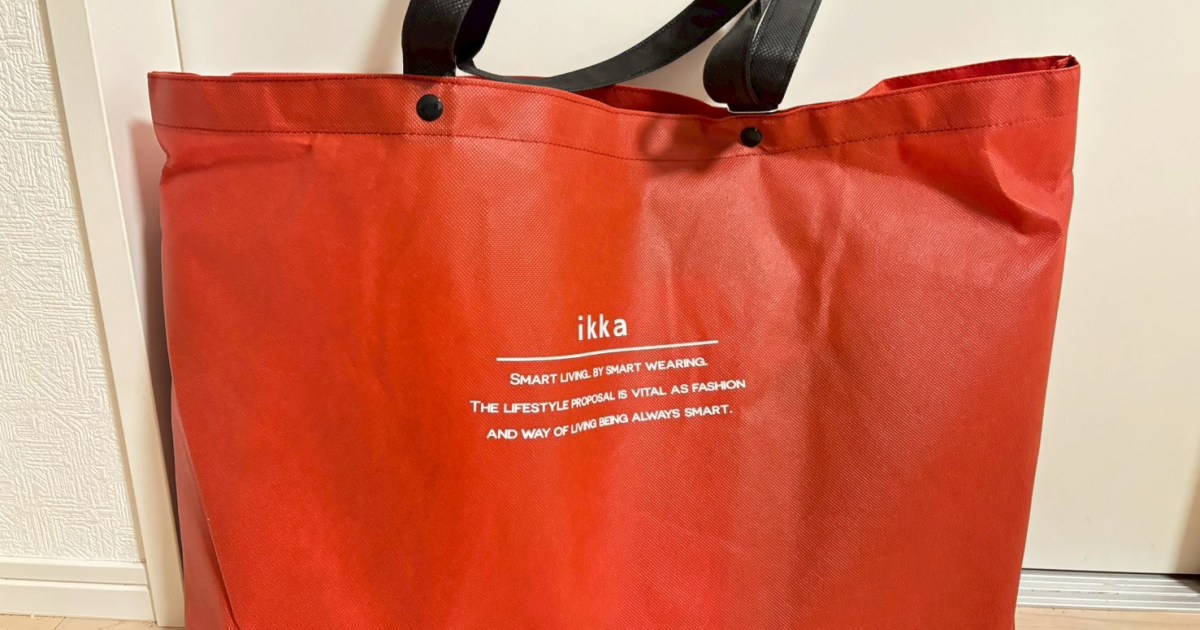
Unboxing the ikka 2026 Fukubukuro: A Japanese New Year Tradition
Imagine stepping into a lively Japanese department store in early January, surrounded by vibrant displays and eager shoppers. Your eyes land on a 福袋 (fukubukuro), a "lucky bag" packed with mystery items at a bargain price. This is the thrill of New Year shopping in Japan, and today, we’re diving into one such bag from the popular brand ikka. Priced at 7,700 yen (about $50 USD), the 2026 winter women’s 福袋 offers a blend of surprise and practicality. Through this unboxing review from Rocket News, you’ll not only peek inside the bag but also uncover a beloved Japanese tradition. Let’s get started!
Inside the ikka 2026 Winter Lucky Bag
Straight from Marui Web Channel’s exclusive collection, this limited-edition 福袋 (fukubukuro) for women caught the reviewer’s attention. As someone who usually sticks to familiar styles, they decided to shake things up with this 7,700-yen mystery set. Inside were six items, with just one customizable piece—a high-neck back-slit pullover in a bold yellow shade. The rest? Pure ランダム (randamu), meaning random, adding to the ワクワク感 (wakuwaku-kan), that flutter of excitement and anticipation.
The haul included a ニット (nitto) vest ensemble paired with a white long-sleeve tee, tapered pants known as テーパードパンツ (tēpādo pantsu), a scarf, and more. The reviewer felt the balance was spot on—enough surprises to keep it fun, but not so wild that it felt like a risky gamble. For someone in their late 30s or early 40s, ikka’s style hit the mark, earning a first impression of “Hey, this isn’t bad at all!” That said, not everything matched their personal 好み (konomi), or taste. Let’s break down the hits and misses.
Highlights and Low Points of the Haul
The standout item was the randomly selected テーパードパンツ (tēpādo pantsu). They fit perfectly, with just the right length, waist, and stretch—almost as if tailored. Though a bit thin for deep winter, the reviewer plans to 着回す (kimawasu), or mix and match, these pants for spring and summer, both at work and casually. On the flip side, the yellow pullover was a letdown. Its shade veered more yellowish-green than expected, clashing with their vision. Still, the soft texture and flattering cut made up for it, even if static cling was a bit うるさすぎる (urusasugiru)—too annoying.
The knit vest ensemble was a mixed bag. While it could look chic with the right styling, the reviewer found it tricky to pull off, predicting they’d mostly wear just the inner tee. Other pieces, like the scarf and a sweatshirt pullover, were safe but versatile—nothing flashy, yet easy to 着回す (kimawasu) in daily outfits. Overall, for 7,700 yen, scoring four thicker garments, practical pants, and a scarf felt like a steal. This 福袋 delivered on refreshing a wardrobe for the New Year without going overboard.
Cultural Context: The Charm of Fukubukuro
If you’ve never heard of a 福袋 (fukubukuro), you’re in for a treat. Translating to “lucky bag” or “mystery bag,” these are discounted bundles of goods sold around New Year’s, often worth far more than their price tag. From fashion brands like ikka to tech shops and even fast-food joints, retailers across Japan use them to clear inventory and draw crowds with the thrill of the unknown. This tradition stretches back to the Edo period (1603–1868), when merchants bundled unsold items as a goodwill gesture for the year ahead.
What makes a 福袋 special is the mix of surprise and trust. You don’t know exactly what’s inside, but there’s an unspoken promise of value, tied to the Japanese spirit of おもてなし (omotenashi), heartfelt hospitality. For many Japanese people, grabbing a 福袋 during the first week of January is a ritual—a way to kick off the year with a sprinkle of luck. Through this ikka unboxing, you’re not just seeing a shopping haul; you’re witnessing a cultural moment that embodies fresh starts and excitement in Japan.
Learn Japanese from This Article
Ready to pick up some authentic Japanese from this New Year tradition? Let’s break down key vocabulary and grammar patterns that popped up in this story. These are words and structures you’d hear in real conversations or see while shopping in Japan.
Key Vocabulary
| Japanese | Romaji | Meaning |
|---|---|---|
| 福袋 | fukubukuro | lucky bag (mystery bag sold at a discount) |
| 着回す | kimawasu | to wear repeatedly, to mix and match (clothes) |
| ワクワク感 | wakuwaku-kan | sense of excitement, anticipation |
| ニット | nitto | knit, knitted clothing |
| ランダム | randamu | random |
| テーパードパンツ | tēpādo pantsu | tapered pants (narrow toward the ankle) |
| 好み | konomi | preference, taste |
Grammar Spotlight: 〜すぎる (Too Much, Excessively)
Let’s zoom in on 〜すぎる (sugiru), a handy pattern meaning “too much” or “excessively.” You attach it to the stem of a verb or adjective to show something is overdone. It often carries a negative nuance, like when something is more than you can handle.
- Structure: Verb stem / Adjective stem (drop い for i-adjectives) + すぎる
- Examples:
- このセーターは静電気がうるさすぎる。(Kono sētā wa seidenki ga urusasugiru.) This sweater has too much static cling (it’s too annoying).
- 食べすぎると体に悪いよ。(Tabesugiru to karada ni warui yo.) Eating too much is bad for your health.
- この色は明るすぎるかもしれない。(Kono iro wa akarusugiru kamoshirenai.) This color might be too bright.
Use 〜すぎる when you want to express excess—like if a 福袋 item is too flashy for your 好み (konomi), or taste. It’s a natural way to vent a little frustration or surprise in conversation.
Grammar Spotlight: 〜ていく (To Go On Doing, To Proceed With)
Next up is 〜ていく (te iku), which means “to go on doing” or “to proceed with” something. It combines the te-form of a verb with いく (iku, to go), adding a sense of continuation or progression over time. It’s great for talking about plans or ongoing actions.
- Structure: Verb (te-form) + いく
- Examples:
- このパンツを春まで着ていくつもりです。(Kono pantsu o haru made kite iku tsumori desu.) I plan to keep wearing these pants until spring.
- 新しいスタイルを試していくのが楽しい。(Atarashii sutairu o tameshite iku no ga tanoshii.) It’s fun to keep trying new styles.
- 福袋の伝統を続けていくのが大事だ。(Fukubukuro no dentō o tsudzukete iku no ga daiji da.) It’s important to carry on the fukubukuro tradition.
You’ll hear 〜ていく often when discussing future intentions or evolving habits, like how you might 着回す (kimawasu) your 福袋 items over the seasons. It adds a dynamic, forward-looking vibe to your speech.
Continue Learning
Want to dive deeper into Japanese grammar? Here are some lessons to help you build on what you’ve learned today:
- Ni, De, and E: Mapping Directions and Locations: Want to learn more about に? Check out our lesson on Ni, De, and E: Mapping Directions and Locations.
- Wa vs. Ga: Emphasizing Importance in Sentences: To understand more about は, explore our Wa vs. Ga: Emphasizing Importance in Sentences lesson.
- Nai Form: Negating Without Auxiliary Words: Want to understand the verb forms used here? Check out Nai Form: Negating Without Auxiliary Words.
Learning Japanese the way it’s taught in Japan means picking up these nuances step by step, just like native speakers do. Keep at it, and you’ll be chatting about 福袋 hauls in no time!
これからもよろしくお願いします。 Kore kara mo yoroshiku onegaishimasu.