
Earthquake in Akita: A Glimpse into Japan's Seismic Reality
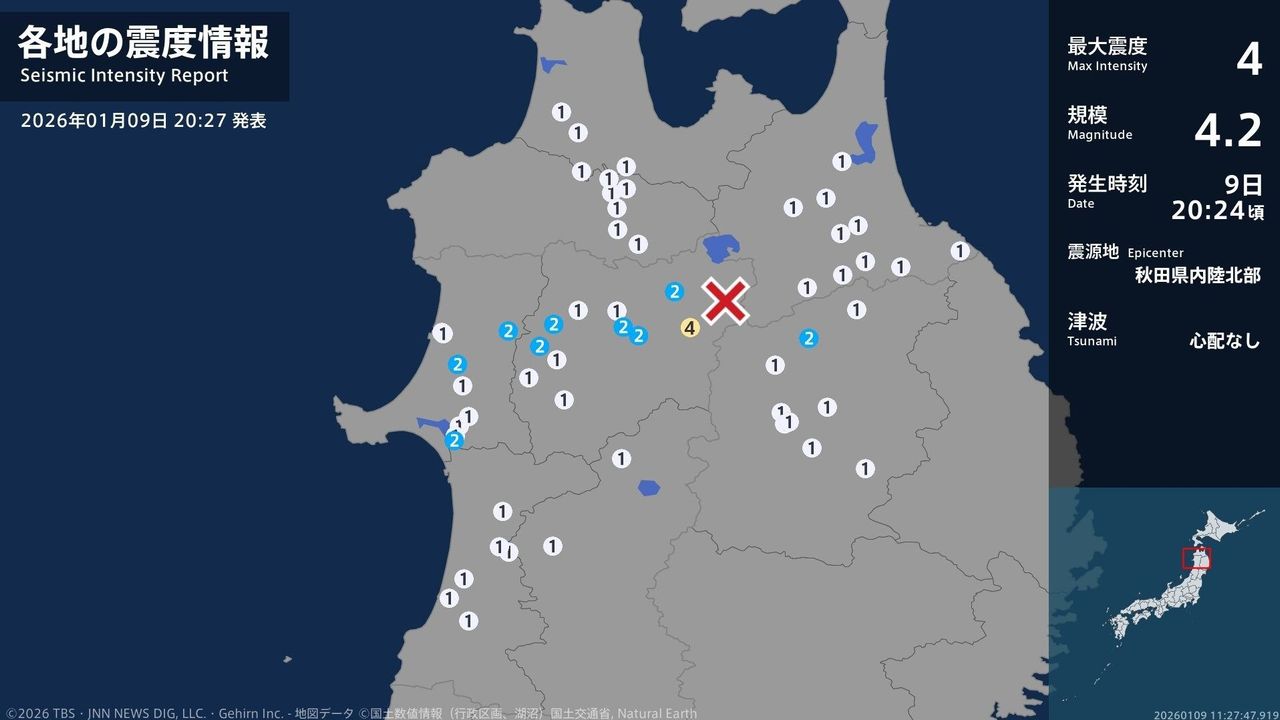
Have you ever wondered how everyday life in Japan adapts to the constant possibility of earthquakes? On the evening of January 9, 2001, at precisely 8:24 PM, a tremor shook 秋田県 (Akita-ken), Akita Prefecture in northern Honshu, offering a perfect moment to dive into this aspect of Japanese life. This event wasn’t just a headline; it’s a window into how nature shapes society and language in Japan. Let’s explore the details of this quake, uncover its cultural significance, and learn some authentic Japanese along the way—the way it’s taught in Japan, not just from textbooks.
The Tremor in Akita Prefecture
At around 8:24 PM—or as the Japanese might say, 8時24分頃 (hachi-ji nijūyon-fun koro), meaning "around 8:24"—a noticeable earthquake struck Akita Prefecture. Registering a maximum intensity of 震度4 (shindo yon)—level 4 on the Japan Meteorological Agency’s seismic scale—this quake was described as やや強い (yaya tsuyoi), or "somewhat strong," by local reports. While it didn’t cause major damage or injuries, it was enough to rattle windows, sway objects, and make people pause. For those in the 地域 (chiiki), or region, such events are a reminder of Japan’s seismic nature, prompting immediate checks for 被害 (higai), meaning damage or harm.
This earthquake was carefully documented through 観測 (kansoku), the process of observation or measurement, by authorities who track seismic activity across the country. Thankfully, no significant issues were reported, but the event underscored the importance of 備え (sonae), or preparation, in a country so accustomed to tremors.
Cultural Context: Earthquakes in Japanese Life
Earthquakes like the one in Akita aren’t just natural phenomena in Japan—they’re part of the cultural fabric. The term 震度 (shindo), or seismic intensity, is something you’ll hear in news reports and daily conversations, reflecting a unique system that measures how shaking is felt at specific locations rather than just the quake’s raw power. Ranging from 0 (imperceptible) to 7 (devastating), a level 4 means most people feel the tremor, and it might even wake someone from sleep. This practical scale shows Japan’s focus on lived experience and safety, with regular drills and public alerts woven into everyday life.
In rural areas like Akita, known for its snowy winters and tight-knit communities, resilience is second nature. An earthquake, even a moderate one, often brings neighbors together to ensure everyone’s safe—a reflection of the collective spirit deeply rooted in Japanese society. For language learners, tuning into such events isn’t just about vocabulary; it’s about understanding how Japanese people frame and respond to nature’s unpredictability through both language and action.
Learn Japanese from This Article
Let’s turn this real-life event into a learning opportunity. Below, you’ll find key vocabulary, grammar patterns, and expressions pulled straight from the context of earthquakes and Japanese news. These are taught the way native speakers learn—through immersion in real situations.
Key Vocabulary
| Japanese | Romaji | Meaning |
|---|---|---|
| 地震 | jishin | earthquake |
| 震度 | shindo | seismic intensity (on the Japanese scale) |
| 観測 | kansoku | observation, measurement |
| やや | yaya | somewhat, slightly |
| 地域 | chiiki | region, area |
| 被害 | higai | damage, harm |
| 備え | sonae | preparation, readiness |
Grammar Spotlight
Here are two useful grammar patterns that often appear in news reports and daily conversations about events like earthquakes. Let’s break them down with examples.
1. 〜を観測する (to observe/measure something)
- Structure: Noun + を + 観測する (kansoku suru)
- Meaning: Used to describe observing or measuring something, often in a scientific or formal context like weather or seismic activity.
- Examples:
- 震度4を観測しました。 (Shindo yon o kansoku shimashita.) - A seismic intensity of 4 was observed.
- この地域で強い揺れを観測した。 (Kono chiiki de tsuyoi yure o kansoku shita.) - Strong shaking was observed in this region.
- When to Use: Perfect for formal or news-style language when discussing data or observations. Note that を marks the object being measured, a key particle in Japanese.
2. 〜頃 (around, approximately for time)
- Structure: Time + 頃 (koro)
- Meaning: Indicates an approximate time, often used for events or schedules.
- Examples:
- 8時頃に地震が起きた。 (Hachi-ji koro ni jishin ga okita.) - The earthquake happened around 8 o’clock.
- 夜9時頃に家に帰る。 (Yoru ku-ji koro ni ie ni kaeru.) - I’ll return home around 9 PM.
- When to Use: Great for casual or formal speech when you’re not pinpointing an exact time. It softens the statement, making it less rigid.
Useful Expression
One phrase you’ll hear often in disaster contexts is tied to readiness: 備えあれば憂いなし (Sonae areba urei nashi), which translates to "If you’re prepared, you have nothing to worry about." It’s a proverb that reflects Japan’s emphasis on preparation, or 備え (sonae), in the face of natural events like earthquakes.
Continue Learning
Ready to build on what you’ve learned here? Dive deeper into Japanese grammar and culture with these lessons:
- O and Wo: Marking Objects Without Prepositions: Ready to dive deeper? Our lesson on O and Wo: Marking Objects Without Prepositions will help you master these concepts.
- Ni, De, and E: Mapping Directions and Locations: To understand more about で, explore our Ni, De, and E: Mapping Directions and Locations lesson.
- Greetings and Self-Introductions: Authentic Entry Phrases: Want to learn more about culture? Check out our lesson on Greetings and Self-Introductions: Authentic Entry Phrases.
As you continue your journey with Japanese, remember that learning from real events like the Akita earthquake connects you to the heart of the language and culture. Keep practicing, and you’ll find yourself understanding not just the words, but the world they come from.
これからもよろしくお願いします。 Kore kara mo yoroshiku onegaishimasu.