
A New Year Miracle: Snagging FamilyMart’s 2026 Happy Bag in Japan
If you’ve ever dreamed of experiencing the little joys of daily life in Japan, here’s a story that’ll pull you right into the heart of a unique New Year tradition. On January 1st, 2026, a small miracle happened at a local FamilyMart: a shopper stumbled upon the coveted コンビニエンスウェア福袋 (konbiniensu uēa fukubukuro), or "Convenience Wear Happy Bag," still in stock despite being 完売 (kanbai, sold out) at countless stores nationwide. Priced at just 1,260 yen, this practical grab bag is a window into Japanese culture—and a perfect chance to learn some authentic Japanese the way it’s spoken in Japan. Let’s dive into this lucky find and unpack the language and traditions behind it.
The Happy Bag Hunt at FamilyMart
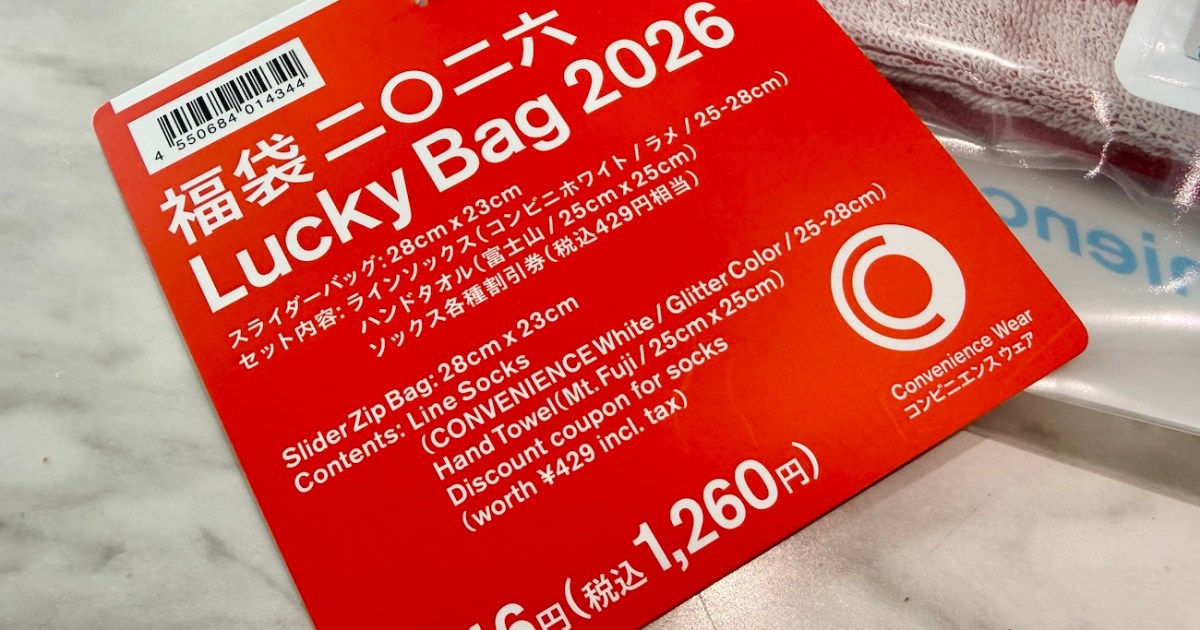
Every January, as part of New Year celebrations, convenience stores like FamilyMart (affectionately called ファミマ (Famima)) release special 福袋 (fukubukuro, lucky bags). These limited-edition mystery bags are packed with discounted items, making them a thrilling tradition for bargain hunters across Japan. The 2026 FamilyMart Convenience Wear Happy Bag, launched at around 13,500 stores on New Year’s Day, dropped its price from 2,000 yen in 2025 to an affordable 1,260 yen. Even with this modest cost, the bags flew off the shelves almost everywhere—except at one lucky shopper’s neighborhood store, where a bit of New Year magic left some 在庫 (zaiko, stock) behind.
What makes this 福袋 stand out is its focus on 普段使い (fudanzukai, everyday use). Unlike some flashy grab bags, FamilyMart’s version centers on コンビニエンスウェア (konbiniensu uēa), their line of functional clothing and accessories. It’s all about practicality, embodying a 堅実 (kenjitsu, steady and reliable) approach that resonates with Japanese shoppers. For the fortunate buyer who snagged one, the contents were a delightful mix of utility and subtle festivity. Let’s take a peek inside.
Unpacking the 2026 Convenience Wear Happy Bag
Opening this year’s Happy Bag revealed a thoughtfully curated selection of items, each reflecting the “convenience” ethos:
- A 割引券 (waribikiken, discount coupon) worth 429 yen for socks, basically a free pair since standard FamilyMart socks cost exactly that.
- A ハンドタオル (hando tauru, hand towel) featuring a Mount Fuji design, a nod to Japanese tradition and the New Year spirit.
- A pair of white line socks with a touch of glitter (ラメ rame), adding a small festive sparkle—though the buyer chuckled that they might not match an older guy’s style, they still felt like a lucky charm.
There’s no gamble with this bag; every item is usable. The Mount Fuji hand towel might not be something you’d pick up on your own, but it’s a handy addition to your home. The socks, glittery or not, are a staple you can never have too many of. And that discount coupon? A smart bonus that lets you personalize part of the value. For just 1,260 yen, the balance of cost and usefulness feels spot on—nothing wasted, everything appreciated.
Cultural Context: The Magic of Fukubukuro
If you’re new to Japanese traditions, 福袋 (fukubukuro) are a cornerstone of New Year celebrations, with roots stretching back to the Edo period. Merchants originally bundled unsold goods to clear 在庫 (zaiko, inventory), combining the kanji for 福 (fuku, luck) and 袋 (bukuro, bag) to symbolize a fresh start with good fortune. Today, these “lucky bags” are a nationwide phenomenon, offered by everyone from luxury department stores to humble convenience chains like FamilyMart. The excitement lies in the mystery—you don’t know exactly what’s inside until you open it, though FamilyMart’s practical spin reduces the risk.
This tradition ties deeply into お正月 (oshōgatsu), Japan’s most significant holiday, a time for renewal, family, and rituals to invite luck. Buying a 福袋, visiting a shrine, or even finding a sold-out item still on the shelf feels like a small blessing to start the year. For language learners, these cultural nuances show how words like 福 (fuku) carry emotional and historical weight beyond a simple translation of “luck.” Understanding the “why” behind these practices makes your Japanese learning journey richer and more authentic.
Learn Japanese from This Article
Let’s turn this heartwarming story into a mini-lesson. Below, you’ll find key vocabulary, grammar patterns, and expressions pulled straight from the context of New Year traditions and convenience store culture. These are words and structures you’d hear in everyday Japan, taught the way native speakers naturally use them.
Essential Vocabulary
| Japanese | Romaji | Meaning |
|---|---|---|
| 福袋 | fukubukuro | lucky bag, mystery grab bag sold at New Year |
| コンビニエンスウェア | konbiniensu uēa | convenience wear (clothing and accessories sold at convenience stores) |
| 完売 | kanbai | sold out |
| 普段使い | fudanzukai | everyday use |
| 堅実 | kenjitsu | steady, practical, reliable |
| 割引券 | waribikiken | discount coupon |
| 在庫 | zaiko | stock, inventory |
Grammar Spotlight: Expressing Surprise and Reflection
Let’s look at two useful grammar patterns that capture the emotions of this Happy Bag discovery. These are conversational structures you’ll hear often in Japan, perfect for expressing surprise or reflecting on a decision.
〜じゃねえか (ja nē ka) - Isn’t it...?, Don’t you see...? This pattern is a casual way to express surprise or realization, often with a sense of “Hey, look at that!” It’s commonly used in spoken Japanese among friends or in informal settings.
- Structure: Verb (plain form) / Noun + じゃねえか
- Examples:
- まだ在庫があるじゃねえか! (Mada zaiko ga aru ja nē ka!) - Hey, there’s still stock, isn’t there?!
- これ、めっちゃお得じゃねえか! (Kore, meccha otoku ja nē ka!) - This is super worth it, don’t you see?!
- Usage: Use this when you’re pointing out something unexpected or exciting, like finding a sold-out 福袋 still on the shelf.
〜かと思った (ka to omotta) - I thought that..., I almost decided to... This pattern reflects on a past thought or assumption, often implying you were close to deciding something but didn’t. It’s great for storytelling or sharing hesitations.
- Structure: Verb (plain form) / Noun + かと思った
- Examples:
- もう完売かと思った。 (Mō kanbai ka to omotta.) - I thought it was already sold out.
- 買うのをやめようかと思った。 (Kau no o yameyou ka to omotta.) - I almost decided to stop myself from buying it.
- Usage: Perfect for moments of doubt or near-misses, like hesitating to check the store for a 福袋 but being glad you did.
Useful Expression
Here’s a bonus phrase you might hear during New Year shopping or celebrations:
- お買い得 (okaidoku) - A great deal, a bargain Example: この福袋、めちゃくちゃお買い得だよ! (Kono fukubukuro, mechakucha olaidoku da yo!) - This lucky bag is such a great deal!
These language nuggets are just the start. Practicing them in context—like imagining yourself hunting for a 福袋—will help them stick, just as Japanese kids learn by living the culture.
Continue Learning
Ready to build on what you’ve learned? Check out these lessons to deepen your understanding of Japanese language and culture:
- Ni, De, and E: Mapping Directions and Locations: Ready to dive deeper? Our lesson on Ni, De, and E: Mapping Directions and Locations will help you master these concepts.
- Wa vs. Ga: Emphasizing Importance in Sentences: Ready to dive deeper? Our lesson on Wa vs. Ga: Emphasizing Importance in Sentences will help you master these concepts.
- Vocabulary Through Kanji Compounds: Lego-Like Word Building: Working on your reading skills? Our Vocabulary Through Kanji Compounds: Lego-Like Word Building lesson is a great next step.
Closing Thoughts
Finding a sold-out 福袋 still on the shelf at FamilyMart feels like a tiny New Year’s miracle, doesn’t it? These small moments of luck and practicality are what make Japanese traditions so endearing—and they’re a fantastic way to learn the language authentically. Keep exploring, keep practicing, and you’ll soon be chatting about お正月 (oshōgatsu) traditions like a local.
これからもよろしくお願いします。 Kore kara mo yoroshiku onegaishimasu.