
January 5th in Japan: Work, Weather, and Seasonal Shifts
As the new year unfolds, have you ever wondered how Japanese people ease back into their routines while staying in tune with nature’s rhythms? On January 5th, Japan marks a unique blend of returning to work, bracing for changing weather, and acknowledging a seasonal milestone. This day offers a perfect window for learners like you to see how everyday life in Japan intertwines with cultural and natural elements. Let’s dive into the significance of 仕事始め (shigoto hajime - the first workday of the year), explore the weather forecasts from 2001, and uncover the meaning behind 小寒 (shōkan - minor cold), a key seasonal term. Along the way, you’ll pick up authentic Japanese expressions and insights straight from Japan.
Back to Work: Shigoto Hajime
January 5th is often the day when many Japanese people return to their offices or workplaces after the New Year holidays. Known as 仕事始め (shigoto hajime), this “first workday of the year” carries a sense of renewal and determination. Unlike in some Western cultures where the return to work might just be “back to the grind,” in Japan, there’s a ceremonial air to it. Companies might hold brief gatherings or speeches to set goals for the year ahead. If you’ve ever dreamed of working in Japan or just chatting with Japanese colleagues, knowing this term can help you connect over shared experiences of starting fresh.
Weather Watch: A Varied Forecast
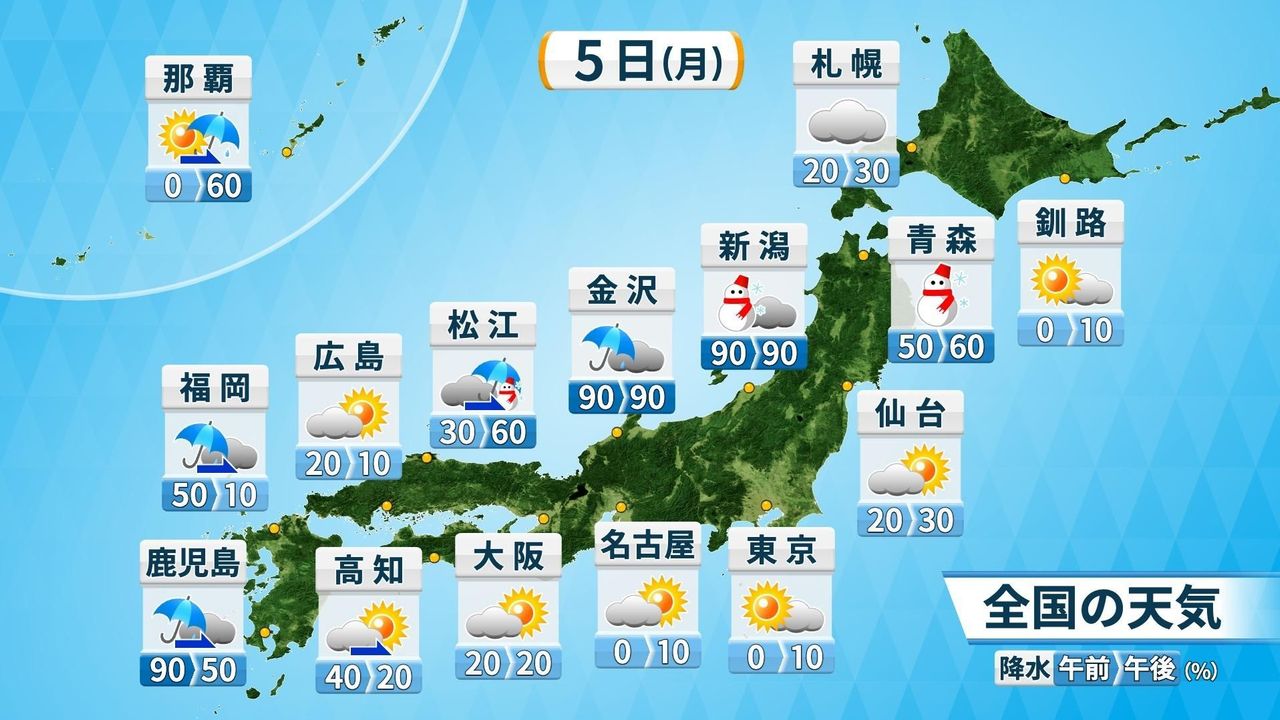
On January 5th, 2001, Japan’s weather forecasts painted a diverse picture across the country. From the Japan Sea side to the Pacific side of western Japan and down to Okinawa, unstable conditions were expected, with the word 天気 (tenki - weather) dominating conversations. In northern regions like Hokuriku and Tohoku, forecasters warned of 大雪 (ōyuki - heavy snowfall) that could be 局地的 (kyokuchiteki - localized, regional), potentially piling up in specific areas. Meanwhile, from Kanto westward, milder temperatures hinted at a softer start to winter. This contrast shows how Japan’s geography shapes its climate, and tuning into such reports can help you practice real-world Japanese while learning how locals discuss 天気 (tenki).
A Seasonal Marker: Shōkan and the Cold Season
Beyond work and weather, January 5th also holds cultural weight as it marks 小寒 (shōkan - minor cold), a term from the traditional Japanese calendar. This day signals the 寒の入り (kan no iri - entry into the cold season), traditionally the start of the year’s harshest winter period. While northern Japan often feels this bitter chill, the milder weather in Kanto and western regions in 2001 didn’t fully align with the seasonal expectation. For learners, grasping 小寒 (shōkan) isn’t just about vocabulary—it’s about seeing how Japanese language and culture reflect a deep connection to nature’s cycles.
Cultural Context: The 24 Solar Terms
If you’re new to Japanese seasonal terms, the concept of 二十四節気 (nijūshisekki - 24 solar terms) might feel unfamiliar, but it’s a cornerstone of how time is perceived in Japan. Originating in ancient China and adopted in Japan long ago, these 24 divisions split the year into segments tied to natural changes—like solstices, equinoxes, and shifts in weather or farming. Terms like 小寒 (shōkan) aren’t just dates on a calendar; they appear in poetry, literature, and even casual chats about the seasons. When you mention these in conversation or notice them in weather reports, you’ll sound more natural and show an appreciation for the Japanese worldview, where nature and time are deeply intertwined.
Learn Japanese from This Article
Ready to turn this slice of Japanese life into a learning opportunity? Below, you’ll find key vocabulary, grammar patterns, and expressions pulled straight from this context. These are taught the way Japanese children learn—through immersion and connection to real-life situations, not just textbook rules.
Key Vocabulary
| Japanese | Romaji | Meaning |
|---|---|---|
| 仕事始め | shigoto hajime | first workday of the year |
| 天気 | tenki | weather |
| 小寒 | shōkan | minor cold (a seasonal term) |
| 寒の入り | kan no iri | entry into the cold season |
| 大雪 | ōyuki | heavy snowfall |
| 局地的 | kyokuchiteki | localized, regional |
Grammar Spotlight: 〜見込み (Expectation/Forecast) and 〜かもしれない (Might/May)
Let’s break down two useful patterns that often pop up in weather forecasts and daily predictions, just like in the January 5th news.
1. 〜見込み (mikomi - expectation, forecast, likelihood) This pattern is used to indicate something is expected or likely based on current information. It’s common in formal contexts like news or reports.
- Structure: Verb (plain form) + 見込み
- Example 1: 大雪になる見込みです。 (Ōyuki ni naru mikomi desu.
- Heavy snowfall is expected.)
- Example 2: 天気が悪くなる見込みがあります。 (Tenki ga waruku naru mikomi ga arimasu.
- The weather is expected to worsen.)
- When to use: Perfect for discussing predictions, like weather or plans, in a polite or neutral tone.
2. 〜かもしれない (Might, May - indicating possibility) This expresses uncertainty or possibility, often used in casual or cautious statements.
- Structure: Verb (plain form) + かもしれない
- Example 1: 大雪が降るかもしれない。 (Ōyuki ga furu kamoshirenai.
- It might snow heavily.)
- Example 2: 天気が良くなるかもしれない。 (Tenki ga yoku naru kamoshirenai.
- The weather might improve.)
- When to use: Great for everyday conversations when you’re not sure about something, from weather to personal plans.
Useful Expression
Here’s a phrase you’ll hear often when discussing weather or seasonal changes:
- 天気予報によると… (Tenki yohō ni yoru to…
- According to the weather forecast…) Use this to introduce weather-related information naturally, as it’s a common way to reference forecasts in Japanese conversations or news.
Continue Learning
Want to build on what you’ve learned here? Check out these lessons from “Japanese from Japan” to deepen your skills:
- Greetings and Self-Introductions: Authentic Entry Phrases: Want to learn more about greeting? Check out our lesson on Greetings and Self-Introductions: Authentic Entry Phrases.
- Wa vs. Ga: Emphasizing Importance in Sentences: Ready to dive deeper? Our lesson on Wa vs. Ga: Emphasizing Importance in Sentences will help you master these concepts.
- Verb Basics: Harnessing the Dictionary Form: Want to understand the verb forms used here? Check out Verb Basics: Harnessing the Dictionary Form.
これからもよろしくお願いします。 Kore kara mo yoroshiku onegaishimasu.