
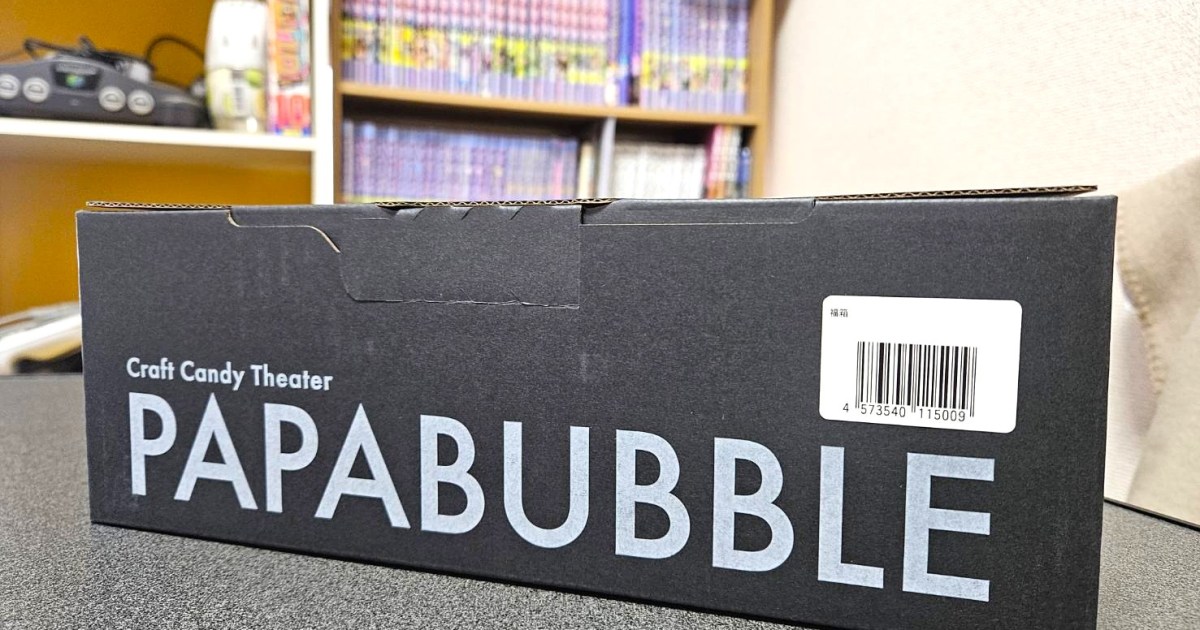
Unbox the Magic of PAPABUBBLE’s 2026 Fukubako: A Sweet Japanese Tradition
Imagine tearing into a mystery package, each item inside a delightful surprise that feels like a little piece of treasure. That’s the joy of a 福箱 (fukubako), a "lucky box" filled with assorted goodies, often sold around the New Year in Japan. This year, the trendy Barcelona-born candy shop PAPABUBBLE has once again grabbed attention with their stylish 2026 福箱, sparking chatter about whether it’s still the amazing deal it was last year. Let’s unbox this sweet offer together and explore what it teaches us about Japanese shopping culture—plus, pick up some authentic Japanese along the way!
What’s Inside PAPABUBBLE’s 2026 Fukubako?
Straight from PAPABUBBLE’s online store, the 2026 福箱 (fukubako) is priced at 4,000 yen (tax included, plus shipping)—a 1,000 yen increase from last year. Even with the price bump, it promises the same chic aesthetic with a bundle of everyday items. When you do the 開封 (kaifu), or "opening," of the box, you’re met with a familiar yet stylish assortment: a bergamot and muscat-scented diffuser, a logo-embroidered hand towel, a sturdy new mesh pouch, a handy multi-case for cosmetics, and a quirky badge-style mirror. On top of that, there’s a クーポン (kūpon), a 500-yen OFF coupon for in-store purchases. While the 中身 (nakami), or "contents," feel a bit like last year’s lineup (except for the mesh pouch), they still carry PAPABUBBLE’s signature flair.
But is it truly お得 (otoku), meaning a "good deal"? Let’s break it down. The individual prices of these 雑貨 (zakka), or "miscellaneous goods," add up as follows: diffuser (3,300 yen), hand towel (1,100 yen), mesh pouch (1,100 yen), multi-case (700 yen), and mirror (400 yen)—a total of 6,100 yen. That’s a savings of 3,100 yen, not quite the steal of last year but still a satisfying bargain. For those intrigued, the online store still has stock, though the items are ランダム (randamu), or "random," so your 福箱 might hold even bigger surprises. Isn’t that exciting, ではないか (dewa nai ka)—don’t you think?
Cultural Context: The Charm of Fukubako and New Year Shopping
If you’ve ever wondered about the deeper meaning behind these mystery boxes, the 福箱 (fukubako)—or its more common cousin, 福袋 (fukubukuro), "lucky bag"—is steeped in Japanese New Year tradition. Typically sold around January 1st by department stores, boutiques, and even candy shops like PAPABUBBLE, these bundles are a way to bring good fortune while clearing out old inventory. The character 福 (fuku) means "luck" or "fortune," embodying the hope that buyers kick off the year with a stroke of good luck by snagging incredible deals.
What’s truly captivating is the element of surprise—you don’t know the exact 中身 (nakami), or "what’s inside," until you open it. This reflects a Japanese love for お楽しみ (otanoshimi), the joy of anticipation. Whether it’s a luxury fashion 福袋 or a quirky box like PAPABUBBLE’s, these bundles show how Japanese consumers celebrate renewal and value through seasonal shopping. And with extras like a クーポン (kūpon), they encourage ongoing loyalty to the brand—a smart move in Japan’s competitive retail world, とのこと (to no koto), or so it is said.
Learn Japanese from This Article
Let’s turn this fun unboxing into a mini Japanese lesson, the way kids in Japan learn their language—through real-life context and practical use. Here are some key words and grammar points straight from the world of 福箱 (fukubako) shopping.
Key Vocabulary
| Japanese | Romaji | Meaning |
|---|---|---|
| 福箱 | fukubako | lucky box, mystery box |
| お得 | otoku | good deal, profitable, worthwhile |
| 開封 | kaifu | opening (a package, seal, etc.) |
| 中身 | nakami | contents, what’s inside |
| 雑貨 | zakka | miscellaneous goods, small household items |
| クーポン | kūpon | coupon |
| ランダム | randamu | random |
Grammar Spotlight: 〜ではないか (Isn’t it...?, Don’t you think...?)
This pattern is used to softly ask for agreement or to express a rhetorical question, often with a sense of wonder or emphasis. It’s a conversational way to engage someone, much like saying “don’t you think?” in English.
- Structure: [Statement] + ではないか (dewa nai ka / ja nai ka in casual speech)
- Examples:
- この福箱はお得ではないか。(Kono fukubako wa otoku dewa nai ka.) - Isn’t this lucky box a great deal?
- 開封するのが楽しみではないか。(Kaifu suru no ga tanoshimi dewa nai ka.) - Isn’t opening it exciting?
- 日本のお正月の習慣は面白いではないか。(Nihon no Oshōgatsu no shūkan wa omoshiroi dewa nai ka.) - Isn’t the Japanese New Year tradition interesting?
Use this when chatting with friends or expressing your thoughts in a friendly, engaging way. It’s a natural phrase you’ll hear often in casual Japanese conversations.
Grammar Spotlight: 〜とのこと (It is said that..., According to...)
This phrase is used to report something you’ve heard or read, often adding a sense of formality or distance from the speaker. It’s like saying “according to” or “it is said that” in English.
- Structure: [Statement] + とのこと (to no koto)
- Examples:
- この福箱は去年より高いとのこと。(Kono fukubako wa kyonen yori takai to no koto.) - It is said that this lucky box is more expensive than last year.
- 中身はランダムだとのこと。(Nakami wa randamu da to no koto.) - According to reports, the contents are random.
- 新年のお買い物で福が来るとのこと。(Shin’nen no okaimono de fuku ga kuru to no koto.) - It is said that shopping in the New Year brings luck.
This is perfect for relaying information from a source, like news or a store announcement, and it’s a common expression in both written and spoken Japanese.
Continue Learning
Want to dive deeper into authentic Japanese? Check out these lessons to build on what you’ve learned today:
- Greetings and Self-Introductions: Authentic Entry Phrases: Curious about the Japanese used here? Our Greetings and Self-Introductions: Authentic Entry Phrases lesson covers this in depth.
- Wa vs. Ga: Emphasizing Importance in Sentences: Want to learn more about は? Check out our lesson on Wa vs. Ga: Emphasizing Importance in Sentences.
Closing
Unboxing a 福箱 (fukubako) isn’t just about the goodies inside—it’s a window into Japanese culture, language, and the joy of surprises. Whether you’re tempted to grab PAPABUBBLE’s 2026 box or just want to soak up the New Year spirit, you’ve picked up some real Japanese to use along the way. Keep exploring with us, and let’s uncover more treasures of the language together!
これからもよろしくお願いします。 Kore kara mo yoroshiku onegaishimasu.