
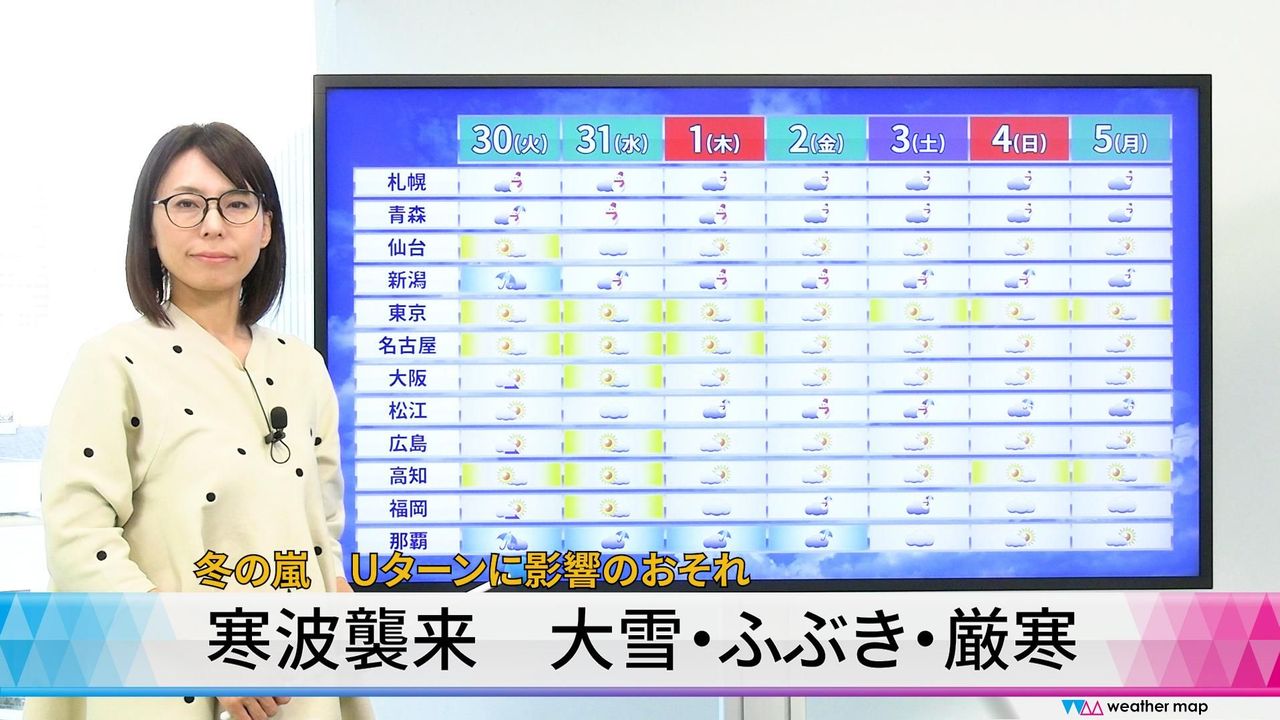
Japan Braces for a Brutal Winter Chill: Learn Authentic Japanese from the News
As the year winds down, have you ever wondered how seasonal changes shape life in Japan? Right now, the country is preparing for a powerful cold snap that promises to test its resilience over the New Year period. This isn’t just a weather update—it’s a chance to dive into authentic Japanese language and culture, straight from the headlines. Reported by Yahoo Japan on December 29, 2001, this icy forecast offers a unique window into how Japanese people talk about weather, travel, and seasonal traditions. Let’s explore the news and uncover some practical language lessons along the way!
A Frigid Forecast for the New Year
Japan is gearing up for an extended wave of 寒気 (kanki), or cold air, that’s expected to linger across the nation. According to the report, this isn’t a fleeting chill—experts warn that the cold will 居座る (isawaru), meaning it will stay for a long time, marking the first prolonged freeze of the winter. Two major cold peaks are predicted during the New Year period, with the Japan Sea side facing potential blizzard conditions and 大雪 (ooyuki), or heavy snow, severe enough to prompt 警報 (keihou), which means warnings or alerts.
This harsh weather coincides with the Uターン (yū-tān), the mass return of travelers after holiday visits—a term borrowed from English “U-turn” but uniquely Japanese in this context. With 冬の嵐 (fuyu no arashi), or winter storms, looming, authorities are urging everyone to stay updated on forecasts to avoid travel disruptions. For you as a learner, this news isn’t just about meteorology; it’s a real-life example of how Japanese language reflects the challenges and rhythms of daily life.
Cultural Context: Winter and New Year in Japan
Winter in Japan is more than just cold weather—it’s a season steeped in cultural significance, especially around お正月 (Oshōgatsu), the New Year celebration. This is a time for family reunions, shrine visits, and reflection, but it’s also a logistical challenge with events like the Uターン (yū-tān) rush. The overlap of severe weather with peak travel highlights Japan’s deep connection to nature, where preparation and adaptability are essential.
Regions along the Japan Sea, often called 雪国 (yukiguni), or “snow country,” face some of the heaviest snowfall in the world. This harsh climate has shaped everything from local architecture to literature—think of Yasunari Kawabata’s famous novel Yukiguni, which captures the isolating beauty of these snowy landscapes. Understanding terms like 雪国 (yukiguni) gives you insight into how Japanese people relate to their environment, making your language learning journey richer and more meaningful.
Learn Japanese from This Article
Ready to turn this news into a learning opportunity? Here, we’ll break down key vocabulary, grammar patterns, and expressions used in weather reports and seasonal discussions. These are words and structures you’ll hear in real Japanese conversations, taught the way native speakers learn them.
Key Vocabulary
| Japanese | Romaji | Meaning |
|---|---|---|
| 寒気 | kanki | cold air, chill |
| 居座る | isawaru | to stay long, to linger |
| 警報 | keihou | warning, alert |
| 大雪 | ooyuki | heavy snow |
| Uターン | yū-tān | U-turn, return rush (after holidays) |
| 冬の嵐 | fuyu no arashi | winter storm |
| 雪国 | yukiguni | snow country |
These words aren’t just useful for weather talk—they reflect how Japanese people describe challenges and environments, giving you a deeper connection to the culture.
Grammar Spotlight
Let’s focus on two grammar patterns often used in forecasts and news reports, helping you sound natural when discussing possibilities or expectations.
〜可能性があります (kanōsei ga arimasu) - there is a possibility of ~ This structure is used to express likelihood or potential, often in formal or objective contexts like weather reports.
- Structure: [Event/Condition] + 可能性があります
- Example 1: 大雪の可能性があります。 (Ooyuki no kanōsei ga arimasu.) - There is a possibility of heavy snow.
- Example 2: 冬の嵐が来る可能性があります。 (Fuyu no arashi ga kuru kanōsei ga arimasu.) - There is a possibility that a winter storm will come.
- When to use: Perfect for discussing uncertain future events, especially in news or planning contexts.
〜そうです (sō desu) - it seems that ~, it is expected that ~ This pattern conveys information you’ve heard or learned, often used for predictions or observations.
- Structure: [Verb/Adjective stem] + そうです
- Example 1: 寒気が居座るそうです。 (Kanki ga isawaru sō desu.) - It seems that the cold air will linger.
- Example 2: 警報が出るそうです。 (Keihou ga deru sō desu.) - It is expected that a warning will be issued.
- When to use: Great for relaying information or forecasts, showing you’re reporting something rather than stating a personal opinion.
Useful Expressions
Beyond grammar, here’s a quick phrase you’ll hear often in weather-related contexts:
- 天気予報をチェックしてください。 (Tenki yohou o chekku shite kudasai.) - Please check the weather forecast. This polite request is a practical way to remind someone to stay informed, especially during unpredictable seasons like winter.
Continue Learning
Want to build on what you’ve learned here? Check out these lessons to deepen your understanding of Japanese grammar and expressions:
- Time and Dates: Tense-Free Expressions: Ready to dive deeper? Our lesson on Time and Dates: Tense-Free Expressions will help you master these concepts.
- Wa vs. Ga: Emphasizing Importance in Sentences: Curious about the Japanese used here? Our Wa vs. Ga: Emphasizing Importance in Sentences lesson covers this in depth.
- Ni, De, and E: Mapping Directions and Locations: Want to learn more about に? Check out our lesson on Ni, De, and E: Mapping Directions and Locations.
Learning Japanese isn’t just about words—it’s about connecting with the culture and context behind them. Keep exploring with us, and you’ll find yourself speaking and thinking like a native in no time!
これからもよろしくお願いします。 Kore kara mo yoroshiku onegaishimasu.