
A Sweet Reunion: Rediscovering Japan's Dessert Paradise After 10 Years
If you’ve ever dreamed of diving into a world of endless sweets, Japan’s got a treat for you. Imagine walking into a dessert wonderland where cakes, pastries, and more are yours for the taking—all at a price that won’t break the bank. That’s exactly what a reporter from Rocket News experienced when they revisited スイーツパラダイス (Suiitsu Paradaisu), a beloved all-you-can-eat dessert chain in Japan, after nearly a decade away. Their story isn’t just about sugary indulgence; it’s a glimpse into everyday Japanese life and a reminder of why authentic experiences like this are a fantastic way to learn the language and culture. Let’s dig into this sweet reunion and uncover some linguistic gems along the way!
Stepping Back into Sweet Memories
Walking into スイーツパラダイス 町田モディ店 (Suiitsu Paradaisu Machida Modi-ten) in Machida, Tokyo, the reporter was instantly flooded with 懐かしい (natsukashii), or nostalgic, feelings. As a student, they often visited this dessert buffet chain when a 70-minute course was a 破格 (hakaku), or unbelievably cheap, 1,500 yen (tax included). Today, while there’s been a slight 値上げ (neage), or price increase, to 1,690 yen (1,890 yen on weekends), it still feels リーズナブル (riizunaburu), or reasonable, given rising costs everywhere. But the big question remained: had the quality kept pace with the price?
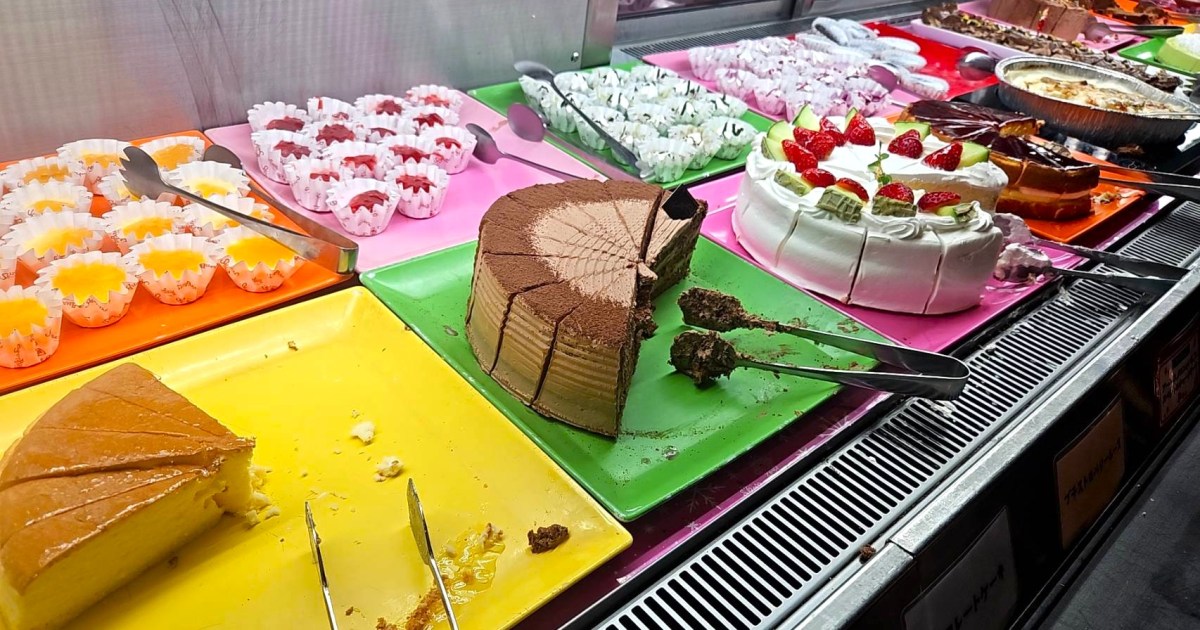
The answer came with the first bite. Though the variety of whole cakes seemed a bit smaller than ten years ago, the 陳列 (chinretsu), or display, of stylish, cute desserts was still dazzling. A luxurious melon shortcake looked like it belonged in a high-end shop, while the sponge cakes were light with perfectly balanced cream. A bitter chocolate cake stood out with its sophisticated flavor, proving that スイーツパラダイス has only gotten better over time.
Beyond the Sweets: A Balanced Buffet
It’s not just about desserts at スイーツパラダイス. They also offer savory dishes to balance the sugar rush. The reporter tried the スイパラ特製カレー (Suipara Tokusei Karee), a special curry with white cabbage and tuna that packed a spicy punch—perfect for cleansing the palate. A hearty bowl of 豚汁 (tonjiru), or pork miso soup, paired surprisingly well with cake, while simple 塩むすび (shio musubi), salted rice balls, came steaming hot with pickles. Freshly cooked pasta and unlimited popcorn rounded out the menu, showing this 食べ放題 (tabehoudai), or all-you-can-eat, buffet caters to every craving.
Breaking the Solo Dining Barrier
One worry the reporter had was standing out as a solo diner. スイーツパラダイス often draws groups of students and women, which can make solo visits feel a bit awkward, especially for someone outside that demographic. The bustling crowd on the day of their visit didn’t help. But to their surprise, the restaurant offered semi-private seating areas away from the main buzz, creating a great 居心地 (igokochi), or sense of comfort. Many solo diners—men included—enjoyed their meals in peace, showing that whether you’re with friends or on your own, this dessert paradise welcomes everyone.
Cultural Context: The All-You-Can-Eat Trend in Japan
If you’re new to Japanese dining culture, places like スイーツパラダイス are a window into the popular trend of 食べ放題 (tabehoudai), or all-you-can-eat buffets. These spots, especially loved by younger crowds, offer a fixed price for a set time limit, encouraging diners to stack their plates high. Unlike some Western buffets that might prioritize quantity, Japanese chains often focus on variety and presentation, even at budget-friendly prices. Group dining is also a big part of social norms in Japan, which can make solo outings feel intimidating. However, the solo-friendly spaces at スイーツパラダイス reflect how modern establishments are adapting to diverse needs, mirroring a subtle shift in attitudes toward individual lifestyles.
Learn Japanese from This Article
Ready to sweeten your Japanese skills? Let’s break down some key vocabulary, grammar, and expressions from this dessert-filled adventure. These are words and patterns you’ll hear in everyday conversations across Japan, taught the way native speakers learn them—through context and real-life use.
Key Vocabulary
| Japanese | Romaji | Meaning |
|---|---|---|
| リーズナブル | riizunaburu | reasonable (price), affordable |
| 食べ放題 | tabehoudai | all-you-can-eat |
| 破格 | hakaku | unbelievably cheap, bargain |
| 値上げ | neage | price increase |
| 懐かしい | natsukashii | nostalgic, dear (memory) |
| 陳列 | chinretsu | display, arrangement (of goods) |
| 居心地 | igokochi | comfort (of a place), feeling at ease |
Grammar Spotlight: 〜気もする and 〜ちゃう
Let’s look at two useful grammar patterns that capture subtle emotions and casual vibes, just like you’d hear in a Japanese conversation about a place like スイーツパラダイス.
〜気もする (ki mo suru) - Feels like, seems a little
This pattern expresses an uncertain impression or a feeling you’re not entirely sure about. It’s often used when reflecting on something with a hint of hesitation.
- Structure: Verb (plain form) / Adjective (stem form) + 気もする (ki mo suru)
- Example 1: 昔より種類が少ない気もする。 (Mukashi yori shurui ga sukunai ki mo suru.) - It feels like there are fewer varieties than before.
- Example 2: ちょっと高い気もするけど、質がいい。 (Chotto takai ki mo suru kedo, shitsu ga ii.) - It seems a little expensive, but the quality is good.
- When to use: Perfect for sharing tentative thoughts, like when you’re not sure if prices have gone up or if a place has changed over time.
〜ちゃう (chau) - To do something (casual, often unintended or completed)
This casual contraction of 〜てしまう (te shimau) often implies completing something or doing it unintentionally, with a conversational tone.
- Structure: Verb (te-form) + ちゃう (chau)
- Example 1: ケーキを食べ過ぎちゃった。 (Keeki o tabesugi chatta.) - I ended up eating too much cake.
- Example 2: 予約しないで行っちゃった。 (Yoyaku shinai de icchatta.) - I went without making a reservation.
- When to use: Great for casual chats with friends about things you did (maybe by mistake) or finished doing, like overindulging at a buffet.
Useful Expression
Here’s a bonus phrase you might hear or use when reflecting on a nostalgic experience like the reporter’s:
- 何で今まで来なかったんだろう。 (Nande ima made konakatta n darou.) - Why didn’t I come here until now? This expression combines curiosity and mild regret, a natural way to express feelings about rediscovering something amazing.
Continue Learning
Want to dive deeper into Japanese grammar and expressions? Check out these lessons to build on what you’ve learned today:
- Ni, De, and E: Mapping Directions and Locations: Want to learn more about に? Check out our lesson on Ni, De, and E: Mapping Directions and Locations.
- Wa vs. Ga: Emphasizing Importance in Sentences: Curious about the Japanese used here? Our Wa vs. Ga: Emphasizing Importance in Sentences lesson covers this in depth.
- Time and Dates: Tense-Free Expressions: Ready to dive deeper? Our lesson on Time and Dates: Tense-Free Expressions will help you master these concepts.
Learning Japanese the way it’s taught in Japan—through real contexts like a dessert buffet adventure—makes the journey so much sweeter. Keep exploring with us, and let’s uncover more of the language and culture together!
これからもよろしくお願いします。 Kore kara mo yoroshiku onegaishimasu.