
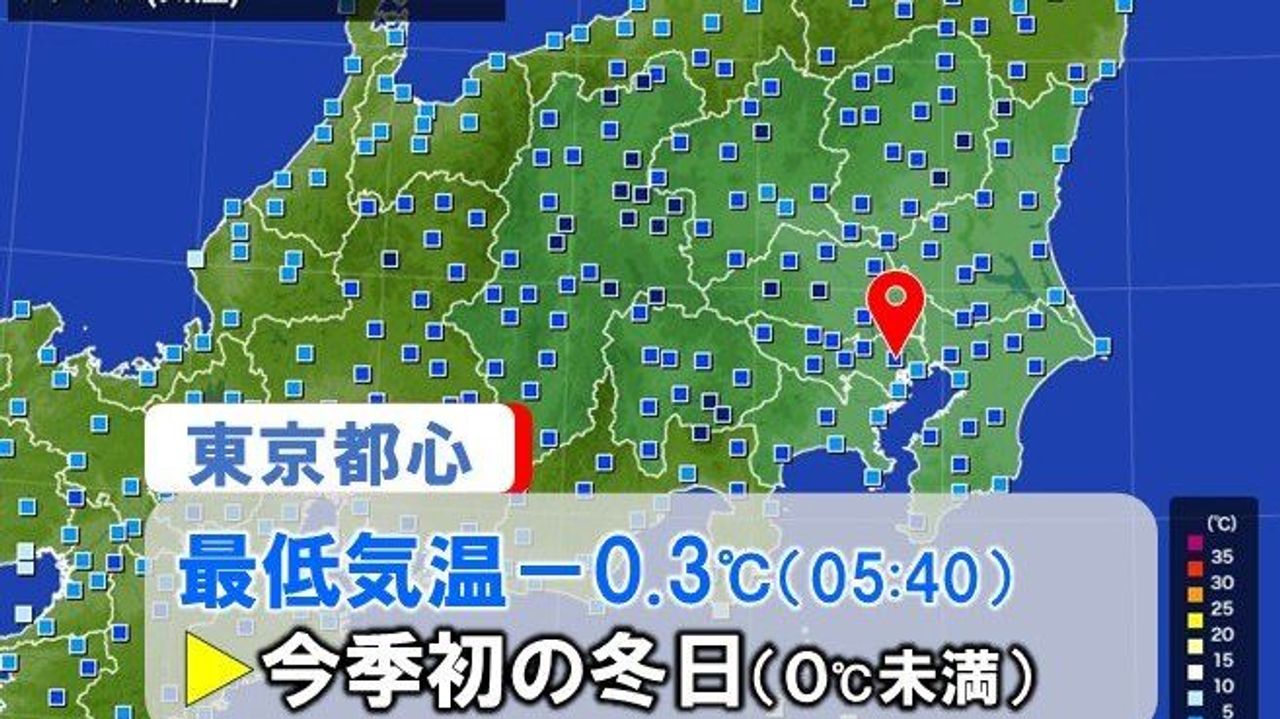
Tokyo’s First Freezing Day: A Winter Surprise in the Capital
Imagine waking up in the heart of Tokyo, the city buzzing as always, only to find the air biting with a rare chill. On December 28th, at precisely 5:30 AM, the capital recorded a temperature below 0°C, marking its first 冬日 (fuyubi)—a winter day with sub-zero lows—of the season. If you’ve ever wondered how Japanese winters unfold even in urban giants like Tokyo, this event offers a perfect glimpse into both the climate and the language that describes it. Let’s dive into this chilly news and uncover some authentic Japanese along the way!
A Rare December Freeze in Tokyo
The arrival of a 冬日 (fuyubi) in late December isn’t just a weather report—it’s a small shock to Tokyoites accustomed to milder winters in the city. According to Yahoo! Japan, this is the first time since December 24, 2022, that the 気温 (kion, temperature) has dipped below freezing in the capital during this month, a gap of three years. While northern Japan often sees such cold, experiencing it in Tokyo’s urban sprawl feels like winter’s quiet but firm announcement. The 観測 (kansoku, observation) of this event reminds us how unpredictable nature can be, even amidst the city’s relentless pace.
Cultural Context: Winter in Japanese Life and Language
In Japan, a term like 冬日 (fuyubi) carries more than just a scientific definition. It stirs memories of frosty mornings, heavy coats, and the rush to stay warm on the way to school or work. Unlike English, where we might casually say “it’s freezing,” Japanese has precise words to capture seasonal shifts, reflecting a deep cultural connection to nature. This linguistic nuance is part of why learning Japanese the way it’s taught in Japan—focusing on context and feeling—helps you understand not just the “what” but the “why” behind the language. A 冬日 isn’t just cold; it’s a moment in time, a shared experience.
Learn Japanese from This Article
Ready to pick up some authentic Japanese from this wintery news? Here, we’ve gathered key vocabulary and grammar patterns that’ll help you talk about weather and seasonal events like a native. Let’s break it down!
Key Vocabulary
| Japanese | Romaji | Meaning |
|---|---|---|
| 冬日 | fuyubi | winter day (below 0°C) |
| 気温 | kion | temperature (of the air) |
| 観測 | kansoku | observation, measurement |
| 下回る | shitamawaru | to fall below, to be less than |
| 今季 | konki | this season |
| 初 | hatsu | first (of something) |
These words are incredibly useful when discussing weather or seasonal changes. For instance, you might hear 今季初の冬日 (konki hatsu no fuyubi), meaning “the first winter day of this season,” in news reports like this one.
Grammar Spotlight
Let’s focus on two grammar patterns that pop up in weather discussions and historical comparisons, both straight from how Japanese is taught in schools across Japan.
1. 〜を下回る (~o shitamawaru): To Fall Below
This structure is used to indicate something falling below a certain value or standard, often with numbers like temperature or statistics.
- Structure: [Value] + を + 下回る
- Examples:
- 気温が0度を下回った。(Kion ga reido o shitamawatta.) - The temperature fell below 0 degrees.
- 売り上げが目標を下回る。(Uriage ga mokuhyou o shitamawaru.) - Sales fell below the target.
Use this when describing measurements or expectations not being met. It’s formal enough for news but common in everyday conversation too.
2. 〜以来 (~irai): Since (a Specific Time or Event)
This pattern indicates the time or event after which something has or hasn’t happened, often used for historical context.
- Structure: [Time/Event] + 以来
- Examples:
- 2022年以来の冬日です。(Nisen nijuuni nen irai no fuyubi desu.) - It’s the first winter day since 2022.
- 卒業以来、会っていません。(Sotsugyou irai, atte imasen.) - I haven’t met them since graduation.
This is perfect for talking about gaps in time or marking significant moments, just like in the news about Tokyo’s freeze.
Useful Expression
Here’s a bonus phrase you’ll hear often in weather reports or seasonal chats: 今季初 (konki hatsu), meaning “the first of this season.” Combine it with other words like:
- 今季初の雪 (konki hatsu no yuki) - The first snow of this season.
- 今季初の勝利 (konki hatsu no shouri) - The first victory of this season.
It’s a handy way to sound natural when discussing seasonal “firsts” in Japan.
Continue Learning
Want to dig deeper into the Japanese language used in contexts like this? Check out these lessons to build your skills:
- Wa vs. Ga: Emphasizing Importance in Sentences: Curious about the Japanese used here? Our Wa vs. Ga: Emphasizing Importance in Sentences lesson covers this in depth.
- Ni, De, and E: Mapping Directions and Locations: Ready to dive deeper? Our lesson on Ni, De, and E: Mapping Directions and Locations will help you master these concepts.
- O and Wo: Marking Objects Without Prepositions: Want to learn more about を? Check out our lesson on O and Wo: Marking Objects Without Prepositions.
Learning Japanese as it’s taught in Japan means connecting language to real moments like a freezing Tokyo morning. Keep practicing, and you’ll soon describe your own winter days with ease!
これからもよろしくお願いします。 Kore kara mo yoroshiku onegaishimasu.