
Awaken Your Potential at SPONOBA: Japan’s Ultimate Baseball Haven
Imagine stepping into a place where cutting-edge technology meets heartfelt inclusivity—a spot where Major League Baseball pros train alongside complete novices like you or me. That’s the vibe at SPONOBA (Suponoba), a revolutionary baseball training facility in Tokyo that opened its doors in December 2025. I stumbled upon a fascinating story from Rocket News about a 45-year-old man’s transformative experience at this venue, and it’s not just about hitting a ball. It’s a window into Japanese innovation, personal growth, and a culture that values progress at any age. Let’s dive into what makes SPONOBA so special and pick up some authentic Japanese along the way!
A Baseball Paradise for Everyone
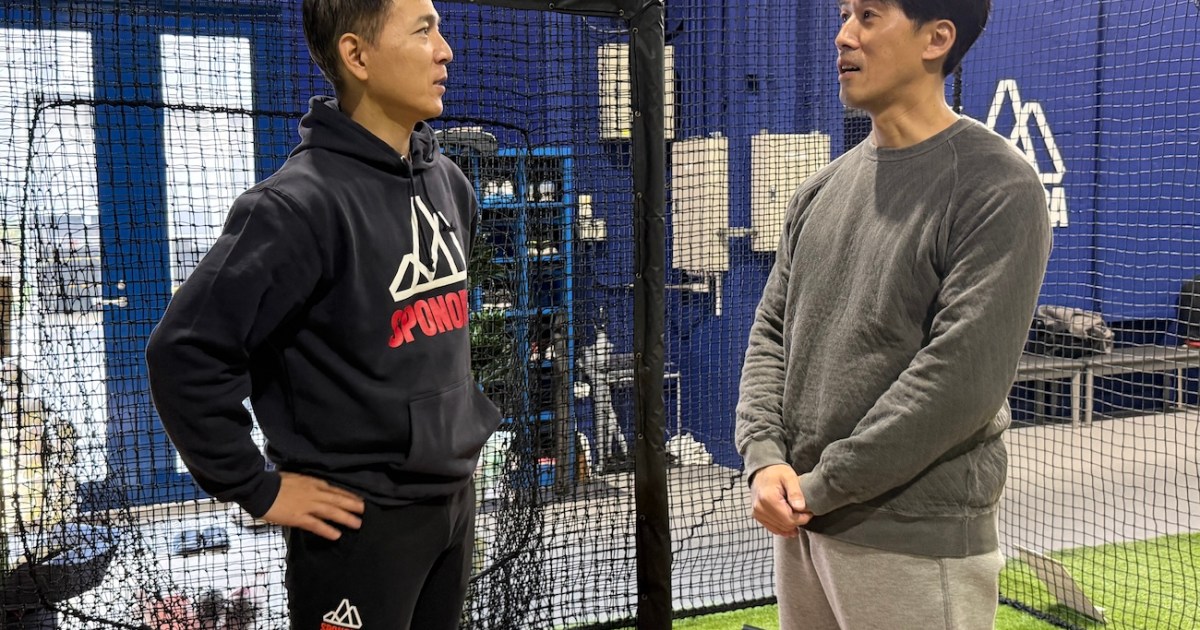
Nestled just a 12-minute walk from Kinshicho and Oshiage stations in Tokyo’s Sumida Ward, SPONOBA (Suponoba) isn’t your typical batting cage. This 施設 (shisetsu - facility) is packed with state-of-the-art tech—think machines that measure your hit speed, angle, and trajectory in real-time, using equipment trusted by pros worldwide. Walking in, you’re surrounded by walls covered in autographs from top athletes, proof of its elite status. Yet, the atmosphere is anything but intimidating. In one lane, international prospects train with intense focus, while next door, elementary school kids swing away with pure joy. It’s a space where everyone belongs, no matter your skill or age.
The Rocket News story follows a 45-year-old man who felt 場違い (bachigai - out of place) at first, worried he’d stick out among seasoned players. But his 体験 (taiken - experience) at SPONOBA proved otherwise. He describes an 覚醒 (kakusei - awakening), a sudden burst of hidden ポテンシャル (potensharu - potential) as he discovered skills he never knew he had. This isn’t just a training ground; it’s a place where limits fade away, embodying Japan’s belief in lifelong learning.
The Kimura Method: Precision Meets Personalization
At the core of SPONOBA is Masahiro Kimura, a legendary coach whose 指導 (shidō - guidance) has shaped over 3,300 athletes, including Major Leaguers and Japan’s WBC national team. His “Power Position” method is all about finding your unique way to maximize strength. Using advanced data analysis and motion checks during トレーニング (torēningu - training), Kimura helps you uncover your personal style. For our 45-year-old hero, this meant learning he’s a “C-type” batter, with a swing resembling pro player Kensuke Kondo.
Kimura’s approach isn’t about tough love; his gentle, almost doctor-like coaching focuses on tiny adjustments—grip, timing, even knee positioning for pitching. After just a few tailored tips, the man felt a surge of power with every swing. It’s a perfect example of Japanese training philosophy: precision and individuality over raw strength. As the man put it, the coaching felt 素晴らしいらしい (subarashii rashii - seems amazing), a word you’ll hear often when people describe something impressive in Japan.
Tradition Meets Tech: The Tatami Room
One of SPONOBA’s most unique spaces is the 畳の間 (tatami no ma - tatami-mat room), inspired by baseball legend Sadaharu Oh. Oh mastered his iconic “one-legged stance” through intense training on tatami mats under coach Hiroshi Arakawa. This room, marked with the kanji 氣 (ki - spirit or energy), reconnects athletes to their body’s foundation, starting from the soles of their feet. It’s a striking mix of modern data-driven methods and traditional Japanese mindfulness, showing how deeply history and innovation intertwine in Japan.
A Universal Lesson in Growth
What hits home in this story is the idea that growth knows no age limit. The joy of 上達 (joutatsu - improvement) shines through, whether you’re swinging a bat or throwing a pitch. The protagonist wishes he’d discovered his unique strengths 30 years ago, but awakening at 45 felt just as sweet. Even a coach at SPONOBA shared how mismatched training held him back in his youth, emphasizing 自己理解 (jiko rikai - self-understanding)—a concept rooted in Japanese thought. It’s a reminder that knowing yourself can unlock potential, no matter when you start.
Cultural Context: Baseball and Harmony in Japan
If you’re new to Japanese culture, you might think baseball is purely American, but in Japan, 野球 (yakyuu - baseball) is a national passion with roots stretching back to the late 19th century. Events like the high school tournament 甲子園 (Koushien) are cultural touchstones, symbolizing youth, grit, and teamwork. SPONOBA channels this love for the sport, but its welcoming nature reflects another core value: 和 (wa - harmony). Unlike some exclusive facilities elsewhere, SPONOBA opens its doors to all, from kids to middle-aged beginners. The tatami no ma also showcases Japan’s knack for blending tradition with progress—a trait you’ll see everywhere, from tech to daily life.
Learn Japanese from This Article
Let’s take a moment to learn some authentic Japanese inspired by this story. These words and patterns aren’t just textbook filler—they’re terms you’d hear in real conversations about sports, growth, and experiences in Japan.
Key Vocabulary
| Japanese | Romaji | Meaning |
|---|---|---|
| 施設 | shisetsu | facility, institution |
| 体験 | taiken | experience, try out |
| 覚醒 | kakusei | awakening, realization |
| トレーニング | torēningu | training |
| ポテンシャル | potensharu | potential |
| 指導 | shidō | guidance, coaching |
| 場違い | bachigai | out of place, inappropriate |
Grammar Spotlight
Here are two useful grammar patterns that pop up in stories like this. They’re taught the way Japanese kids learn them—through context and real use.
〜らしい (seems like, I heard that)
This pattern is used to express something you’ve heard or an impression you have. It adds a sense of “seems” or “appears to be” to a statement.
- Structure: [Adjective/Noun] + らしい
- Examples:
- 彼の指導は素晴らしいらしい。 (Kare no shidō wa subarashii rashii.
- His coaching seems amazing.)
- SPONOBAはプロ仕様らしい。 (Suponoba wa puro shiyō rashii.
- I heard SPONOBA is pro-level.)
- そのトレーニングは難しいらしい。 (Sono torēningu wa muzukashii rashii.
- That training seems difficult.)
- 彼の指導は素晴らしいらしい。 (Kare no shidō wa subarashii rashii.
- When to use: Perfect for sharing opinions or hearsay without stating something as absolute fact. You’ll hear it a lot in casual chats about places or people.
〜だけで (just by doing ~, only with ~)
This pattern highlights that something is achieved simply by a single action or condition.
- Structure: [Verb te-form/Stem form] + だけで
- Examples:
- 指導を受けるだけで上達した。 (Shidō o ukeru dake de joutatsu shita.
- Just by receiving guidance, I improved.)
- 少し練習するだけで上手くなった。 (Sukoshi renshū suru dake de umaku natta.
- I got better just by practicing a little.)
- 彼のアドバイスを聞くだけで自信がついた。 (Kare no adobaisu o kiku dake de jishin ga tsuita.
- Just by listening to his advice, I gained confidence.)
- 指導を受けるだけで上達した。 (Shidō o ukeru dake de joutatsu shita.
- When to use: Great for emphasizing simplicity or surprise at how little effort led to a result. It’s common in stories of personal growth or quick learning.
Useful Expression
A phrase you might hear at a place like SPONOBA is お疲れ様です (otsukaresama desu - Thanks for your hard work). It’s a versatile way to acknowledge someone’s effort, often said after training or any hard work. Try it out after a workout or even a study session!
Continue Learning
Want to dive deeper into the Japanese language used in stories like this? Check out these lessons from “Japanese from Japan” to build on what you’ve learned:
- Ni, De, and E: Mapping Directions and Locations: Curious about the Japanese used here? Our Ni, De, and E: Mapping Directions and Locations lesson covers this in depth.
- Wa vs. Ga: Emphasizing Importance in Sentences: Want to learn more about は? Check out our lesson on Wa vs. Ga: Emphasizing Importance in Sentences.
- Nai Form: Negating Without Auxiliary Words: Want to understand the verb forms used here? Check out Nai Form: Negating Without Auxiliary Words.
これからもよろしくお願いします。 Kore kara mo yoroshiku onegaishimasu.