
"Girls und Panzer" Premiere: Fans Chant “Dūche” at Tokyo Event
Imagine stepping into a buzzing theater in Tokyo, surrounded by passionate anime fans chanting a nickname that echoes through the venue. If you’ve ever dreamed of experiencing Japanese pop culture firsthand, the recent premiere of ガールズ&パンツァー もっとらぶらぶ作戦です! (Gāruzu & Pantsā Motto Rabu Rabu Sakusen Desu!) - "Girls und Panzer: More Love Love Operation!" - at Shinjuku Wald 9 on December 26, 2025, was the place to be. This event wasn’t just a movie screening; it was a celebration of a beloved series that has captured hearts in Japan and beyond. Let’s dive into the highlights, uncover some cultural gems, and pick up authentic Japanese along the way!
Premiere Event: A Night of Laughter and Chants
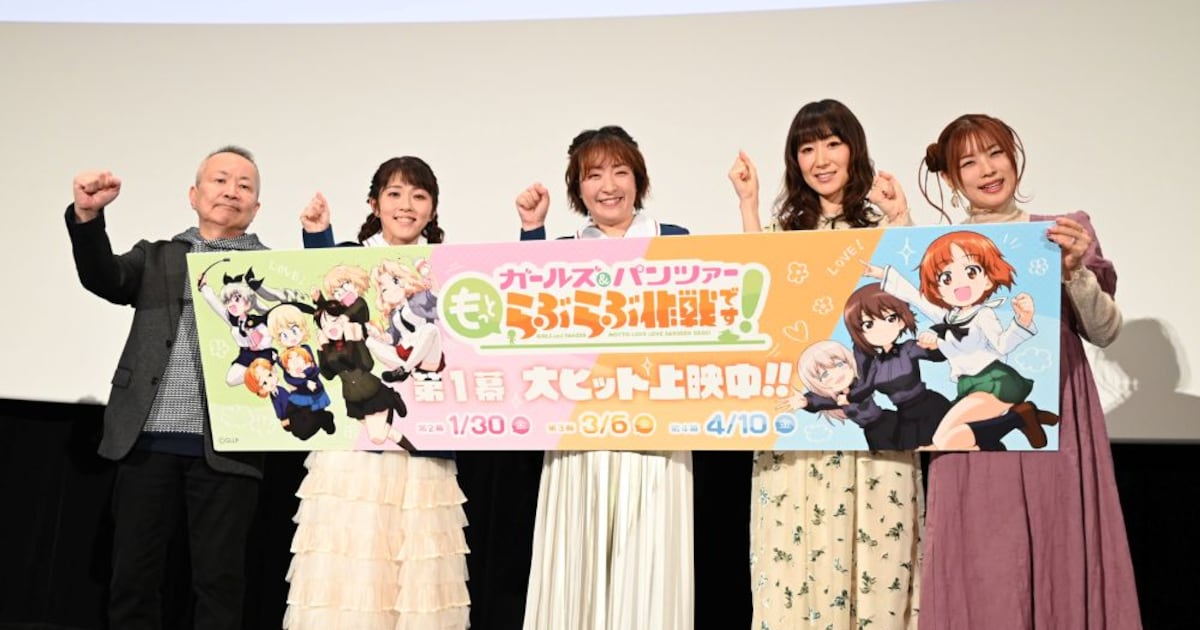
The theater was electric as fans gathered for the 舞台挨拶 (butai aisatsu), a stage greeting event where the cast and crew connect directly with the audience. The crowd’s excitement peaked with chants of ドゥーチェ (Dūche), a nickname meaning "leader" or "commander," tied to a fan-favorite character, Anchovy. Voice actresses Kana Ueda (Momoko Kawashima) and Misato Fukuen (Anzu Kadotani), singers ChouCho and Sayaka Sasaki of the opening theme Nonstop Daydream, and director Masami Shimoda took the stage, sharing laughs and behind-the-scenes stories.
Fukuen expressed relief at how smoothly the film reached fans, while Ueda admitted her surprise at seeing a 4-panel manga come to life on the big screen. She couldn’t hold back her laughter recalling the fun, 和気あいあい (waki aiai) - harmonious and friendly - atmosphere during recording sessions. One standout moment was Ueda’s recounting of a scene where her character dominated the dialogue. As she read the 台本 (daihon), or script, she was shocked to perform it all in one go, boosting her confidence. The crowd erupted when she playfully encouraged everyone to chant ドゥーチェ (Dūche), filling the 会場 (kaijou), or venue, with infectious energy.
Director’s Tease and Rising Tension
Director Shimoda kept the audience on edge with hints about the four-part spin-off’s direction. Unlike the franchise’s iconic tank battles, this series promises a different kind of high テンション (tenshon), or excitement. He teased a cliffhanger involving the character Erika at the end of the first act, assuring fans that all will be revealed by the fourth act. With upcoming releases on January 30, March 6, and April 10, 2026, Shimoda jokingly warned that the cast might “burst a blood vessel” from the escalating intensity in acts two and three. What are your 感想 (kansou), or impressions, about this buildup? It’s clear the fans can’t wait to see what’s next!
Behind the Catchy Opening Theme
The opening song Nonstop Daydream is a collaboration between ChouCho, who composed the music, and Sayaka Sasaki, who penned the lyrics. ChouCho shared her initial struggles with the song’s unique style but was thrilled when it became a catchy pop track. Sasaki cleverly wove references to past ガルパン (Garupan, short for Girls und Panzer) songs into the lyrics, urging fans to watch the official lyric videos for hidden nods. Ueda mentioned how the song instantly sparked the thrill of a new adventure, while Fukuen praised its fresh take on the series’ essence. Shimoda even dropped a fun secret: the opening animation has a tiny change in one frame each time, challenging fans to spot the difference. Talk about a reason to rewatch!
Cultural Context: Why "Girls und Panzer" Resonates
If you’re new to ガールズ&パンツァー, you’re in for a treat. Since its debut in 2012, this anime has become a cultural phenomenon in Japan, blending the niche world of tank warfare with the everyday lives of high school girls. At its core is 戦車道 (Senshadō), or "the way of the tank," portrayed as a traditional martial art for girls, akin to kendo or judo. This unique mix of military strategy and slice-of-life comedy captures Japanese values of discipline, teamwork, and humor.
Events like the 舞台挨拶 (butai aisatsu) are a cornerstone of anime culture in Japan, where 声優 (seiyū), or voice actors, build deep connections with fans. The playful title もっとらぶらぶ作戦です! reflects Japan’s love for cute, lighthearted language—らぶらぶ (rabu rabu) mimics the English "love love," adding a whimsical touch to the theme of relationships and camaraderie. Understanding these layers shows how anime mirrors Japanese traditions and community spirit, giving you a window into the culture as you learn the language.
Learn Japanese from This Article
Let’s turn this exciting event into a learning opportunity! Here, you’ll find key vocabulary, grammar patterns, and expressions straight from the context of the premiere. These are taught the way Japanese kids learn—through real-life usage and cultural nuance, not just textbook rules.
Key Vocabulary
| Japanese | Romaji | Meaning |
|---|---|---|
| 舞台挨拶 | butai aisatsu | stage greeting (premiere event) |
| 会場 | kaijou | venue, event location |
| ドゥーチェ | dūche | Duce (Italian for 'leader'), nickname |
| 感想 | kansou | impression, opinion, feedback |
| 台本 | daihon | script (for plays, movies, etc.) |
| 和気あいあい | waki aiai | harmoniously, in a friendly atmosphere |
| テンション | tenshon | tension, excitement, energy level |
Grammar Spotlight
Let’s break down two useful grammar patterns that popped up in the context of this event. These will help you express thoughts and describe actions authentically.
〜と思う (to omou) - to think that ~, to believe that ~
This structure lets you share opinions or beliefs, much like the voice actresses shared their 感想 (kansou), or impressions, at the event.
- Structure: [Statement/Verb in plain form] + と思う (to omou)
- Example 1: 映画が面白いと思う。(Eiga ga omoshiroi to omou.) - I think the movie is interesting.
- Example 2: このアニメは最高だと思う。(Kono anime wa saikou da to omou.) - I believe this anime is the best.
- Example 3: 次の幕も楽しみだと思う。(Tsugi no maku mo tanoshimi da to omou.) - I think the next act will be exciting too.
Use this when expressing personal thoughts or predictions, a common way to connect with others in Japanese conversations.
〜ながら (nagara) - while doing ~, at the same time as ~
This pattern describes doing two actions simultaneously, like listening to the opening theme while feeling the excitement of the premiere.
- Structure: [Verb stem form] + ながら (nagara) + [Second action]
- Example 1: 歌を聴きながらテンションが上がった。(Uta o kikinagara tenshon ga agatta.) - My excitement rose while listening to the song.
- Example 2: 台本を読みながら笑った。(Daihon o yominagara waratta.) - I laughed while reading the script.
- Example 3: 会場で待ちながら友達と話した。(Kaijou de machinagara tomodachi to hanashita.) - I talked with friends while waiting at the venue.
This is perfect for describing multitasking or setting the scene, a natural way to sound fluent in daily conversations.
Useful Expression
Here’s a phrase you might hear at events like this or in casual chats about anime:
- 和気あいあい (waki aiai) - harmoniously, in a friendly atmosphere
- Usage: Often used to describe a warm, cheerful group dynamic, like the recording sessions Ueda mentioned.
- Example: みんなで和気あいあいと話した。(Minna de waki aiai to hanashita.) - We all talked in a friendly, harmonious atmosphere.
Continue Learning
Want to dive deeper into the Japanese language and culture behind events like this? Check out these lessons for more authentic learning:
- Greetings and Self-Introductions: Authentic Entry Phrases: Curious about the Japanese used here? Our Greetings and Self-Introductions: Authentic Entry Phrases lesson covers this in depth.
- Ni, De, and E: Mapping Directions and Locations: Curious about the Japanese used here? Our Ni, De, and E: Mapping Directions and Locations lesson covers this in depth.
- Katakana Essentials: Adapting Global Words to Japanese: Working on your reading skills? Our Katakana Essentials: Adapting Global Words to Japanese lesson is a great next step.
Learning Japanese the way it’s taught in Japan opens doors to understanding not just the language, but the heart of its culture. Keep exploring with us, and you’ll be chanting ドゥーチェ (Dūche) with the best of them in no time!
これからもよろしくお願いします。 Kore kara mo yoroshiku onegaishimasu.