
Japan’s Winter Weather: A Glimpse into Daily Life and Language
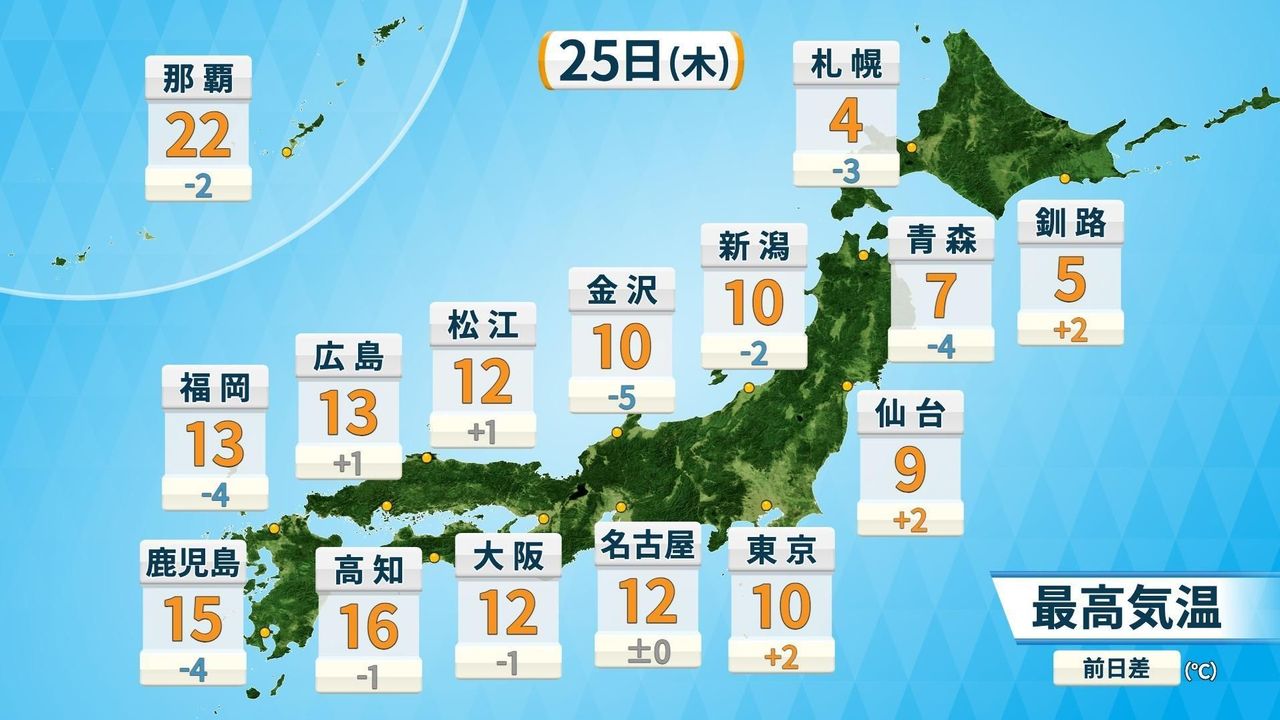
If you’ve ever wondered what it’s like to experience Japan’s dramatic seasonal shifts, today’s weather report from December 25, 2001, offers a perfect window into the country’s winter challenges. More than just a forecast, it reveals how Japanese people adapt to nature’s whims with resilience and practicality. Let’s dive into this snapshot of rain, snow, and biting cold across Japan, and along the way, pick up some authentic language and cultural insights that will bring you closer to understanding life there.
Weather Update: Rain, Cold, and Snow Across Japan
On this chilly Thursday, much of Japan is drenched in 雨 (ame), rain, with the 関東 (Kantō) region—think Tokyo and its surrounding areas—catching a brief morning break before the downpour returns by midday. Over in 西日本 (Nishi-Nihon), or western Japan, parts of Kyushu might see a peek of sunshine in the afternoon, but don’t get too comfortable. A sharp drop in 気温 (kion), temperature, is expected as cold northern winds strengthen. By nightfall, it could feel even colder than the morning, so bundling up isn’t just a suggestion—it’s a necessity.
Looking ahead to Friday, a strengthening winter pressure pattern 大雪 (ōyuki), heavy snow, and rough weather are in the forecast, especially along the Japan Sea side. The report calls for 警戒 (keikai), caution, due to potential traffic disruptions. It 見込み (mikomi) seems like the cold isn’t letting up anytime soon, and this kind of weather can profoundly impact daily life, from commuting to planning outdoor activities.
Cultural Context: Embracing Japan’s Seasonal Extremes
In Japan, weather isn’t just something to talk about—it’s a force that shapes everyday decisions. The forecast’s emphasis on preparing for nighttime cold with proper clothing reflects a practical mindset deeply rooted in Japanese culture. The term 寒気 (kanki), cold air, isn’t just a meteorological word; it carries a sense of anticipation, signaling the need to brace for harsh conditions. Similarly, warnings about 交通障害 (kōtsū shōgai), traffic disruptions, highlight a collective awareness of how snow can bring transportation to a standstill, especially in regions along the Japan Sea known for intense winter snowfall.
This weather report also subtly teaches us about regional identity. Names like 関東 (Kantō) and 西日本 (Nishi-Nihon) aren’t just labels on a map—they evoke unique lifestyles, dialects, and even seasonal experiences. For Japanese people, knowing where someone is from often means understanding how they deal with weather differently, adding a layer of depth to even a simple forecast.
Learn Japanese from This Article
Let’s turn this weather report into a mini-language lesson, the way Japanese children might learn—through real-life context and practical usage. Below, you’ll find key vocabulary and grammar patterns straight from the forecast, helping you speak and think like a native.
Key Vocabulary
| Japanese | Romaji | Meaning |
|---|---|---|
| 雨 | ame | rain |
| 寒気 | kanki | cold air |
| 気温 | kion | temperature |
| 大雪 | ōyuki | heavy snow |
| 警戒 | keikai | caution, alertness |
| 見込み | mikomi | expectation, prospect |
Grammar Spotlight: 〜そうだ (Seems Like) and 〜おそれがある (There is a Risk Of)
〜そうだ (~sō da) - Seems like, looks like This pattern is used to express something that appears to be true based on information or observation. It’s perfect for weather forecasts or predictions.
- Structure: Verb (plain form) + そうだ / Adjective (stem form) + そうだ
- Examples:
- 雨が降りそうだ。 (Ame ga furisō da.) - It seems like it will rain.
- 寒そうだ。 (Samusō da.) - It looks cold.
- Usage Tip: Use this when you’re relaying information you’ve heard or observed, like a forecast. It’s less certain than a direct statement, reflecting the speculative nature of predictions.
〜おそれがある (~osore ga aru) - There is a risk/fear of This formal expression is often used in warnings or to indicate potential danger, common in news or official reports.
- Structure: Verb (dictionary form) + おそれがある
- Examples:
- 大雪のおそれがある。 (Ōyuki no osore ga aru.) - There is a risk of heavy snow.
- 交通障害のおそれがある。 (Kōtsū shōgai no osore ga aru.) - There is a risk of traffic disruptions.
- Usage Tip: You’ll hear this in formal contexts like weather alerts or safety announcements. It adds a sense of urgency and caution to the statement.
Useful Expression
When discussing weather or forecasts, a handy phrase to know is 気をつけてください (Ki o tsukete kudasai), meaning "Please be careful." It’s a polite way to express concern, often used when warning someone about conditions like snow or rain.
Continue Learning
Ready to build on what you’ve learned here? Check out these lessons to deepen your understanding of Japanese language and culture:
- Time and Dates: Tense-Free Expressions: Want to learn more about time? Check out our lesson on Time and Dates: Tense-Free Expressions.
- Wa vs. Ga: Emphasizing Importance in Sentences: Ready to dive deeper? Our lesson on Wa vs. Ga: Emphasizing Importance in Sentences will help you master these concepts.
- Ni, De, and E: Mapping Directions and Locations: Curious about the Japanese used here? Our Ni, De, and E: Mapping Directions and Locations lesson covers this in depth.
As you continue your journey with Japanese, remember that every piece of news, every forecast, is a chance to learn something new about the language and the people who speak it. Keep exploring, and you’ll find yourself thinking and speaking more like a native every day.
これからもよろしくお願いします。 Kore kara mo yoroshiku onegaishimasu.