
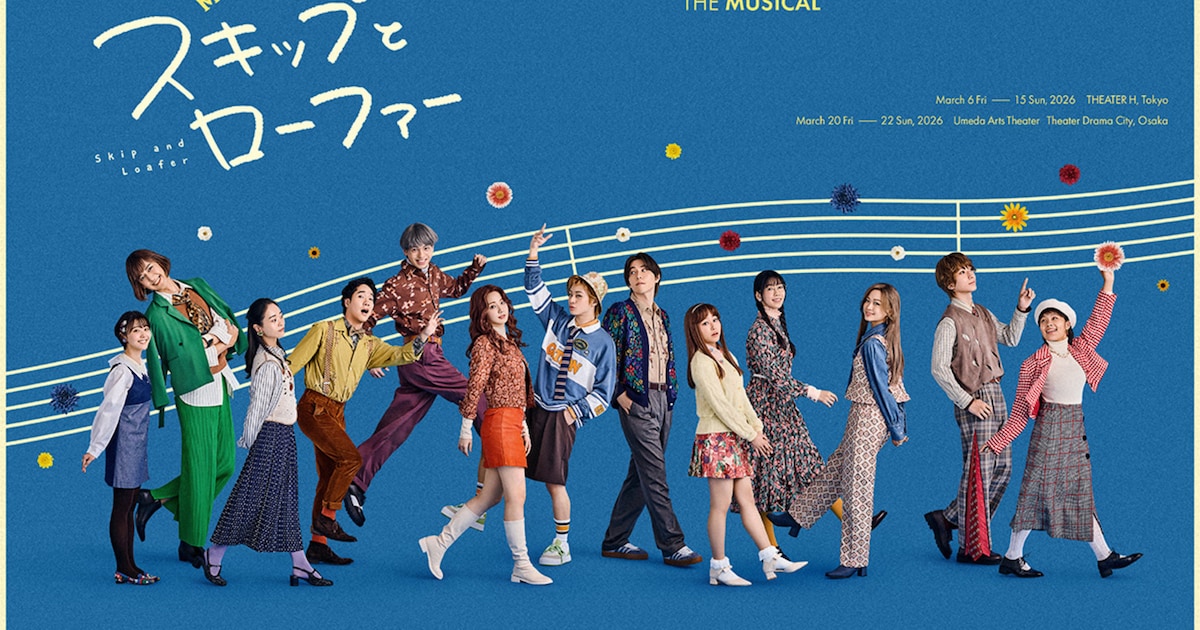
"Skip and Loafer" Musical Unveils Stunning Character Visuals!
If you’ve ever been captivated by Japanese manga or dreamed of experiencing Japan’s vibrant theater scene, you’re in for a treat! On December 25, 2025, the musical adaptation of the beloved manga スキップとローファー (Sukippu to Rōfā) - "Skip and Loafer" - dropped a major reveal with character visuals for all 13 main characters and a breathtaking group photo. For learners like you, this isn’t just exciting news—it’s a gateway to authentic Japanese culture and language, straight from the heart of Japan’s entertainment world. Let’s dive into the details and see what we can learn along the way!
The Big Reveal: A First Look at the Cast
The musical スキップとローファー (Sukippu to Rōfā), based on Misaki Takamatsu’s heartwarming coming-of-age manga, has fans buzzing with the release of its キャラクタービジュアル (kyarakutā bijuaru), or "character visuals." These promotional images showcase the actors in costume, bringing the story’s beloved characters to life. Leading the cast is Misa Shimizu, who will 扮する (funsuru), or "play the role of," the endearing 岩倉美津未 (Iwakura Mitsumi), a brilliant yet slightly ズレている (zurete iru) - "offbeat" - honor student from Ishikawa Prefecture navigating high school in Tokyo. Alongside her is Shion Yoshitaka as the charismatic 志摩聡介 (Shima Sōsuke), with 11 other key characters like 江頭ミカ (Egashira Mika) played by Koko Hayashi rounding out the ensemble.
The group visual, capturing the entire class with Mitsumi and Sōsuke at the center, radiates the 青春 (seishun) - "youth" or "adolescence" - that defines this story. This 解禁 (kaikin), or "unveiling," of visuals has heightened anticipation for the 公演 (kōen), the "performance" set to run in Tokyo from March 6 to 15, 2026, at Theater H, and in Osaka from March 20 to 22 at Umeda Arts Theater. With general ticket sales starting January 24, 2026, at noon, this is your chance to witness a slice of Japanese storytelling if you’re in the area!
A Story That Captures the Heart of Youth
At its core, スキップとローファー (Sukippu to Rōfā) is a story of growth and connection, often described as a 青春学園ストーリー (seishun gakuen sutōrī), or "youth school story." It follows Mitsumi, a top student (優等生, yūtōsei) from the countryside, as she adjusts to life in a big-city high school. Her earnest personality and unique perspective slowly influence those around her, especially Sōsuke, creating heartwarming bonds. Originally published by Kodansha in 月刊アフタヌーン (Gekkan Afutanūn), or "Monthly Afternoon," the manga’s relatable characters and subtle humor have made it a standout. Now, seeing these characters come to life in a ミュージカル (myūjikaru), or "musical," offers a fresh way to experience this emotional journey.
Cultural Context: From Manga to Stage in Japan
You might be wondering why a manga like this gets turned into a stage production. Welcome to the world of 2.5次元ミュージカル (ni-ten-go jigen myūjikaru), or "2.5D musicals," a hugely popular trend in Japan! This term refers to adaptations of manga, anime, or games into live performances, blending the "2D" fictional world with the "3D" reality of theater. These shows, with their meticulously crafted costumes and visuals, resonate deeply with fans, especially younger audiences. They also highlight Japan’s love for storytelling across different mediums—think anime, live-action films, and stage plays, all inspired by a single story.
Announcements like this one, often shared on platforms like ステージナタリー (Sutēji Natarī), or "Stage Natalie," aren’t just news; they’re a cultural event. They connect fans to Japan’s storytelling traditions and show how deeply entertainment is woven into daily life. As you learn Japanese, noticing these trends will help you understand not just the "what" but the "why" behind so much of Japanese pop culture.
Learn Japanese from This Article
Ready to pick up some authentic Japanese from this exciting news? Let’s break down key vocabulary and grammar patterns that’ll help you talk about entertainment and culture just like a native speaker would.
Key Vocabulary
| Japanese | Romaji | Meaning |
|---|---|---|
| ミュージカル | myūjikaru | musical (theater performance) |
| キャラクタービジュアル | kyarakutā bijuaru | character visual (promotional image) |
| 青春 | seishun | youth, adolescence |
| 解禁 | kaikin | release, unveiling (of content) |
| 公演 | kōen | performance, show |
| ズレている | zurete iru | offbeat, out of sync, a bit strange |
| 優等生 | yūtōsei | honor student, top student |
Grammar Spotlight
Let’s focus on two useful patterns that popped up in this news:
〜扮する (funsuru) - to play the role of, to act as This verb is often used in entertainment contexts to describe someone taking on a character role. It’s formal but common in written announcements.
- Structure: Actor + が + Character + を + 扮する
- Examples:
- 清水美沙が岩倉美津未を扮する。 (Shimizu Misa ga Iwakura Mitsumi o funsuru.) - "Misa Shimizu plays the role of Mitsumi Iwakura."
- 吉高志音が志摩聡介を扮する。 (Yoshitaka Shion ga Shima Sōsuke o funsuru.) - "Shion Yoshitaka plays the role of Sōsuke Shima."
- Use this when discussing actors or roles in theater, film, or even cosplay!
〜が公開された (ga kōkai sareta) - was released, was made public This passive structure is frequently used in news to announce the release of information or visuals.
- Structure: Item + が + 公開された
- Examples:
- キャラクタービジュアルが公開された。 (Kyarakutā bijuaru ga kōkai sareta.) - "The character visuals were released."
- 集合写真が公開された。 (Shūgō shashin ga kōkai sareta.) - "The group photo was made public."
- Perfect for talking about news or updates being shared with the public.
Useful Expression
Here’s a bonus phrase you’ll hear in entertainment contexts:
- チケット販売開始 (chiketto hanbai kaishi) - "ticket sales start" Example: チケット販売は1月24日に開始します。 (Chiketto hanbai wa ichigatsu nijūyokka ni kaishi shimasu.) - "Ticket sales start on January 24." Use this to discuss event schedules or launches!
Continue Learning
Want to dive deeper into the language used in stories like this? Check out these lessons to build your skills:
- Katakana Essentials: Adapting Global Words to Japanese: Working on your reading skills? Our Katakana Essentials lesson is a great next step for mastering words like ミュージカル (myūjikaru).
- Wa vs. Ga: Emphasizing Importance in Sentences: Curious about the Japanese used here? Our Wa vs. Ga lesson covers structures like が公開された in depth.
- Ni, De, and E: Mapping Directions and Locations: Planning to catch a show in Tokyo or Osaka? Our Ni, De, and E lesson helps with navigating locations mentioned in this article.
Learning Japanese the way it’s taught in Japan opens doors to understanding not just the language but the heartbeat of its culture. Keep exploring with us, and you’ll be chatting about your favorite manga or musical in no time!
これからもよろしくお願いします。 Kore kara mo yoroshiku onegaishimasu.