
A Rainy Christmas Eve in Kantō: Weather Meets Japanese Culture
Have you ever imagined a Christmas Eve where the holiday cheer is washed away by rain? If you’ve been following life in Japan, you’ll discover that even seasonal celebrations can take an unexpected turn. On December 24, 2001, the Kantō region, including Tokyo, experienced a rare rainy Christmas Eve, the first of its kind in decades. This unusual weather event offers a perfect chance to dive into authentic Japanese experiences and learn the language as it’s used in real-life contexts. Let’s explore this news story, uncover its cultural significance, and pick up some practical Japanese along the way.
Rainy Christmas Eve: A Rare Event in Kantō
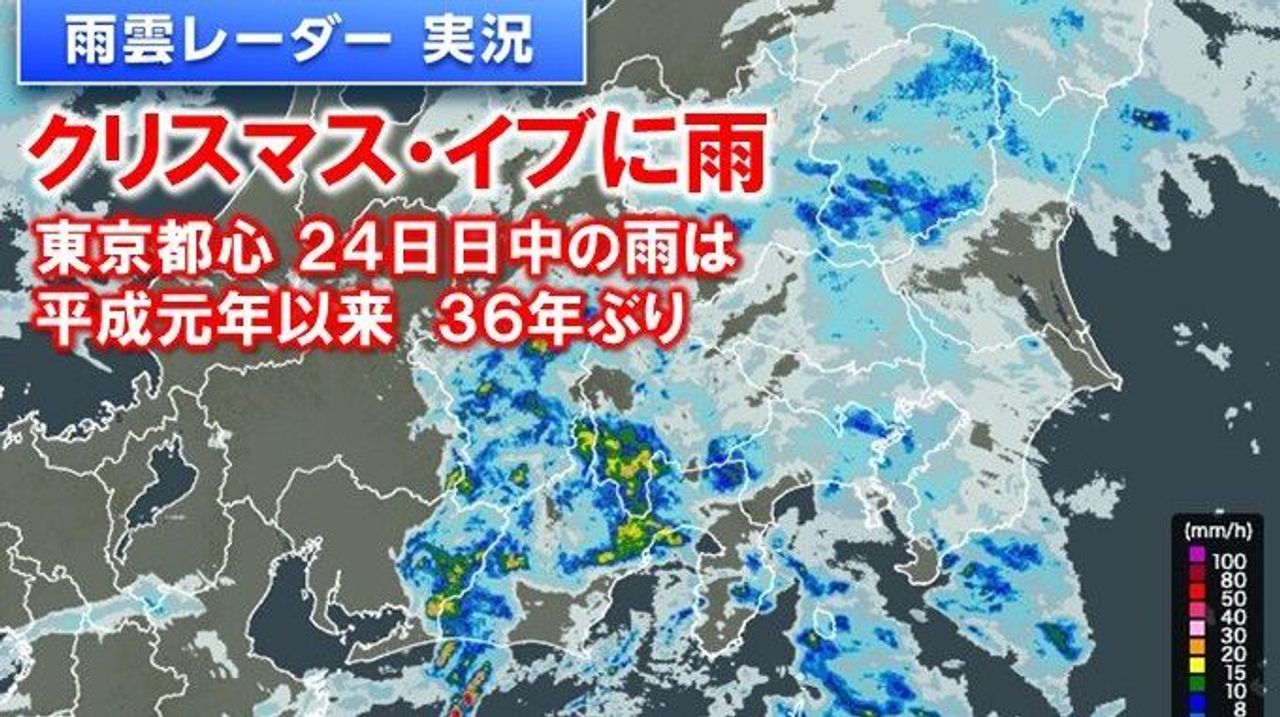
Picture this: it’s Christmas Eve morning in Tokyo, and instead of crisp winter air, you’re greeted by the steady patter of 雨 (ame, rain). On December 24, 2001, the 関東 (Kantō, Kantō region) saw rain spread across the area from dawn, with central Tokyo—known as 都心 (toshin, city center)—recording 0.5 millimeters of rainfall by 9 a.m. While this might sound like a tiny amount, it’s a big deal because it’s the first time in 36 years, 以来 (irai, since) 1989, that measurable rain (0.5 mm or more) has fallen during the daytime hours of Christmas Eve (9 a.m. to 6 p.m.). That year, 1989, was also the start of the 平成 (Heisei) era, making this 観測 (kansoku, observation or measurement) a notable milestone. By midday, the rain intensified into a 本降り (honburi, downpour), likely dampening the festive mood for many in the city.
Cultural Context: Christmas Eve in Japan
Christmas Eve, or クリスマスイブ (Kurisumasu Ibu), isn’t just another day in Japan—it’s a cultural phenomenon, even though it’s not a traditional Japanese holiday. Unlike in many Western countries where Christmas often centers on family gatherings, in Japan, it’s primarily a romantic occasion for couples. Think candlelit dinners, thoughtful gifts, and strolls under stunning イルミネーション (iruminēshon, illuminations or decorative lights) that transform cities like Tokyo into winter wonderlands. So, when rain pours down on such a day, it’s more than just inconvenient weather—it disrupts carefully planned dates and dims the magic of those iconic light displays. Understanding this helps you see why a news story about rain on Christmas Eve resonates so deeply with Japanese people. It’s a glimpse into how nature can shape even modern, borrowed traditions in Japan.
Learn Japanese from This Article
Let’s turn this rainy day into a learning opportunity! Below, you’ll find key vocabulary from the news story, plus a grammar spotlight on expressions that will help you talk about time and events like a native speaker. These are words and patterns you’d encounter in everyday Japanese media and conversations, taught the way Japanese children learn them—through context and real usage.
Key Vocabulary
| Japanese | Romaji | Meaning |
|---|---|---|
| 雨 | ame | rain |
| クリスマスイブ | Kurisumasu Ibu | Christmas Eve |
| 関東 | Kantō | Kantō region |
| 本降り | honburi | downpour, heavy rain |
| 観測 | kansoku | observation, measurement |
| 都心 | toshin | city center, central Tokyo |
| イルミネーション | iruminēshon | illumination, decorative lights |
These words aren’t just useful for weather reports—they’re tied to cultural moments. For instance, knowing イルミネーション (iruminēshon) lets you chat about holiday vibes in Japan, while 本降り (honburi) is a vivid way to describe heavy rain in any context.
Grammar Spotlight: Talking About Time with 〜以来 and 〜以降
To discuss events tied to specific moments in time, like the last rainy Christmas Eve in Tokyo, two useful grammar patterns are 〜以来 (irai, since) and 〜以降 (ikō, after/since). Let’s break them down with examples inspired by this news story.
〜以来 (irai): Since a Specific Time or Event
- Structure: Time/Event + 以来
- Usage: Used to indicate that something hasn’t happened (or has continued) since a specific point in the past. It often pairs with negative verbs for “not since” contexts.
- Examples:
- 1989年以来、クリスマスイブに雨が降っていません。 (1989-nen irai, Kurisumasu Ibu ni ame ga futte imasen.) Since 1989, it hasn’t rained on Christmas Eve.
- 子供の時以来、東京に行っていません。 (Kodomo no toki irai, Tōkyō ni itte imasen.) I haven’t been to Tokyo since I was a child.
- When to Use: Perfect for historical or personal milestones when you’re emphasizing a gap or continuation from a past point.
〜以降 (ikō): After/Since a Specific Time
- Structure: Time + 以降
- Usage: Focuses on the period after a specific time, often with a sense of “from that point onward.” It’s more neutral than 以来 and doesn’t imply a negative or positive continuation.
- Examples:
- 1989年以降、クリスマスイブの天気が変わりました。 (1989-nen ikō, Kurisumasu Ibu no tenki ga kawarimashita.) After 1989, the weather on Christmas Eve changed.
- 午後3時以降、雨が強くなりました。 (Gogo san-ji ikō, ame ga tsuyoku narimashita.) After 3 p.m., the rain got heavier.
- When to Use: Great for describing changes or events following a specific time, often in formal or written contexts like news.
By mastering these, you’ll sound more natural when discussing timelines or historical events, just like in Japanese news reports. Practice them with personal anecdotes—when was the last time something memorable happened to you 以来 (irai)?
Useful Expression: Weather Talk
Since rain played the starring role in this story, here’s a handy phrase to describe the weather: 雨が降っています。 (Ame ga futte imasu.) - It’s raining. You can swap 雨 (ame) with other weather words like 雪 (yuki, snow) to say 雪が降っています。 (Yuki ga futte imasu.) - It’s snowing. This simple structure is one you’ll hear daily in Japan, especially during unpredictable winter weather.
Closing Thoughts
Learning Japanese through real-world events like a rainy Christmas Eve in Kantō isn’t just about memorizing words—it’s about connecting with the culture and experiences of Japanese people. Whether it’s understanding the romance of クリスマスイブ (Kurisumasu Ibu) or describing a sudden 本降り (honburi), you’re stepping into the language as it’s lived and spoken in Japan. Keep practicing these words and patterns, and soon you’ll be chatting about weather and holidays like a local.
これからもよろしくお願いします。 Kore kara mo yoroshiku onegaishimasu.