
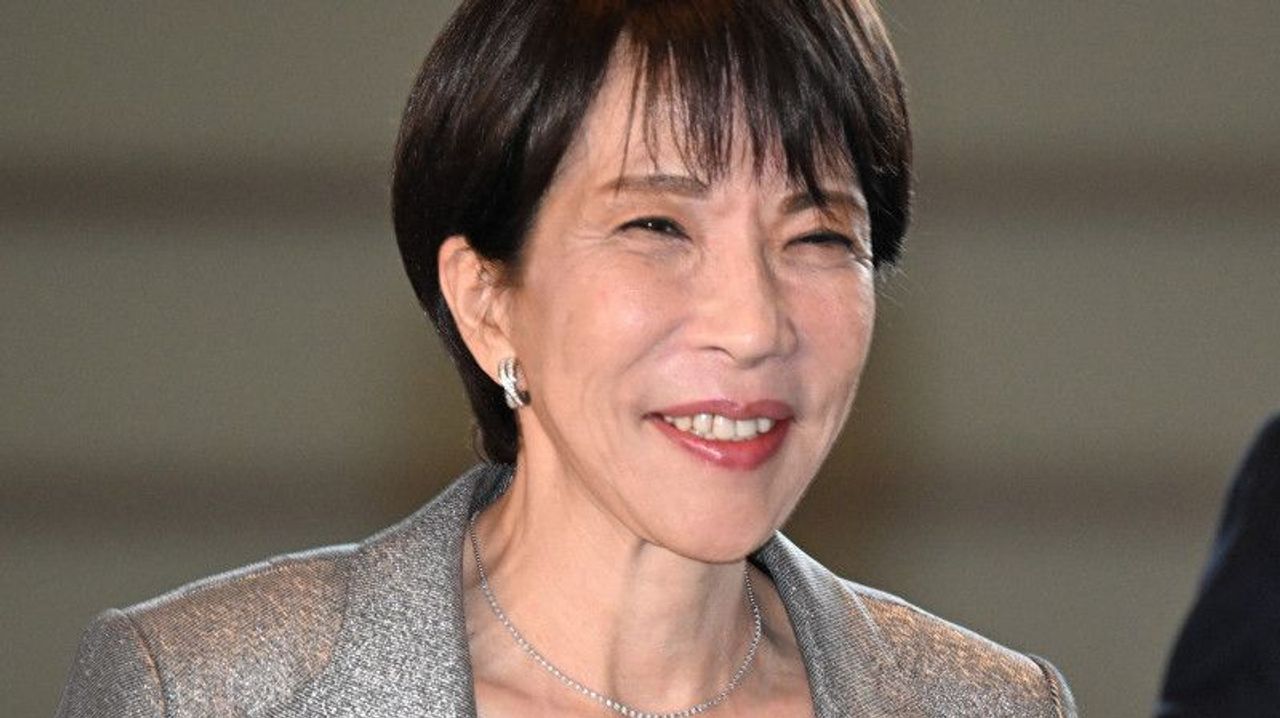
Takaichi Cabinet Approval Rises to 67%: What It Means for Japan
If you’ve ever wondered how Japanese people view their government, you’re in for a fascinating glimpse into the heart of Japan’s political landscape. On December 20th and 21st, 2001, the daily newspaper 毎日新聞 (Mainichi Shimbun) conducted a nationwide 世論調査 (yoron chousa, public opinion poll) that revealed a subtle yet significant shift in public sentiment. For Japanese learners like you, this isn’t just news—it’s a chance to understand how public opinion shapes politics in a country where stability and consensus are deeply valued. Let’s dive into the latest findings about the Takaichi Cabinet and uncover what they tell us about Japanese society.
Steady Support for the Takaichi Cabinet
The results of the poll show that the 支持率 (shiji ritsu, approval rating) for the Takaichi Cabinet has climbed slightly to 67%, an increase of 2 points から (kara, from) the previous poll on November 22nd and 23rd, which stood at 65%. On the flip side, the 不支持率 (fu shiji ritsu, disapproval rating) dipped by 1 point to 22%, down from 23%. This near-横ばい (yokobai, steady or unchanged) trend is noteworthy, as it marks three consecutive months of approval ratings above 65% since the cabinet’s 発足 (hossoku, inauguration) in October. In fact, 67% is the highest recorded in this period. For anyone following Japanese politics, these numbers reflect strong, sustained trust in the current 内閣 (naikaku, cabinet)—a rare achievement in a world where public opinion can be unpredictable.
The poll, 実施 (jisshi, conducted) by one of Japan’s leading newspapers, highlights a pattern of stability that’s worth paying attention to. But what does this consistency really mean in the context of Japanese culture? Let’s explore that next.
Cultural Context: The Weight of Public Opinion in Japan
In Japan, public opinion polls aren’t just statistics—they’re a reflection of a society that prioritizes harmony and often avoids direct confrontation. A consistent approval rating above 65% for the Takaichi Cabinet signals not just political stability but also a cultural tendency to support leadership unless significant issues arise. Unlike some Western countries where approval ratings can swing wildly due to polarizing events, Japanese polls often show gradual changes, mirroring a preference for measured, collective judgment over impulsive reactions.
For learners like you, this offers a unique window into how Japanese people engage with politics. It’s less about loud debates or viral outrage and more about a quiet, thoughtful assessment of leadership. Understanding this mindset helps you grasp why terms like 支持率 (shiji ritsu, approval rating) carry such weight in news reports and everyday conversations. It’s not just about numbers; it’s about the unspoken values of trust and consensus that shape Japanese society.
Learn Japanese from This Article
Ready to turn this news into a learning opportunity? Let’s break down some key vocabulary and grammar patterns from the poll results. These are words and structures you’ll encounter often in Japanese media, so mastering them will help you read and discuss current events like a native.
Key Vocabulary
| Japanese | Romaji | Meaning |
|---|---|---|
| 世論調査 | yoron chousa | public opinion poll |
| 支持率 | shiji ritsu | approval rating |
| 不支持率 | fu shiji ritsu | disapproval rating |
| 内閣 | naikaku | cabinet (government) |
| 実施 | jisshi | implementation, conduct (of a survey, etc.) |
| 横ばい | yokobai | flat, unchanged, steady |
| 発足 | hossoku | establishment, inauguration |
Grammar Spotlight: 〜から〜ポイント増/減 (Increase/Decrease by ~ Points from ~)
This structure is commonly used in Japanese news to report changes in data like poll results. It combines から (kara, from) with ポイント増 (pointo zou, increase by points) or ポイント減 (pointo gen, decrease by points) to show a shift from a previous figure.
- Structure: [Previous Time/Data] から [Number] ポイント増/減
- Example 1: 前回の調査から2ポイント増です。(Zenkai no chousa kara ni pointo zou desu.
- It increased by 2 points from the last survey.)
- Example 2: 去年から5ポイント減になりました。(Kyonen kara go pointo gen ni narimashita.
- It decreased by 5 points from last year.)
- When to Use: This is perfect for discussing statistical changes, especially in news about politics, economics, or sports rankings. It’s a concise way to compare past and present data.
Grammar Spotlight: 〜以降 (Since, After)
Another useful pattern from the article is 以降 (ikou, since or after), which indicates a starting point in time and implies continuation from that point onward.
- Structure: [Time/Event] 以降
- Example 1: 10月以降、支持率が65%以上です。(Juugatsu ikou, shiji ritsu ga rokujuu go paasento ijou desu.
- Since October, the approval rating has been over 65%.)
- Example 2: 卒業以降、連絡がありません。(Sotsugyou ikou, renraku ga arimasen.
- Since graduation, there has been no contact.)
- When to Use: Use this to talk about events or trends continuing after a specific time or event. It’s formal but common in written Japanese, especially in news or reports.
Useful Expression
Here’s a bonus phrase you’ll hear often in discussions of trends: 横ばい (yokobai, steady or unchanged). It’s a handy term to describe situations where numbers or conditions remain flat, as in: 支持率は横ばいです。(Shiji ritsu wa yokobai desu. - The approval rating is steady.)
By practicing these words and patterns, you’ll be better equipped to follow Japanese news and understand the nuances of public discourse. Keep at it, and you’ll soon feel like you’re learning Japanese the way it’s taught in Japan—rooted in real-life context and culture!
Closing Thoughts
Thank you for joining us on this journey through Japanese politics and language. Whether you’re intrigued by the Takaichi Cabinet’s steady support or eager to master terms like 世論調査 (yoron chousa, public opinion poll), remember that every piece of news is a chance to deepen your connection to Japan. Keep exploring, keep learning, and let’s continue this adventure together.
これからもよろしくお願いします。 Kore kara mo yoroshiku onegaishimasu.