
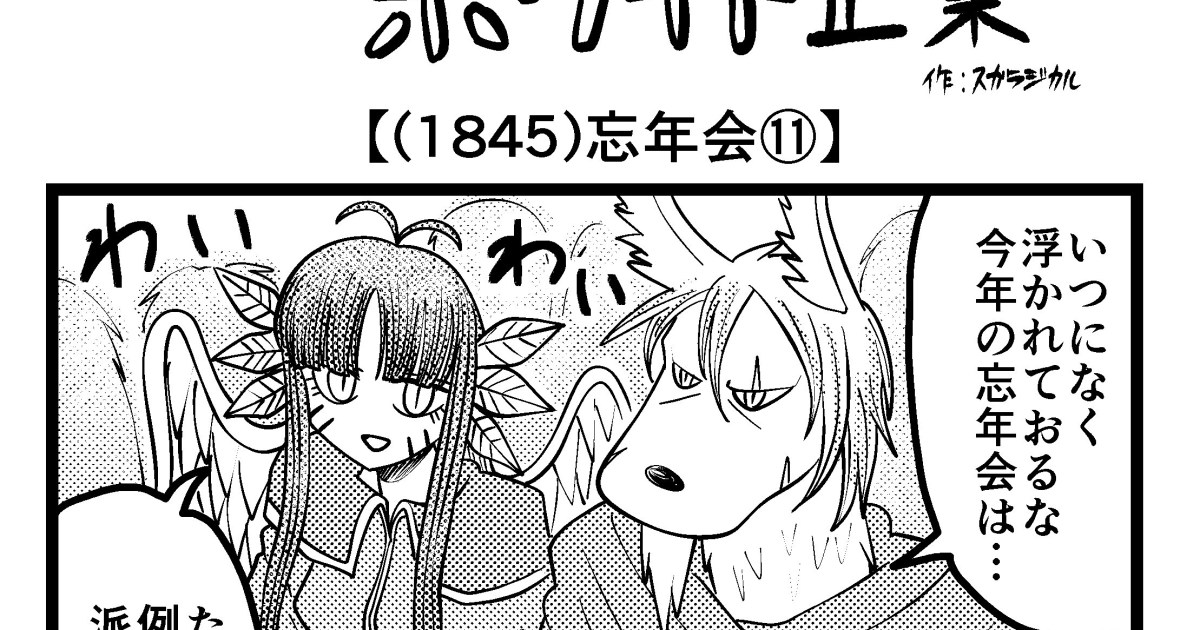
Demon King's Army Throws a Bounenkai: A Japanese Year-End Party Tale
Ever wondered what a year-end party looks like in Japan, even for a fictional Demon King's army? If you’ve been curious about Japanese workplace traditions or just love a good laugh, you’re in for a treat. In the latest episode of the hilarious 4-panel manga series Maou-gun wa Howaito Kigyou (Demon King's Army is a White Company) by artist Sugara Radical, we get a front-row seat to a 忘年会 (bounenkai), a traditional end-of-year bash. Published on December 21, 2025, by Rocket News, episode 1845 titled "Forget the Year Party ⑪" (Bounenkai ⑪) blends fantasy with the all-too-real quirks of office life. Let’s dive into this story, explore the cultural significance of a 忘年会, and pick up some authentic Japanese along the way!
A Demon Army’s Year-End Bash
Picture this: even the fearsome Demon King’s army, often portrayed as a surprisingly employee-friendly "white company" (a term for businesses with great working conditions), isn’t immune to the chaos of a year-end party. In this strip, the army throws their annual 忘年会 (bounenkai), and hilarity ensues. From awkward small talk with 仲間 (nakama, colleagues or companions) to over-the-top 乾杯 (kanpai, toasts or cheers), the characters stumble through the same party pitfalls you’d see in any Japanese 職場 (shokuba, workplace). Artist Sugara Radical nails the humor of these gatherings, showing that even demons can’t escape corporate culture’s unspoken rules. If you’re new to this 漫画 (manga, comic), it’s a long-running satire that turns a villainous army into a modern office, making their daily struggles—and parties—relatable to anyone.
Cultural Context: What’s a Bounenkai?
If you’ve never heard of a 忘年会 (bounenkai), it literally means "forget the year party." Held typically in December, these events are a cornerstone of Japanese workplace 文化 (bunka, culture), offering a chance to unwind, strengthen 親睦 (shinboku, friendship or bonding), and leave the year’s stresses behind. Think lots of food, drinks, and sometimes karaoke or games. More than just a party, a 忘年会 is a ritual of closure and renewal, reflecting the Japanese emphasis on group harmony (和, wa). In manga like this, these gatherings often become comedic gold, spotlighting the clash between formal hierarchies and the informal mess of a party. Understanding this tradition helps you see why this episode hits home for Japanese readers—it’s not just about demons; it’s about shared human experiences we can all relate to.
Learn Japanese from This Article
Ready to pick up some authentic Japanese from this quirky manga tale? Let’s break down key vocabulary and grammar patterns that’ll help you navigate conversations about parties, workplaces, and more. These are words and structures you’d hear in real Japanese settings, just as native speakers use them.
Key Vocabulary
Here are some essential words tied to the story and Japanese year-end traditions:
| Japanese | Romaji | Meaning |
|---|---|---|
| 忘年会 | bounenkai | end-of-year party |
| 職場 | shokuba | workplace |
| 仲間 | nakama | colleague, friend, companion |
| 乾杯 | kanpai | toast, cheers |
| 親睦 | shinboku | friendship, bonding |
| 漫画 | manga | comic, cartoon |
| 文化 | bunka | culture |
Next time you’re chatting about Japanese traditions or reading a 漫画 (manga), try tossing in a word like 忘年会 (bounenkai) or raising a glass with a hearty 乾杯 (kanpai)!
Grammar Spotlight
Let’s look at two useful grammar patterns that pop up in everyday Japanese, especially in social settings like a 忘年会 (bounenkai). These will help you express desires and reflect on actions—perfect for party convos!
1. 〜たい: Want to (do something)
This pattern expresses a desire to do something. Attach 〜たい to the stem form of a verb (drop the ます from the polite form).
- Structure: Verb (stem) + たい
- Examples:
- 忘年会に行きたい。 (Bounenkai ni ikitai.) - I want to go to the end-of-year party.
- 仲間と話したい。 (Nakama to hanashitai.) - I want to talk with my colleagues.
- 乾杯したい! (Kanpai shitai!) - I want to toast!
Use this when sharing what you’re eager to do, like joining a party or bonding with 仲間 (nakama).
2. 〜てしまう: End up doing (often with regret or completion)
This pattern shows something was done, often unintentionally or with a sense of regret. Combine the て-form of a verb with しまう.
- Structure: Verb (て-form) + しまう
- Examples:
- 飲みすぎてしまった。 (Nomisugite shimatta.) - I ended up drinking too much.
- 忘年会で遅くまで話してしまった。 (Bounenkai de osoku made hanashite shimatta.) - I ended up talking late at the end-of-year party.
- 忘れてしまった。 (Wasurete shimatta.) - I ended up forgetting (something).
This is super handy for reflecting on party mishaps or things that got out of hand—something many can relate to after a lively 忘年会 (bounenkai)!
Useful Expression
Here’s a bonus phrase you’ll hear at any Japanese gathering:
- 乾杯! (Kanpai!) - Cheers! It’s the go-to shout before taking a sip with friends or colleagues. Say it with energy to match the party vibe!
Closing Thoughts
Whether it’s demons or humans, a 忘年会 (bounenkai) captures the universal chaos and camaraderie of closing out a year with those in your 職場 (shokuba). This manga episode isn’t just a laugh—it’s a window into Japanese 文化 (bunka) and the little rituals that bring people together. Keep practicing these words and grammar points, and soon you’ll be ready to toast with a 乾杯 (kanpai) at your own year-end bash. Let’s keep learning together!
これからもよろしくお願いします。 Kore kara mo yoroshiku onegaishimasu.