
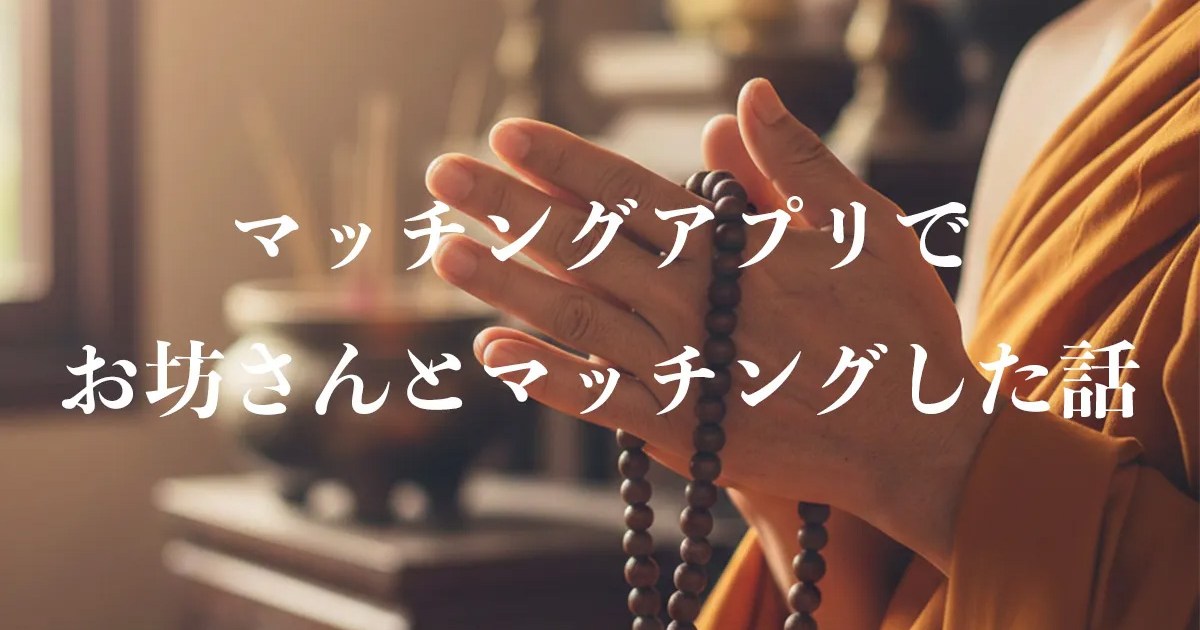
Christmas is just around the corner, and yet, for one Japanese writer, the holiday season brings the same old story—no partner in sight. In a candid and humorous piece from Rocket News, Asami Oshima shares her unexpected journey through the world of マッチングアプリ (matching appu)—dating apps—hoping to beat the Christmas blues. What she didn’t anticipate was matching with someone completely out of the ordinary: a Buddhist monk. Her story offers a glimpse into modern Japanese dating culture, personal struggles with finding love, and the surprises that come with stepping outside one’s comfort zone.
The Quest for Love in a Digital Age
Asami Oshima begins her tale with a relatable frustration: despite the festive buzz of Christmas, she’s still single. Unwilling to give up on her dream of finding a partner before the holidays, she turns to a マッチングアプリ (matching appu), a popular tool in Japan for meeting potential partners. These apps allow users to input personal details—age, location, hobbies, even income—and swipe through profiles with a simple “like” or “pass.” If both parties hit “like,” a match is made, opening the door to messaging and, hopefully, a connection.
For Asami, the app seemed like a practical solution to the limitations of everyday encounters. After all, she notes, many people around her have met their spouses through such platforms. But after three months of trying, she came to a stark realization: this fast-paced, goal-oriented style of dating just wasn’t for her. Before uninstalling the app, though, she stumbled into an encounter so unique it became the highlight of her experience.
An Unexpected Match: Dating a Monk
Among the matches Asami made was a man she calls “B-san,” whose profile stood out with his bold, shaved-head look and a vibe of sincerity. Their early chats were casual—until a peculiar message threw her off. When asked about his plans, B-san replied, “I have a 御法事 (gohōji)”—a Buddhist memorial service. Confused, Asami wondered if he was attending or conducting it. Her suspicion grew when she realized most people wouldn’t use the formal term 御法事 unless they were involved in the ceremony itself. Pressing for clarity, B-san playfully confirmed her guess: he was, indeed, a Buddhist monk.
Their conversations took on a fascinating tone from there. B-san’s messages were peppered with phrases like “today was a precious time” or mentions of chanting sutras during commutes—language far removed from everyday banter. Asami learned about his rigorous training since student days, and her curiosity led her to accept a date invitation. Though the first attempt was rescheduled due to a sudden 通夜 (tsuya)—a wake—B-san’s thoughtful apology, “Sorry if I smell like incense,” added a uniquely endearing touch. When they finally met, their dates (often at yakiniku or Thai restaurants) were filled with captivating stories of temple life and monastic discipline. Yet, despite the enjoyment, Asami couldn’t envision herself marrying into a temple’s world, and their connection quietly faded.
Why Matching Apps Didn’t Click
Reflecting on her three-month experiment, Asami pinpoints why マッチングアプリ didn’t suit her. The app’s design pushes for quick romantic outcomes—every interaction feels loaded with the expectation of becoming “the one.” For someone like Asami, who prefers slow-building relationships where she can observe a person’s character over time (like in workplace settings), this pace felt unnatural. She admits that while the app is efficient and fits the modern era, it left her guarded rather than open to love. Ultimately, she chose to step away, feeling it was unfair to continue without genuine investment.
Interestingly, just before deleting her account, Asami matched with someone whose chemistry felt effortless. While she’s unsure where it will lead, this last-minute surprise reinforced her belief that unexpected encounters can happen anywhere. Still, she stands firm: the app-driven approach isn’t her path. Dating, she concludes, is deeply personal—what works for one may not for another, and she’ll keep searching with a lighter heart.
Cultural Context
For many English speakers, the idea of matching with a Buddhist monk on a dating app might sound surreal, but it reflects the diversity of modern Japanese society. Buddhism has deep roots in Japan, with monks often playing significant roles in community life through ceremonies like 御法事 (gohōji) and 通夜 (tsuya). However, monks are not always bound to a life of celibacy—depending on the sect, some can marry and lead relatively “normal” lives, which explains B-san’s presence on a dating platform. This blend of traditional roles with contemporary lifestyles is a fascinating aspect of Japan today.
Additionally, the pressure to find a partner before Christmas isn’t just a personal quirk for Asami—it’s tied to a cultural phenomenon in Japan. Known as クリスマスまでに恋人を作る (Kurisumasu made ni koibito o tsukuru), the desire to have a romantic partner for the holiday season is a common sentiment, fueled by the image of Christmas as a couple’s day rather than a family holiday, unlike in many Western countries. This cultural lens adds depth to Asami’s urgency and her willingness to try unconventional methods like dating apps.
Learn Japanese from This Article
Vocabulary
| Japanese | Romaji | Meaning |
|---|---|---|
| ニュース | nyuusu | news |
| 日本 | nihon | Japan |
In context:
- ニュース (nyuusu): A common katakana word borrowed from English
- 日本 (nihon): The name of the country in Japanese
Learning Tips
💡 Reading news in Japanese is great practice for building vocabulary!
これからもよろしくお願いします。
Kore kara mo yoroshiku onegaishimasu.