
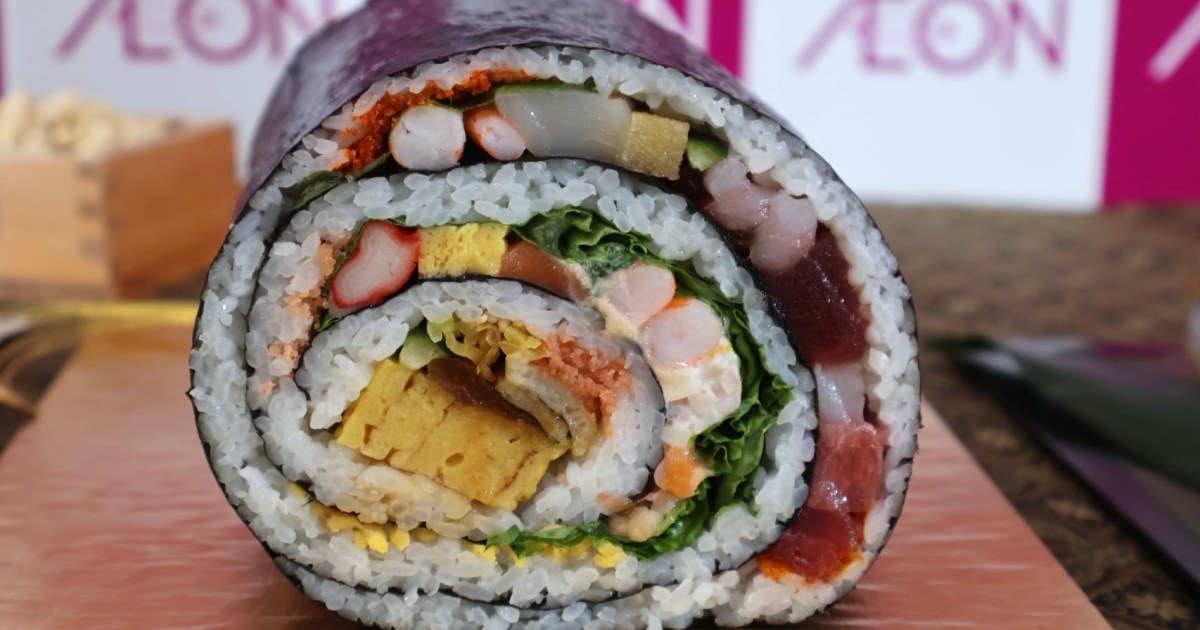
Aeon’s 2026 Ehoumaki: A Bold Twist on Japanese Setsubun Tradition
Imagine it’s a chilly December day, not even past Christmas, and you’re already getting a sneak peek into a major Japanese festival for the next year. On December 17, 2025, Aeon, one of Japan’s biggest supermarket chains, unveiled their jaw-dropping “2026 Aeon 恵方巻 (ehoumaki)” lineup for the upcoming 節分 (setsubun) festival. If you’ve ever wondered how Japanese traditions can blend with modern creativity, this event is a perfect window into that world. From monstrous sushi rolls to unexpected global twists, let’s dive into a story that’s as much about culture as it is about food—and pick up some authentic Japanese along the way.
Aeon’s Daring 2026 Ehoumaki Lineup
Aeon’s preview event was a feast for the eyes, featuring an incredible 23 varieties and 31 items of 恵方巻 (ehoumaki), the traditional rolled sushi eaten during 節分 (setsubun), a festival that marks the shift from winter to spring. The options were as diverse as they were stunning. You could go for a 豪華 (gouka)—meaning luxurious—seafood roll like the 海鮮恵方巻 (kaisen ehoumaki), crafted under the guidance of the famous Ginza restaurant 鮨よしたけ (Sushi Yoshitake), for 1,490 yen. Or, if you’re watching your budget, grab a four-roll set for just 1,058 yen, showcasing great コスパ (kosupa)—a popular Japanese term for cost-performance or value for money.
Then there’s the showstopper: the ごくぶと巻 (gokubuto-maki), a colossal roll weighing 1.7 kilograms and priced at 6,458 yen. Packed with 26 different 具材 (guzai)—ingredients like simmered eel, grilled salmon belly, scallops, and roe—this isn’t just a meal; it’s an experience. Aeon also leaned into modern trends with shareable options like the “Everyone Enjoy a Sushi Roll Party Set” (3,218 yen), perfect for gatherings since 節分 lands on a Tuesday in 2026. And in a move that raised eyebrows, they introduced a Mexican-inspired “taco” roll, tying into the American “Taco Tuesday” craze. Aeon’s 2026 keywords—cost-performance, Instagrammable appeal, and shareability—show how they’re reimagining tradition for today’s crowd.
A Live Demo That Wowed the Crowd
One of the event’s highlights was a 実演 (jitsuen)—a live demonstration—of crafting the massive ごくぶと巻 (gokubuto-maki). The presenter teased the audience with, “This takes time, are you sure you’ll stay interested?” which drew warm laughs. Over 10 minutes, we watched rice spread evenly over nori, edges built up like tiny walls, and layers of ingredients carefully arranged. The result? A 14cm-wide giant that left everyone wondering how you’d even take a bite. It was a fascinating look at the artistry behind Japanese food, proving that even something as “simple” as a sushi roll carries deep craftsmanship.
A Surprising Taste Test Twist
As attendees admired the luxurious seafood rolls on display, excitement built for the taste test. Would it be the 鮨よしたけ masterpiece? The crab and roe extravaganza? Nope—out came tacos. Inspired by “Taco Tuesday” and the timing of 節分 on a Tuesday, Aeon pitched this as a fun fusion. The seafood-filled tacos were unexpectedly delicious, though they left everyone still curious about the star 恵方巻 rolls. It’s a reminder that Japanese traditions aren’t set in stone—they evolve, blending global influences with local roots in surprising ways.
Cultural Context: Understanding Setsubun and Ehoumaki
If you’re new to Japanese traditions, 節分 (setsubun) is celebrated around February 3rd each year to mark the start of spring on the lunar calendar. It’s known for bean-throwing rituals to ward off evil spirits, with people shouting “鬼は外、福は内” (oni wa soto, fuku wa uchi—demons out, fortune in!). A key custom, especially in western Japan, is eating 恵方巻 (ehoumaki), a rolled sushi that you’re supposed to eat in silence while facing the year’s lucky direction (based on the Chinese zodiac) to bring good fortune.
Aeon’s modern spins—like shareable sets or taco rolls—might break from the “silent eating” tradition, but they reflect how customs adapt to contemporary life. This event also highlights Japan’s unique ability to honor heritage while embracing innovation. A 1.7kg sushi roll or a Mexican dish at a traditional festival might seem quirky, but it shows how companies like Aeon cater to diverse tastes while keeping cultural roots alive. For learners like you, it’s a chance to see how language and culture connect—words like 恵方巻 aren’t just vocabulary; they’re keys to understanding Japan’s seasonal rhythms and values like community and renewal.
Learn Japanese from This Article
Let’s turn this cultural deep dive into a learning opportunity. Here are some key words and grammar points straight from the story, taught the way Japanese kids learn—through context and real usage, not just textbook drills.
Key Vocabulary
| Japanese | Romaji | Meaning |
|---|---|---|
| 恵方巻 | ehoumaki | directional sushi roll eaten on Setsubun |
| 節分 | setsubun | seasonal division; festival marking the start of spring (usually February 3rd) |
| 豪華 | gouka | luxurious, splendid |
| コスパ | kosupa | cost-performance (value for money) |
| 具材 | guzai | ingredients (especially for sushi or rolls) |
| 実演 | jitsuen | live demonstration, performance |
| 早割 | hayawari | early bird discount |
These words aren’t just random terms—they’re tied to everyday Japanese life. For instance, you’ll hear コスパ (kosupa) tossed around in conversations about shopping or dining, while 早割 (hayawari) is a practical term for snagging deals like Aeon’s early bird discounts (available until January 10 for their rolls!).
Grammar Spotlight: 〜つつ (While Doing; Although)
Let’s look at a useful grammar pattern, 〜つつ (tsutsu), which means “while doing something” or “although.” It’s often used to describe two actions happening at the same time or to express a contrast. Attach it to the stem form of a verb.
- Structure: Verb (stem form) + つつ
- Examples:
- 伝統を守りつつ、新しいアイデアを取り入れる。 (Dentou o mamori tsutsu, atarashii aidea o toriireru.) While preserving tradition, (they) incorporate new ideas.
- 恵方巻を食べつつ、幸運を祈る。 (Ehoumaki o tabe tsutsu, kouun o inoru.) While eating ehoumaki, (we) pray for good fortune.
- 忙しいと分かっていつつ、パーティーに参加した。 (Isogashii to wakatte i tsutsu, paatii ni sanka shita.) Although knowing (I was) busy, (I) joined the party.
Use 〜つつ when you want to sound a bit more formal or literary—it’s a great way to describe simultaneous actions or subtle contradictions, like balancing tradition and innovation at events like Aeon’s.
Grammar Spotlight: 〜そうだ (I Heard That; It Seems That)
Another handy pattern is 〜そうだ (sou da), used to report information you’ve heard or to express something that seems to be the case. It’s perfect for sharing news or observations, like those from Aeon’s event. Attach it to the stem form of a verb or adjective.
- Structure: Verb/Adjective (stem form) + そうだ
- Examples:
- イオンの恵方巻はとても豪華だそうだ。 (Ion no ehoumaki wa totemo gouka da sou da.) I heard that Aeon’s ehoumaki are very luxurious.
- タコス風の巻き寿司が面白いそうだ。 (Takosu-fuu no makizushi ga omoshiroi sou da.) It seems that the taco-style sushi roll is interesting.
- 節分に新しいスタイルが人気になるそうだ。 (Setsubun ni atarashii sutairu ga ninki ni naru sou da.) I heard that new styles will become popular for Setsubun.
This pattern is super useful for relaying information without stating it as your own opinion—think of it as the Japanese way of saying “word on the street is…”
Useful Expression
Here’s a quick phrase tied to 節分 that you might hear or use: “鬼は外、福は内” (oni wa soto, fuku wa uchi)—Demons out, fortune in! It’s shouted during bean-throwing ceremonies to drive away bad luck and invite good vibes. Try saying it aloud to get a feel for the rhythm of Japanese expressions.
Closing Thoughts
Aeon’s 2026 恵方巻 (ehoumaki) lineup isn’t just about food—it’s a celebration of how Japanese culture dances between tradition and modernity. Whether it’s a 1.7kg sushi roll or a taco twist, events like these show that learning Japanese isn’t just about words; it’s about stepping into a living, breathing world. Keep exploring with us, and you’ll uncover more of these fascinating intersections of language and life.
これからもよろしくお願いします。 Kore kara mo yoroshiku onegaishimasu.