
Earthquake in Northeastern Japan: A Window into Language and Resilience
If you've ever wondered how natural disasters shape life in Japan, today's news offers a powerful glimpse into the country's reality. Earthquakes are woven into the fabric of Japanese daily life, and understanding how the nation responds to them can teach you not just about its culture and resilience but also about the language used in times of crisis. Let’s dive into a recent seismic event that struck northeastern Japan and uncover what it reveals about the Japanese way of handling emergencies—while picking up some authentic language along the way.
A Powerful Quake Off Aomori’s Coast
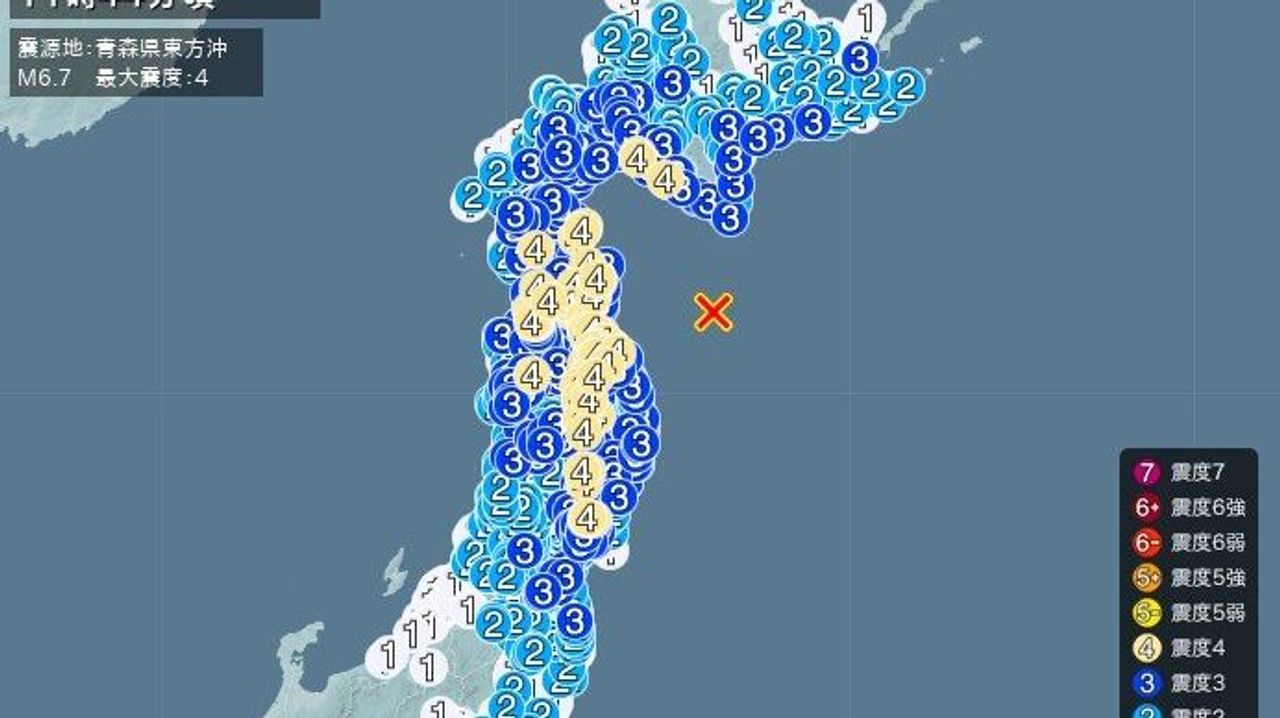
On December 12, 2001, at around 11時44分頃 (juu-ichi-ji yonjuu-yon-pun koro), a significant earthquake with a マグニチュード (magunichūdo) of 6.7 struck off the eastern coast of 青森県 (Aomori-ken), a prefecture in the northern part of Japan's main island, Honshu. The 地震 (jishin)—earthquake—was strong enough to be felt across several prefectures, including 北海道 (Hokkaidō), 青森県 (Aomori-ken), 岩手県 (Iwate-ken), 宮城県 (Miyagi-ken), and 秋田県 (Akita-ken). It reached a maximum intensity of 震度4 (shindo 4) on Japan’s unique seismic scale, meaning most people would have felt noticeable shaking, and objects might have fallen off shelves.
What heightened the urgency of this event was the potential for a 津波 (tsunami), a massive wave triggered by underwater seismic activity near the 震源 (shingen)—epicenter. Authorities quickly issued warnings, urging residents to stay vigilant and monitor official 津波情報 (tsunami jōhō)—tsunami information updates—for the latest developments. They also noted that there is a risk, or おそれがあります (osore ga arimasu), of further aftershocks. For those of us learning about Japan, this event is a stark reminder of how geography and nature continuously shape life in the country.
Cultural Context: Living with Earthquakes
Earthquakes aren’t just breaking news in Japan; they’re a fundamental part of life. Situated on the Pacific Ring of Fire, Japan is one of the most seismically active regions in the world. This reality is deeply embedded in the Japanese language and culture. Take the term 震度 (shindo), for instance—it refers to the intensity of shaking as experienced by people, distinct from the earthquake’s マグニチュード (magunichūdo) or magnitude. Unlike the internationally used Richter scale, Japan’s 震度 scale (ranging from 0 to 7) focuses on the human experience of a quake, reflecting how language mirrors lived reality.
Preparedness is also second nature in Japanese society. From regular school drills to household emergency kits, the idea of being ready for a 地震 (jishin) or 津波 (tsunami) is ingrained from childhood. This cultural mindset shines through in the calm, systematic way such news is reported and acted upon, prioritizing public safety and clear information over panic. As a learner, paying attention to events like this helps you grasp not just the language of emergencies but also the stoic resilience that defines much of Japanese identity.
Learn Japanese from This Article
Let’s turn this real-world event into a learning opportunity. Below, you’ll find key vocabulary, grammar patterns, and expressions pulled straight from the context of this earthquake news. These are terms and structures you’d encounter in Japan, taught the way native speakers understand them.
Key Vocabulary
| Japanese | Romaji | Meaning |
|---|---|---|
| 地震 | jishin | earthquake |
| 津波 | tsunami | tsunami |
| 震度 | shindo | seismic intensity (Japan’s scale) |
| マグニチュード | magunichūdo | magnitude (of an earthquake) |
| 震源 | shingen | epicenter (of an earthquake) |
| 観測 | kansoku | observation, measurement |
| おそれ | osore | fear, risk, concern |
Grammar Spotlight
1. 〜おそれがあります (osore ga arimasu): There is a risk/fear that ~
This pattern is often used in formal or news contexts to express concern or potential danger, such as during natural disasters.
- Structure: [Event/Condition] + おそれがあります
Examples:
- 津波のおそれがあります。 (Tsunami no osore ga arimasu.) - There is a risk of a tsunami.
- 余震のおそれがあります。 (Yoshin no osore ga arimasu.) - There is a risk of aftershocks.
- 大雨のおそれがあります。 (Ōame no osore ga arimasu.) - There is a risk of heavy rain.
When to Use: This is a polite, formal way to warn about potential dangers. You’ll hear it in news reports or official announcements.
2. 〜頃 (koro): Around (a time), approximately
This suffix is used to indicate an approximate time, often when the exact moment isn’t critical or known.
- Structure: [Time] + 頃
Examples:
- 11時44分頃に地震がありました。 (Juu-ichi-ji yonjuu-yon-pun koro ni jishin ga arimashita.) - There was an earthquake around 11:44 AM.
- 夕方頃に帰ります。 (Yūgata koro ni kaerimasu.) - I’ll return around evening.
- 去年の夏頃に日本に行きました。 (Kyonen no natsu koro ni Nihon ni ikimashita.) - I went to Japan around last summer.
When to Use: Use 頃 (koro) to soften a statement about time, making it less precise. It’s common in casual and formal speech alike.
Useful Expression
- 津波情報 (tsunami jōhō) - Tsunami information
- Example: 津波情報を確認してください。 (Tsunami jōhō o kakunin shite kudasai.) - Please check the tsunami information.
By learning these words and patterns, you’re not just memorizing vocabulary—you’re stepping into the way Japanese people communicate during critical moments. This is how language is taught in Japan: tied to real life, not just textbooks.
Closing Thoughts
Understanding events like this earthquake in northeastern Japan gives you more than just news; it offers a window into the language, culture, and resilience of the Japanese people. As you continue your journey with Japanese, remember that every word and phrase carries a story, often shaped by the environment and history of the country. Keep exploring, keep listening, and you’ll find yourself speaking and thinking more like a native.
これからもよろしくお願いします。 Kore kara mo yoroshiku onegaishimasu.