
A Demon Army’s Year-End Party: Unpacking Japan’s Bounenkai Tradition
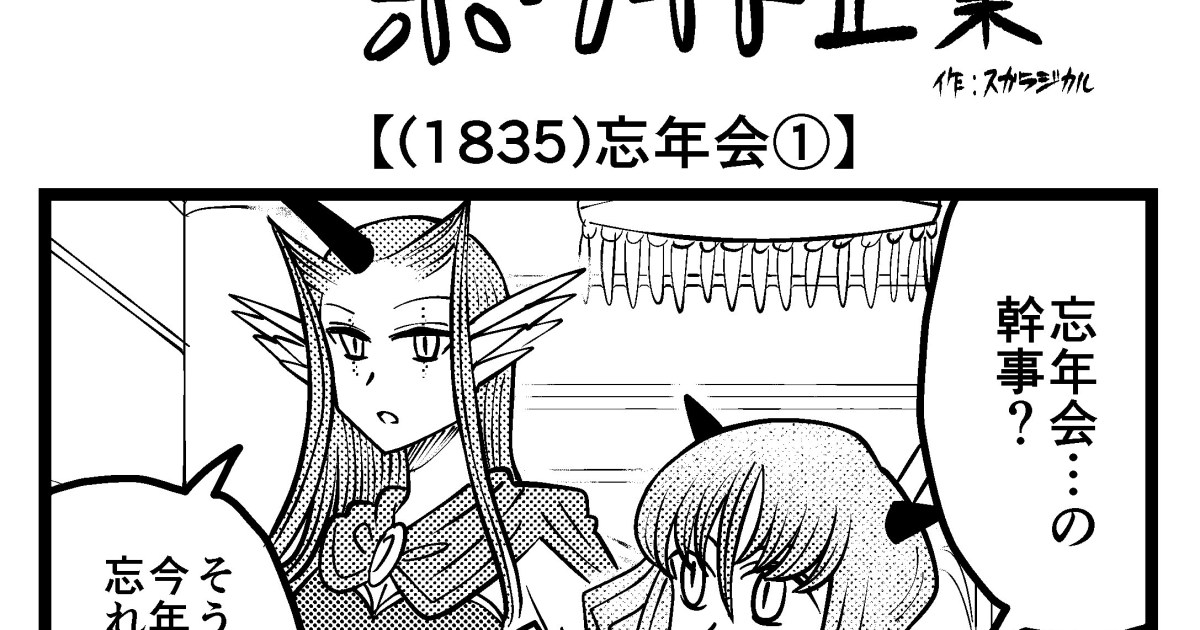
If you’ve ever wondered what a Japanese office party looks like, even in the most bizarre settings, you’re in for a hilarious treat! Today, we’re diving into a quirky manga strip from Rocket News titled “Demon King’s Army is a White Company,” specifically the 1835th episode about a 忘年会 (bounenkai), or year-end party. This isn’t just any celebration—it’s a window into the lighter side of Japanese work culture, even when the “office” belongs to a fictional demon army. Let’s explore this slice of Japanese humor and see what it teaches us about social traditions in Japan while picking up some authentic language along the way.
A Demon Army’s Unexpected Celebration
In this episode of the manga by Sugara Radical, titled 忘年会① (Bounenkai ①), we’re transported into the world of the Demon King’s Army. Surprisingly, this isn’t a dark and sinister crew but a “white” (employee-friendly) organization that values camaraderie. The storyline revolves around their year-end party, where the characters gather to reflect on the past year, share laughs, and strengthen their 絆 (kizuna), or bonds. The humor shines through in the absurdity of seeing demonic figures engage in such a relatable, human ritual—complete with awkward toasts like 乾杯 (kanpai) and party antics. It’s a perfect blend of fantasy and the everyday Japanese tradition of coming together with 仲間 (nakama), or colleagues and friends, to 祝う (iwau), meaning to celebrate.
Cultural Context: The Heart of a Bounenkai
If the term 忘年会 (bounenkai) is new to you, don’t worry—it’s a cornerstone of Japanese social life, especially in the workplace. Literally meaning “forget-the-year party,” a bounenkai is held in December to let go of the year’s stresses and celebrate with colleagues, friends, or family. Often hosted at an 居酒屋 (izakaya), a casual Japanese pub, these gatherings are a mix of duty and joy. They reflect the cultural value of 和 (wa), or harmony, which is central to group dynamics in Japan. Historically, these year-end parties date back centuries, evolving from formal court banquets to modern office get-togethers. In this manga, even a demon army embraces this tradition, showing just how deeply ingrained bounenkai is in Japanese society—whether in reality or fantasy!
Learn Japanese from This Article
Ready to pick up some authentic Japanese from this quirky story? Let’s break down key vocabulary and grammar patterns that’ll help you navigate conversations about celebrations and social events in Japan. These are words and structures you’d hear in real-life settings, just like how Japanese people learn them naturally.
Key Vocabulary
| Japanese | Romaji | Meaning |
|---|---|---|
| 忘年会 | bounenkai | year-end party |
| 居酒屋 | izakaya | Japanese pub, casual bar |
| 和 | wa | harmony |
| 仲間 | nakama | colleague, companion, friend |
| 祝う | iwau | to celebrate |
| 乾杯 | kanpai | cheers, toast |
| 絆 | kizuna | bond, connection |
These words are your ticket to understanding and joining in on Japanese social traditions. Imagine walking into an 居酒屋 (izakaya) and raising a glass with a hearty 乾杯 (kanpai)—you’ll feel right at home!
Grammar Spotlight: Expressing Desires and Trying New Things
Let’s spotlight two useful grammar patterns that fit perfectly with the theme of celebrations and social bonding. These are taught to Japanese kids as they grow up, and they’ll help you express yourself naturally.
〜たい: Want to (Do Something)
- Structure: Verb stem + たい
- Usage: Use this to express something you want to do. It’s a personal desire, often tied to your feelings or wishes.
- Examples:
- 忘年会に行きたいです。(Bounenkai ni ikitai desu.) - I want to go to a year-end party.
- 仲間と祝いたいです。(Nakama to iwai tai desu.) - I want to celebrate with my friends.
- 居酒屋で乾杯したい!(Izakaya de kanpai shitai!) - I want to toast at an izakaya!
This pattern is super handy when talking about events or activities you’re excited about. Just remember, it’s usually used for your own desires, not to guess someone else’s.
〜てみる: Try Doing (Something)
- Structure: Verb te-form + みる
- Usage: This means “to try doing something” and is great for suggesting or expressing curiosity about a new experience.
- Examples:
- 忘年会に参加してみたい。(Bounenkai ni sanka shite mitai.) - I want to try joining a year-end party.
- 居酒屋に行ってみよう。(Izakaya ni itte miyou.) - Let’s try going to an izakaya.
- 乾杯を言ってみる。(Kanpai o itte miru.) - I’ll try saying cheers.
This pattern adds a sense of experimentation or newness to your actions. It’s perfect for when you’re stepping into unfamiliar cultural territory, like attending your first bounenkai.
Useful Expression
Here’s a bonus phrase you’ll hear at any Japanese party: 乾杯! (Kanpai!) - “Cheers!” or “Toast!” It’s the go-to exclamation when clinking glasses, signaling the start of a celebration. Say it with energy, and you’ll instantly connect with everyone around you.
Closing Thoughts
Exploring the Demon King’s Army bounenkai isn’t just a laugh—it’s a reminder of how universal the need for connection and celebration is, even across cultures and fictional worlds. By learning words like 絆 (kizuna) and patterns like 〜たい (tai) and 〜てみる (te miru), you’re not just memorizing Japanese; you’re stepping into the heart of its traditions. Keep practicing, and soon, you’ll be ready to join a real 忘年会 (bounenkai) with confidence.
これからもよろしくお願いします。 Kore kara mo yoroshiku onegaishimasu.