
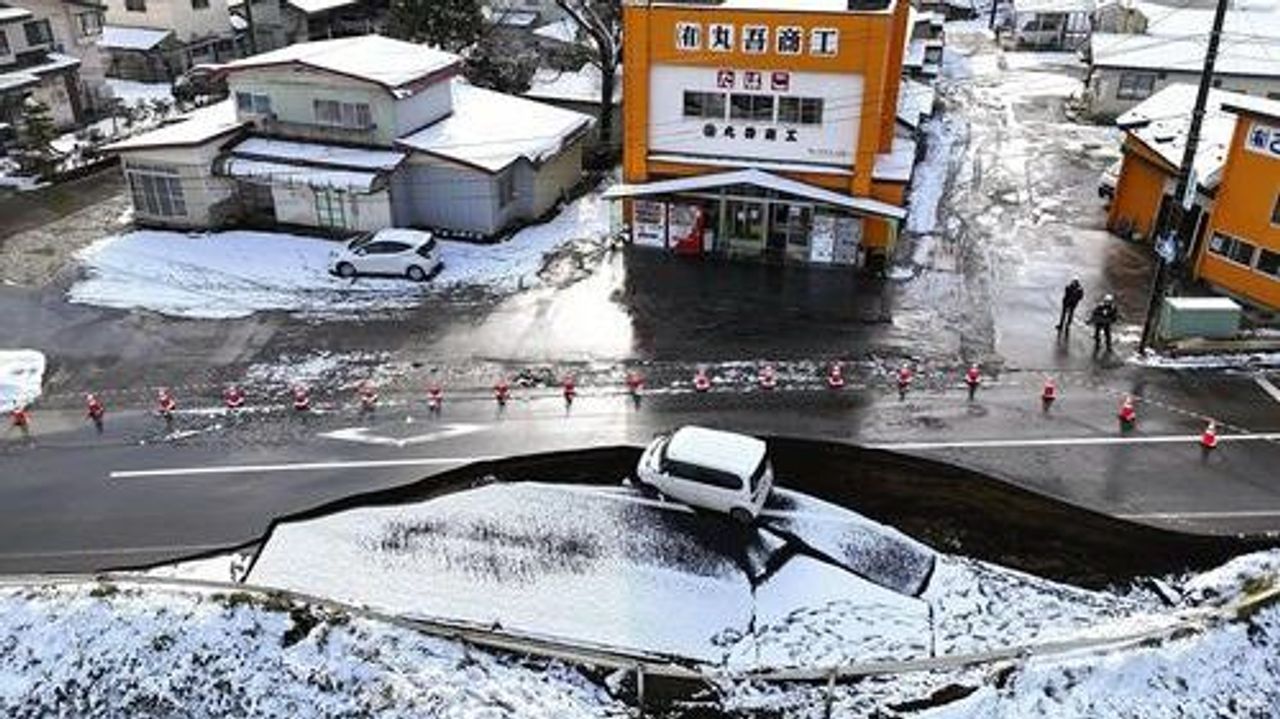
Japan’s Earthquake Warning Systems: A Lesson in Safety and Language
Have you ever wondered how Japan, a country so prone to earthquakes, manages to keep its people safe and informed during natural disasters? Today, we’re diving into a fascinating piece of news from 2001 that showcases Japan’s advanced earthquake warning systems and offers a unique glimpse into the resilience and organization embedded in Japanese society. As you learn Japanese authentically—the way it’s taught in Japan—you’ll discover that understanding the language goes hand in hand with appreciating the culture of preparedness and community. Let’s explore this story and pick up some practical language skills along the way!
Earthquake Alert Issued in Aomori Prefecture
On December 9, 2001, the 気象庁 (Kishōchō - Japan Meteorological Agency) made history by issuing a groundbreaking alert. After a powerful earthquake with a seismic intensity of 震度6強 (shindo roku-kyō - seismic intensity 6-strong) struck Hachinohe City in Aomori Prefecture, the agency released the first-ever “北海道・三陸沖後発地震注意情報” (Hokkaidō-Sanriku-oki Kōhatsu Jishin Chūi Jōhō - Hokkaido-Sanriku Offshore Subsequent Earthquake Advisory). This advisory warned of a higher possibility of a larger 後発地震 (kōhatsu jishin - subsequent earthquake) occurring off the eastern coast of Aomori. Residents in the 対象地域 (taishō chiiki - affected region) were urged to take special 備え (sonae - precautions) for the following week.
What makes this alert so significant is how it reflects Japan’s proactive approach to disaster management. Unlike many places where warnings might only come seconds before a quake, Japan’s systems often anticipate follow-up events, giving people time to prepare. For language learners like you, this news isn’t just about earthquakes—it’s a window into how Japan prioritizes safety and communal responsibility, values you’ll notice in the language and tone of public announcements like this 注意情報 (chūi jōhō - advisory information).
Cultural Context: Japan’s Earthquake Preparedness
Living in Japan means living with earthquakes, as the country sits on the Pacific Ring of Fire. If you’ve ever watched Japanese TV or visited, you might have noticed how earthquake drills and safety protocols are second nature to most people. From schoolchildren practicing evacuations to households stocking emergency kits, preparedness is part of daily life. The term 震度 (shindo - seismic intensity) is one you’ll hear constantly in Japan. Unlike the magnitude scale, which measures the energy of a quake at its source, 震度 focuses on how strongly the shaking is felt in a specific area—a practical way to assess immediate danger.
The 2001 advisory also highlights Japan’s collectivist mindset. When the 気象庁 urged residents to take precautions, it wasn’t just a suggestion—it was a call to communal action. This cultural value of shared responsibility often shows up in Japanese language, with expressions and announcements carrying a tone of urgency and unity. As you study Japanese, you’ll start to notice how these cultural underpinnings shape the way people communicate during crises like a 地震 (jishin - earthquake).
Learn Japanese from This Article
Let’s turn this news story into a learning opportunity! Below, you’ll find key vocabulary, a grammar spotlight, and useful expressions to help you discuss earthquakes and safety in Japanese—just as native speakers do.
Key Vocabulary
| Japanese | Romaji | Meaning |
|---|---|---|
| 地震 | jishin | earthquake |
| 震度 | shindo | seismic intensity |
| 気象庁 | kishōchō | Japan Meteorological Agency |
| 後発地震 | kōhatsu jishin | subsequent earthquake |
| 注意情報 | chūi jōhō | advisory information |
| 備え | sonae | preparation, precaution |
| 対象地域 | taishō chiiki | target area, affected region |
These words are incredibly useful if you’re following Japanese news or discussing natural disasters. For instance, you might hear 震度 (shindo) in a broadcast to describe how strong a quake felt in your area, or 備え (sonae) when talking about getting ready for emergencies.
Grammar Spotlight: 〜として and 〜を受ける
Let’s look at two grammar patterns that often appear in formal announcements or news like this one.
1. 〜として (as, in the role of, considering as)
This pattern is used to describe something or someone in a specific role or capacity. It’s common in official statements to clarify the context or perspective.
- Structure: Noun + として
- Example 1: 気象庁として、情報を発表しました。 (Kishōchō toshite, jōhō o happyō shimashita.
- As the Japan Meteorological Agency, we announced the information.)
- Example 2: 住民として、備えが必要です。 (Jūmin toshite, sonae ga hitsuyō desu.
- As residents, preparations are necessary.)
- When to use: Use this to emphasize the role or identity of the subject, often in formal or explanatory contexts like news or public notices.
2. 〜を受ける (to receive an impact, influence, etc.)
This pattern is often used to describe receiving something intangible, like damage, influence, or an impact—perfect for talking about earthquakes.
- Structure: Noun + を受ける
- Example 1: 地震の影響を受けました。 (Jishin no eikyō o ukemashita.
- We received the impact of the earthquake.)
- Example 2: 注意情報を受けて、避難しました。 (Chūi jōhō o ukete, hinan shimashita.
- Receiving the advisory information, we evacuated.)
- When to use: Use this when describing the effect or consequence of an event, especially in the context of disasters or news.
Useful Expression
Here’s a practical phrase you might hear or use during an emergency situation in Japan:
- 気をつけてください。 (Ki o tsukete kudasai.
- Please be careful.) This is a polite way to urge someone to stay safe, often used by authorities or even friends during times of caution.
By practicing these words and patterns, you’ll not only expand your vocabulary but also get a feel for how Japanese is used in real-life situations like disaster preparedness. It’s learning the way Japanese people do—rooted in context and culture!
Closing Thoughts
Thanks for joining me on this journey into Japan’s earthquake warning systems and the language that surrounds them. Understanding how Japan prepares for disasters like 地震 (jishin) gives you a deeper appreciation for the culture and the way Japanese is spoken in moments of urgency and unity. Keep practicing these words and grammar patterns, and you’ll be one step closer to speaking Japanese authentically.
これからもよろしくお願いします。 Kore kara mo yoroshiku onegaishimasu.