
Discover Japan's Quirky "Potato Chip Rice" with アバンチュールめし
Have you ever wandered into a Japanese convenience store and stumbled upon something so bizarre yet intriguing that you just had to try it? If you’re learning Japanese and craving a peek into the playful, innovative side of Japanese food culture, you’re in for a treat. Today, we’re diving into a curious new product spotted at a Seven-Eleven in Japan: a seasoning mix called アバンチュールめし (Abanchūru Meshi), which translates to “Adventure Meal.” It’s designed specifically for creating “Potato Chip Rice,” an unconventional dish that’s as quirky as it sounds. Let’s explore this culinary experiment, uncover what it reveals about modern Japanese tastes, and pick up some authentic Japanese along the way.
The Discovery of “Potato Chip Rice” Seasoning
Imagine yourself browsing the seasoning aisle at a Japanese convenience store. Amidst the neatly arranged shelves—a perfect 陳列 (chinretsu, display)—a peculiar package grabs your attention. It’s labeled アバンチュールめし (Abanchūru Meshi), marketed as a “dedicated 調味料 (chōmiryō, seasoning)” for something called “Potato Chip Rice.” At first, you might think it’s just another snack idea, but then it hits you—you’ve never heard of rice and ポテトチップス (poteto chippusu, potato chips) being combined before. What is this mysterious dish?
Launched exclusively at Seven-Eleven stores in Japan on October 13, 2025, this product by Ebara Foods promises a 禁断 (kindan, forbidden) fusion of potato chips and steamed white rice. Priced at 213 yen (tax included), it comes in two bold 風味 (fūmi, flavors): ガーリックバター風味 (Gārikku Batā Fūmi, Garlic Butter Flavor) and 明太マヨ風味 (Mentai Mayo Fūmi, Spicy Cod Roe Mayo Flavor). Each package contains two single-serving packets, with simple instructions: mix one packet with about 180 grams of warm rice, then top it with potato chips to create your own ポテチめし (Potechi Meshi, Potato Chip Rice). Out of sheer 好奇心 (kōkishin, curiosity), the original writer decided to give it a try—and we’re following along to see what happens.
The Experiment: Crafting “Potechi Meshi”
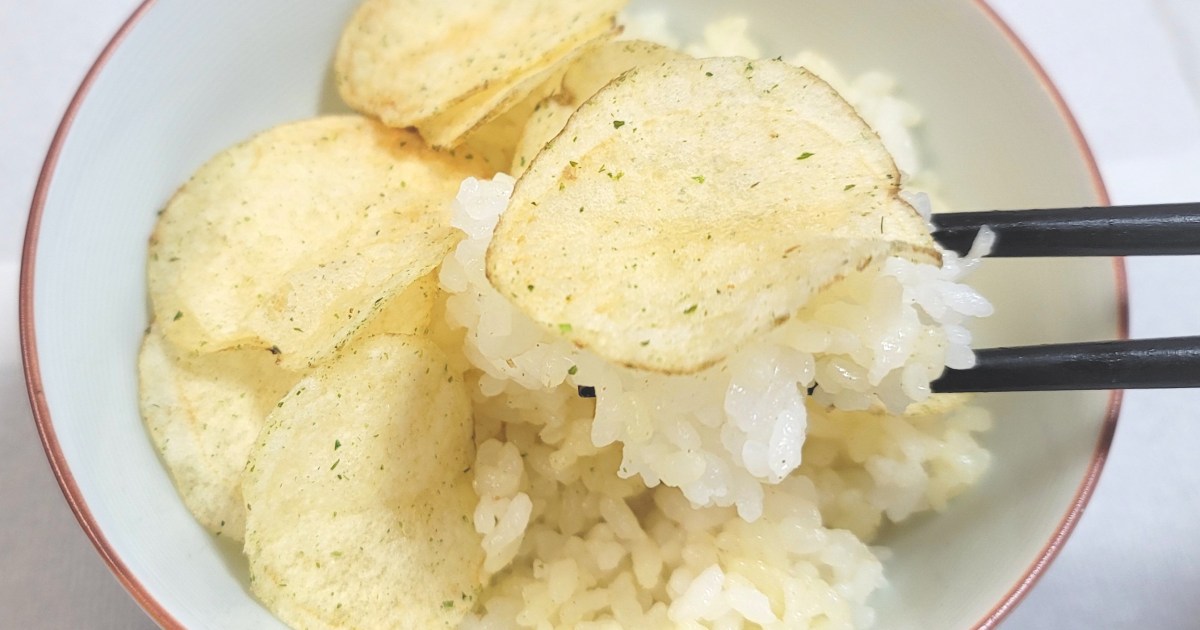
Following the package instructions, the experiment began with the Garlic Butter flavor. The seasoning was mixed into a bowl of warm rice, and classic lightly salted potato chips (うすしお味, Usushio Aji) were added on top. But here’s where things got tricky: the package vaguely suggested using an “適量 (tekiryō, appropriate amount)” of chips. How much is “appropriate” for such an unusual dish? After some hesitation, a handful of chips was added, and the result looked… well, odd. It didn’t resemble any familiar cuisine, yet it sparked a sense of adventure.
The first bite was surprising—not because it was bad, but because it was unexpectedly tasty. The Garlic Butter flavor was rich and captivating, showcasing Ebara Foods’ skill in crafting seasonings. However, there was a catch: the potato chips, meant to be a key player in this dish, felt like an afterthought. The seasoning overpowered everything, leaving the chips with little impact. Even switching to seaweed-salted chips (のりしお味, Nori Shio Aji) didn’t make much difference.
Next up was the Spicy Cod Roe Mayo flavor, and it was even more intense. Its bold, junk-food-like taste completely dominated, making the dish feel more like “Spicy Mayo Rice” than ポテチめし. In a final twist, the chips were ditched altogether, and the rice and seasoning were enjoyed solo. Let’s just say the result was incredibly satisfying.
A Bittersweet Verdict on アバンチュールめし
So, what’s the final take on アバンチュールめし? It’s a bittersweet conclusion. As a 調味料 (chōmiryō, seasoning) for rice, it’s a masterpiece—both flavors transform plain rice into something extraordinary. But as a companion to potato chips, it falls short. The chips struggle to stand out against the powerful seasoning, leaving rice as the star of the show. The writer suggests this might still be an experimental product, with room to balance the components better.
Still, there’s no denying the charm of trying something so uniquely Japanese. For language learners and culture enthusiasts, this product offers a taste of Japan’s playful food scene. Who knows? By experimenting with it now, you might be ahead of the curve before ポテチめし becomes a household name.
Cultural Context: Japan’s Passion for Food Innovation
If you’ve ever stepped into a Japanese convenience store like Seven-Eleven, you’ll know they’re a goldmine of creative, often quirky food products. Japan has a deep-rooted culture of 食の革新 (Shoku no Kakushin, Food Innovation), where companies constantly push boundaries with new flavors and combinations to delight consumers. From seasonal KitKat varieties to ramen-flavored snacks, blending the familiar with the unexpected is a hallmark of Japanese food culture. ポテチめし fits perfectly into this trend, reflecting a boldness to experiment—even if the result isn’t flawless.
Moreover, rice (ご飯, Gohan) is sacred in Japanese cuisine, often paired with diverse toppings or seasonings. Combining it with something as casual and Western as potato chips might seem strange to outsiders, but it showcases Japan’s talent for fusion cuisine—adapting global influences into something distinctly Japanese. Products like アバンチュールめし also highlight the importance of convenience in modern Japanese life. In a fast-paced society, quick and easy meals are essential, and this seasoning offers just that, with a fun twist.
Learn Japanese from This Article
Let’s turn this quirky food story into a learning opportunity. Below, you’ll find key vocabulary, grammar patterns, and expressions to help you understand Japanese as it’s used in real contexts—just like native speakers learn it.
Essential Vocabulary
Here are some useful words from the world of Japanese food and convenience store culture. Memorize these to expand your everyday Japanese:
| Japanese | Romaji | Meaning |
|---|---|---|
| 調味料 | chōmiryō | seasoning, condiment |
| 陳列 | chinretsu | display (of goods), arrangement |
| ポテトチップス | poteto chippusu | potato chips |
| 風味 | fūmi | flavor, taste |
| 禁断 | kindan | forbidden, prohibited |
| 適量 | tekiryō | appropriate amount, suitable quantity |
| 好奇心 | kōkishin | curiosity |
Grammar Spotlight
Let’s focus on two grammar patterns that often appear in Japanese articles and conversations about products or experiences. These will help you express observations and surprises authentically.
〜とのことである (to no koto de aru): It is said that, according to
This formal expression is often used in writing or reporting to indicate information from a source. It’s like saying “according to” or “it is said that” in English.
- Structure: [Statement/Information] + とのことである
- Examples:
- この商品はセブンイレブン限定で発売されているとのことである。 (Kono shōhin wa Sebun Irebun gentei de hatsubai sarete iru to no koto de aru.) It is said that this product is sold exclusively at Seven-Eleven.
- 新しい調味料はご飯に合うとのことである。 (Atarashii chōmiryō wa gohan ni au to no koto de aru.) According to reports, the new seasoning goes well with rice.
- When to Use: Use this in formal writing or when summarizing information from a source, like product descriptions or news.
〜かと思いきや (ka to omoikiya): I thought... but (contrary to expectation)
This expression conveys surprise when something turns out differently than expected. It’s conversational and great for storytelling.
- Structure: [Expectation] + かと思いきや + [Unexpected Result]
- Examples:
- ポテチめしは美味しくないかと思いきや、意外と良かった。 (Potechi meshi wa oishikunai ka to omoikiya, igai to yokatta.) I thought Potato Chip Rice wouldn’t be tasty, but it was surprisingly good.
- 調味料が強すぎるかと思いきや、ちょうどいい味だった。 (Chōmiryō ga tsuyosugiru ka to omoikiya, chōdo ii aji datta.) I thought the seasoning would be too strong, but it was just right.
- When to Use: Perfect for casual conversations or writing when you want to highlight a surprising twist, like in food reviews or personal stories.
Useful Expressions
Here’s a handy phrase inspired by the article to use when you’re unsure about quantities in cooking or instructions:
- 適量 (tekiryō, appropriate amount): Often seen on Japanese recipes or product packages, it means “use as much as needed.” You might hear or say: 適量を加えてください。 (Tekiryō o kuwaete kudasai.) Please add an appropriate amount.
Learning these words and patterns directly from real-life contexts like this food story helps you grasp Japanese the way it’s taught in Japan—rooted in everyday situations and cultural nuances.
Closing Thoughts
Exploring products like アバンチュールめし isn’t just about tasting something new—it’s a window into Japan’s creative spirit and a chance to learn authentic Japanese along the way. Whether you’re intrigued by ポテチめし or just want to expand your vocabulary, stories like this make language learning feel alive and relevant. Keep your 好奇心 (kōkishin, curiosity) alive, and let’s continue this journey together.
これからもよろしくお願いします。 Kore kara mo yoroshiku onegaishimasu.