
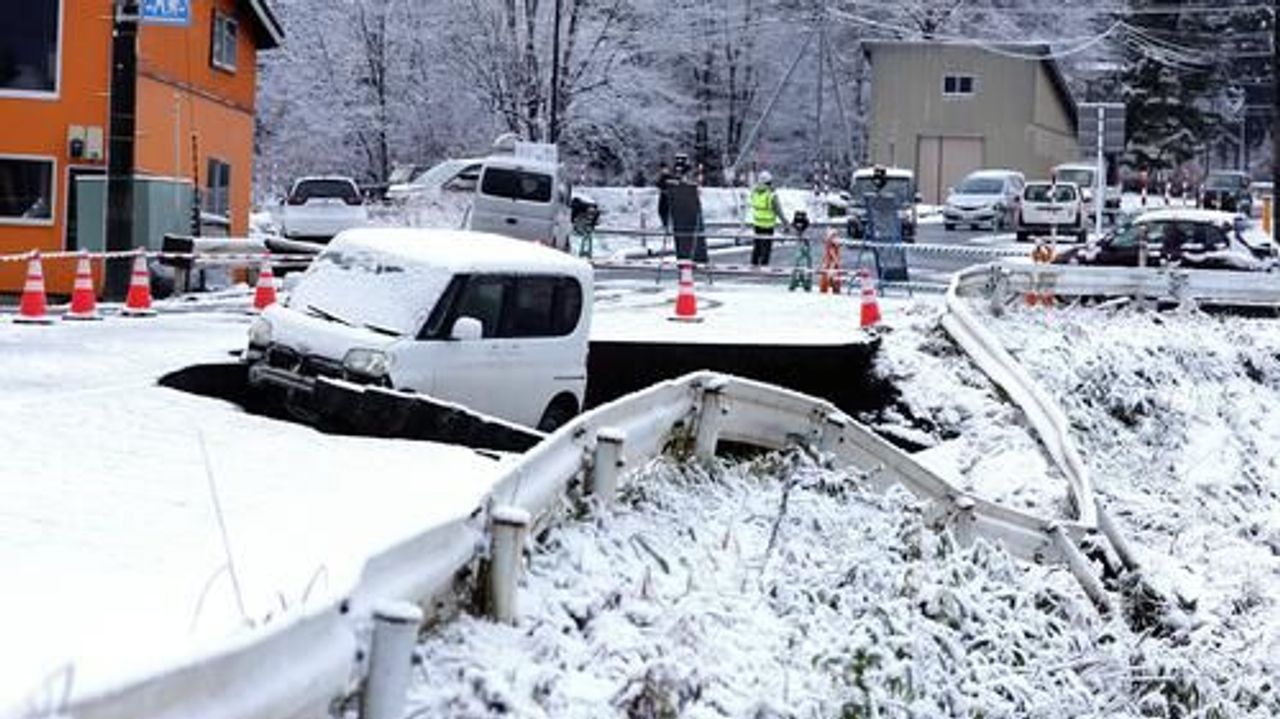
Japan’s First Earthquake Advisory: A Lesson in Language and Preparedness
Have you ever wondered how Japan, a country so familiar with earthquakes, communicates warnings and keeps its people safe during seismic events? In today’s article, we’re diving into a significant moment from 2001 when a unique earthquake advisory was issued for the first time in Japanese history. This isn’t just a news story—it’s a window into Japan’s advanced disaster preparedness systems and how the language reflects urgency and caution. Let’s explore this event and uncover some authentic Japanese expressions tied to it.
Earthquake Off Aomori Triggers First-Ever Advisory
On the night of December 8, 2001, an earthquake struck off the eastern coast of 青森県 (Aomori-ken), a prefecture in the northern part of Japan’s main island, Honshu. Following this event, the 気象庁 (kishōchō), or Japan Meteorological Agency (JMA), along with the Cabinet Office, issued the first-ever 北海道・三陸沖後発地震注意情報 (Hokkaidō-Sanriku-oki Kōhatsu Jishin Chūi Jōhō), translating to "Hokkaido-Sanriku Offshore Subsequent Earthquake Advisory." This advisory warned that the 可能性 (kanōsei), or likelihood, of a 大規模 (daikibo)—large-scale—earthquake occurring within the next week was higher than usual, though still rare, at about a 1-in-100 chance. Experts urged the public to remain 冷静 (reisei), meaning calm and composed, rather than panic, emphasizing the importance of a measured response in such situations.
This event marked a milestone in Japan’s disaster communication, showcasing how the country uses precise systems and language to inform citizens without causing unnecessary alarm. For learners like you, it’s a chance to see how Japanese authorities balance technical information with public reassurance through carefully chosen words like 注意情報 (chūi jōhō), which means advisory or caution notice.
Cultural Context: Japan’s Relationship with Earthquakes
Japan sits on the Pacific Ring of Fire, making it one of the most earthquake-prone countries in the world. Earthquakes, or 地震 (jishin), aren’t just natural events here—they’re deeply woven into the culture, history, and daily life. From school drills to household emergency kits, preparedness is second nature to most Japanese people. The issuance of an advisory like the 後発地震注意情報 (Kōhatsu Jishin Chūi Jōhō)—a "subsequent earthquake advisory"—reflects Japan’s proactive approach. Unlike a direct warning, this type of advisory signals a heightened risk without guaranteeing an event, a nuance often communicated carefully in Japanese to avoid mass panic.
For English speakers, understanding these terms and the calm, structured way they’re presented offers insight into Japan’s collective mindset. It’s not just about the words—it’s about the cultural value of staying composed and ready. This cultural lens shapes how news like this is reported and received, teaching us why maintaining 冷静 (reisei)—calmness—is so vital in times of uncertainty.
Learn Japanese from This Article
If you’ve ever wanted to learn Japanese the way it’s taught in Japan, focusing on real-world contexts like disaster preparedness is a fantastic start. Let’s break down some key vocabulary and grammar from this event that you can use to deepen your understanding of the language and culture.
Key Vocabulary
Here are some essential words tied to earthquakes and advisories that you’ll encounter in Japanese news or daily life:
| Japanese | Romaji | Meaning |
|---|---|---|
| 地震 | jishin | earthquake |
| 震源 | shingen | epicenter (of an earthquake) |
| 注意情報 | chūi jōhō | advisory information, caution notice |
| 気象庁 | kishōchō | Japan Meteorological Agency (JMA) |
| 大規模 | daikibo | large-scale |
| 可能性 | kanōsei | possibility, likelihood |
| 冷静 | reisei | calm, composed |
These terms are often used in formal announcements or news reports, so memorizing them will help you follow real Japanese media with confidence.
Grammar Spotlight: 〜よりは高い (Higher Than ~)
One useful structure from this context is 〜よりは高い (~yori wa takai), which means "higher than ~." It’s often used to compare probabilities or levels, as seen in the advisory’s mention of the likelihood of an earthquake being higher than usual.
- Structure: [基準/Standard] + よりは + 高い (higher)
- Example Sentences:
- 今回の地震の可能性は普段よりは高いです。 (Konkai no jishin no kanōsei wa fudan yori wa takai desu.) The likelihood of an earthquake this time is higher than usual.
- この地域の危険度は他の場所よりは高いです。 (Kono chiiki no kikendo wa hoka no basho yori wa takai desu.) The danger level in this area is higher than in other places.
- 今日の気温は昨日よりは高いです。 (Kyō no kion wa kinō yori wa takai desu.) Today’s temperature is higher than yesterday’s.
This pattern is incredibly versatile and can be used in everyday conversations beyond disaster contexts, making it a practical addition to your Japanese toolkit.
Useful Expression: 〜を呼び掛ける (To Call For, To Urge)
Another expression worth noting is 〜を呼び掛ける (~o yobikakeru), meaning "to call for" or "to urge." It’s often used by authorities or media to encourage specific actions, as seen when experts urged calmness during the advisory.
- Structure: [Action/Noun] + を + 呼び掛ける
- Example Sentences:
- 政府は冷静を呼び掛けました。 (Seifu wa reisei o yobikakemashita.) The government called for calmness.
- 先生が生徒に協力を呼び掛けました。 (Sensei ga seito ni kyōryoku o yobikakemashita.) The teacher urged the students to cooperate.
- When to Use: This is a formal expression often found in public announcements or situations where someone in authority is encouraging a group to act in a certain way.
By practicing this expression, you’ll get a feel for how Japanese communication often prioritizes collective responsibility and polite urging over direct commands.
Closing Thoughts
Learning Japanese through real events like the 2001 earthquake advisory gives you a glimpse into how language and culture intertwine in Japan. From understanding key terms like 地震 (jishin) to grasping the calm urgency behind expressions like 冷静を呼び掛ける (reisei o yobikakeru), you’re not just learning words—you’re learning the Japanese way of thinking. Keep practicing these phrases, and you’ll find yourself more connected to the language as it’s used every day in Japan.
これからもよろしくお願いします。 Kore kara mo yoroshiku onegaishimasu.