
On April 1, LINEヤフー announced it will gradually shift to requiring employees to come to the office “in principle, three times a week” (原則週3回). The move marks another major change in the company’s post-pandemic work style.
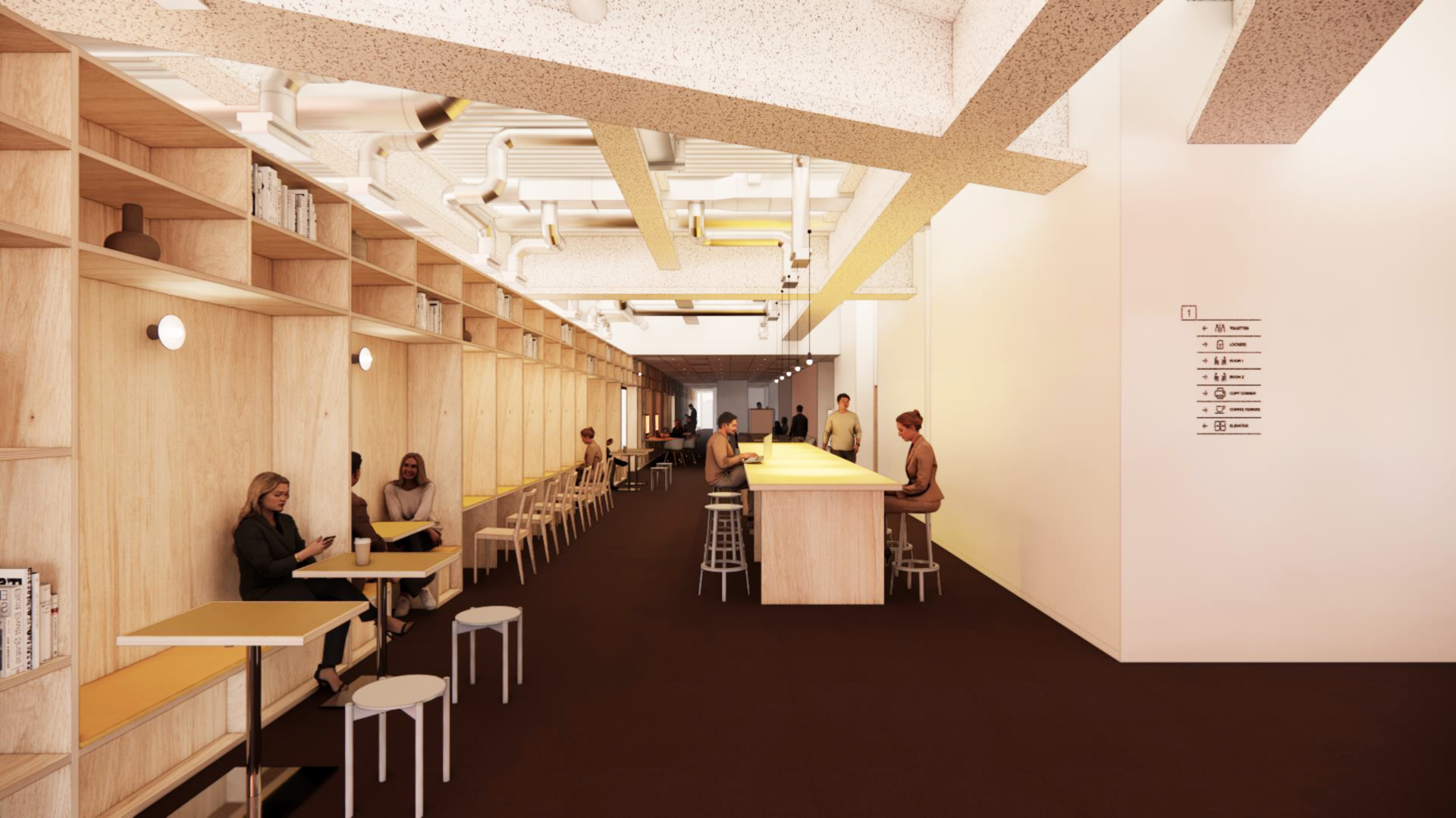
At the same time, the company revealed it has opened a new business base, the “Akasaka Office,” inside Akasaka Trust Tower in Minato Ward, Tokyo—directly connected to Tameike-Sannō and Kokkai-gijidō-mae stations. All areas of the new オフィス (ofisu) will fully open on May 11.
From Full Remote to Three Days in the Office
LINEヤフー’s approach to リモートワーク (rimooto waaku) has changed dramatically over the past few years.
Before the 2023 management integration:
- Yahoo (before merging) introduced unlimited remote work in 2020 during the COVID-19 pandemic.
- In 2022, it created a system allowing employees to live anywhere in Japan.
- LINE (before merging) revised its work rules in 2021, making it possible for departments to operate fully remotely or require office attendance only at the end of the month or for regular meetings.
After the two companies merged on October 1, 2023, forming LINEヤフー, policies gradually shifted.
In April 2025, the company abolished フルリモート (furu rimooto), or fully remote work. It required business divisions to come to the office once a week in principle, and other divisions once a month.
Now, starting April 2026, the company will raise attendance to three days per week in principle—and expand its office space at the same time.
In Japanese, the company “requires” attendance using the expression:
- 出社を求める (shussha o motomeru) — to require office attendance
We’ll look at this grammar more closely later.
The New Akasaka Office: “Stay Closer, Go Further”
The new office’s コンセプト (konseputo, concept) is:
“Stay Closer, Go Further”
This phrase also appears in LINEヤフー’s コーポレートロゴ (kooporeeto rogo, corporate logo).
The goal? To encourage spontaneous encounters and conversations among employees.
The office layout is designed to create 偶発的な出会い (guuhatsuteki na deai) — accidental or spontaneous meetings.
For example:
- A lounge space called CONNECT STREET is placed along the path to work desks, encouraging casual interaction.
- A cross-department meeting space called CONNECT HUB promotes collaboration beyond organizational boundaries.
- A quiet, enclosed work area called STUDY ROOM is designed for deeper concentration.
Not only are there spaces for collaboration, but there are also individual focus areas and spaces that can be used on a プロジェクト (purojekuto) basis. The office is equipped with adjustable standing desks and デュアルモニター (dyuaru monitaa, dual monitor setups).
The design balances teamwork and personal productivity—reflecting a hybrid work philosophy rather than a complete return to pre-pandemic norms.
Cultural Context: Why Office Design Matters in Japan
Japanese companies traditionally emphasized physical presence in the office. Being seen at your desk was often linked to dedication and teamwork.
The pandemic disrupted this long-standing culture. Many companies rapidly adopted リモートワーク (rimooto waaku), and some—like Yahoo—went as far as unlimited remote work.
Now, companies like LINEヤフー are searching for a middle ground.
The phrase “Stay Closer, Go Further” reflects a belief that innovation happens through direct communication. Designing movement paths that encourage chance encounters shows how seriously Japanese companies think about physical space as a tool for collaboration.
The idea of engineering “accidental” communication may sound unusual, but in Japan’s group-oriented corporate culture, informal hallway conversations can play an important role in decision-making and trust-building.
Learn Japanese from This Article
Key Vocabulary
| Japanese | Romaji | Meaning |
|---|---|---|
| リモートワーク | rimooto waaku | remote work |
| フルリモート | furu rimooto | fully remote work |
| オフィス | ofisu | office |
| コンセプト | konseputo | concept |
| コーポレートロゴ | kooporeeto rogo | corporate logo |
| ラウンジ | raunji | lounge |
| プロジェクト | purojekuto | project |
| デュアルモニター | dyuaru monitaa | dual monitor setup |
Notice how many of these are written in katakana. They’re loanwords adapted into Japanese pronunciation. Mastering this pattern will dramatically improve your reading ability in tech news.
Grammar Spotlight
1️⃣ 〜を求める — “to require” or “to request”
Structure: [Noun] + を求める
In this article:
- 出社を求める (shussha o motomeru) — to require office attendance
Example sentences:
会社は社員に説明を求めた。 Kaisha wa shain ni setsumei o motometa. The company requested an explanation from employees.
政府は協力を求めている。 Seifu wa kyōryoku o motomete iru. The government is seeking cooperation.
It’s often used in formal or business contexts.
2️⃣ 〜だけでなく〜も — “not only ~ but also ~”
Structure: A だけでなく B も
Example from this article’s context:
- 共創スペースだけでなく、個人で集中できるスペースも設置した。 Kyōsō supēsu dake de naku, kojin de shūchū dekiru supēsu mo setchi shita. They installed not only collaboration spaces but also individual focus spaces.
Another example:
- 日本だけでなく、海外でも人気がある。 Nihon dake de naku, kaigai demo ninki ga aru. It’s popular not only in Japan but also overseas.
This is an extremely useful pattern for business writing and formal explanations.
Useful Expressions
- 原則週3回 (gensoku shū sankai) — three times a week in principle
- 段階的に移行する (dankaiteki ni ikō suru) — to transition gradually
- 経営統合 (keiei tōgō) — management integration / corporate merger
- 偶発的な出会い (guuhatsuteki na deai) — spontaneous encounter
These expressions frequently appear in Japanese business news.
Continue Learning
Working on your reading skills? Our Katakana Essentials: Adapting Global Words to Japanese lesson is a great next step.
Curious about the Japanese used here? Our Basic Vocabulary Building: Embracing Words Without Latin Ties lesson covers this in depth.
Want to strengthen your script reading? Check out Reading and Writing in Japanese II: Hiragana and Katakana.
As Japan’s work culture continues to evolve, so does the language used to describe it. By reading real news like this, you’re not just learning vocabulary—you’re seeing how modern Japanese business actually communicates.
これからもよろしくお願いします。 Kore kara mo yoroshiku onegaishimasu.