
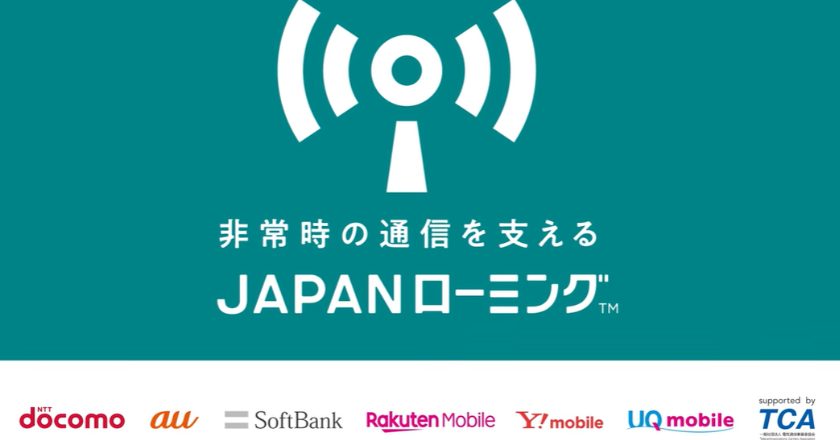
On April 1, a new nationwide emergency system called 「JAPANローミング」 (JAPAN roomingu) officially began operation in Japan. The goal? To keep critical communication possible during large-scale 災害 (saigai, disasters) or major 通信障害 (tsuushin shougai, communication outages).
Under this system, Japan’s major 携帯キャリア (keitai kyaria, mobile carriers) can temporarily share their ネットワーク (nettowaaku, networks) with each other—ensuring that people can still make emergency calls even if their own provider’s service goes down.
What Is “JAPAN Roaming”?
“JAPAN Roaming” is a cooperative framework among Japan’s major mobile operators:
- NTT Docomo
- SoftBank
- KDDI (including Okinawa Cellular Telephone)
- Rakuten Mobile
If one company’s network is damaged in a disaster or outage, another carrier can provide access through its 4G LTE (eru tii ii) network.
In other words, your phone might temporarily connect to a rival company’s signal—so you can still reach emergency services.
How the System Works
The support is provided on a city, ward, town, or village basis (市区町村単位).
There are two levels of service:
1. Emergency Calls Only
This option allows users to contact:
- Police
- Fire departments
- Japan Coast Guard
In Japanese, the article describes this as support for 緊急通報のみ (kinkyuu tsuuhou nomi), meaning “emergency calls only.”
2. Full Roaming
Called フルローミング (furu roomingu), this expanded level includes:
- Voice calls
- Data communication up to 300 kbps (both upload and download)
- SMS (es emu esu, text messaging service)
Which level is activated depends on discussions between the carriers, based on the situation.
The article uses the expression 状況に応じて (joukyou ni oujite) — “depending on the situation.” This is a key phrase you’ll see often in formal Japanese.
Why This Matters in Japan
Japan experiences frequent natural disasters, including earthquakes and typhoons. Communication infrastructure can be heavily affected during large-scale events.
The new system allows companies to cooperate instead of operating independently during emergencies. Rather than each carrier managing only its own subscribers, they can provide temporary relief to users of another company.
This approach highlights an important aspect of Japanese crisis management: coordination and structured decision-making among organizations.
Learn Japanese from This Article
Let’s break down some of the key vocabulary and grammar you saw.
Key Vocabulary
| Japanese | Romaji | Meaning |
|---|---|---|
| 災害 | saigai | disaster |
| 通信障害 | tsuushin shougai | communication outage |
| 携帯キャリア | keitai kyaria | mobile carrier |
| ローミング | roomingu | roaming |
| ネットワーク | nettowaaku | network |
| LTE | eru tii ii | 4G LTE standard |
| SMS | es emu esu | text messaging service |
| フルローミング | furu roomingu | full roaming |
| 状況 | joukyou | situation, circumstances |
| 緊急通報 | kinkyuu tsuuhou | emergency call |
Notice how many of these words are written in katakana. Japanese technology reporting uses a lot of loanwords adapted into Japanese pronunciation.
Grammar Spotlight
1. 〜際に(〜さいに)
Meaning: “When…” / “On the occasion of…” (formal)
From the article:
大規模な災害や通信障害が発生した際に daikibo na saigai ya tsuushin shougai ga hassei shita sai ni “When large-scale disasters or communication outages occur…”
This structure is commonly used in formal writing and official announcements.
Pattern: Verb (past plain form) + 際に
Example:
- 地震が起きた際に連絡してください。 jishin ga okita sai ni renraku shite kudasai “Please contact us when an earthquake occurs.”
It sounds more formal than just saying ときに (toki ni).
2. 〜に応じて(〜におうじて)
Meaning: depending on; according to
From the article:
被災した事業者の状況に応じて hisai shita jigyousha no joukyou ni oujite “Depending on the affected company’s situation…”
Pattern: Noun + に応じて
Examples:
- 状況に応じて対応します。 joukyou ni oujite taiou shimasu “We will respond according to the situation.”
- 人数に応じて席を用意します。 ninzuu ni oujite seki o youi shimasu “We will prepare seats depending on the number of people.”
This is a very useful phrase for business Japanese and formal communication.
Useful Expression
Here’s a practical phrase you can reuse:
- 協議で決定する kyougi de kettei suru “To decide through discussion”
In formal settings, especially corporate or government contexts, decisions are often described as being made “through consultation.”
Continue Learning
Working on your reading skills? Our Katakana Essentials: Adapting Global Words to Japanese lesson is a great next step.
Want to learn more about tech? Check out our lesson on Basic Vocabulary Building: Embracing Words Without Latin Ties.
Want to strengthen your reading foundation? Explore Reading and Writing in Japanese II: Hiragana and Katakana.
As you read more real Japanese news, you’ll start noticing patterns like 〜際に and 〜に応じて everywhere—especially in official announcements. Articles like this are a powerful way to learn Japanese the way it’s actually written in Japan.
これからもよろしくお願いします。 Kore kara mo yoroshiku onegaishimasu.