
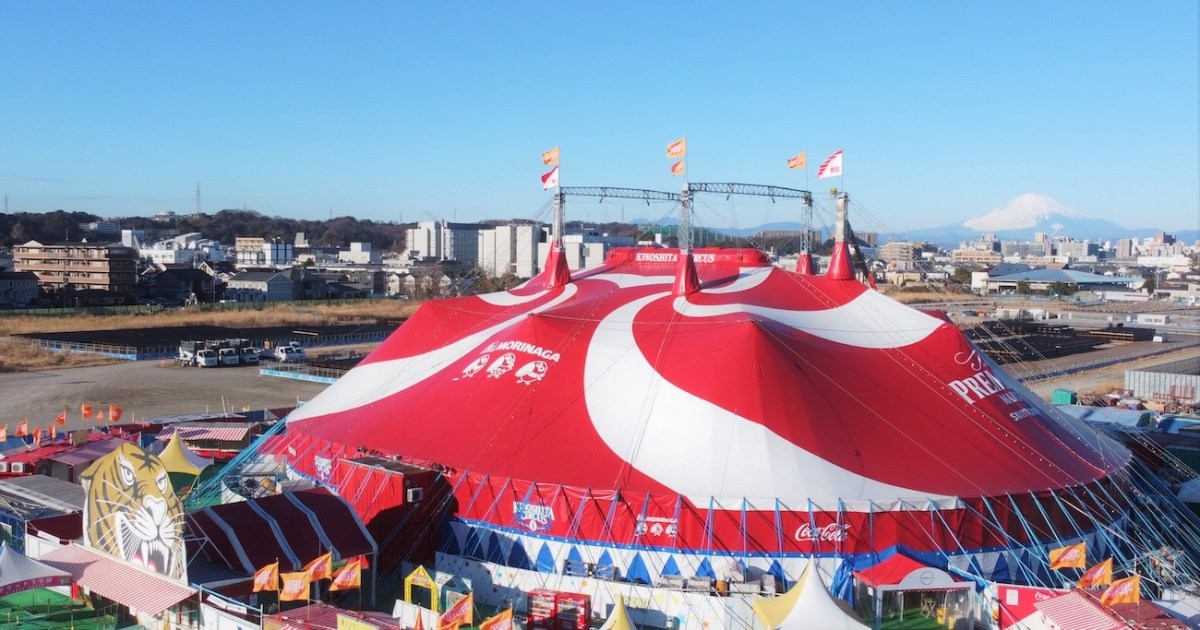
In 2004, during Japan’s so-called 就職氷河期 (shuushoku hyōgaki)—the “employment ice age”—one university student made a decision that would change his life. Instead of continuing to wear a recruit suit and attend company seminars, he jumped into the world of Kinoshita Circus.
More than ten years later, after touring 50 cities from Yokohama to Kyoto, he finally put those memories into words.
From Recruit Suit to Circus Tent
During the 就職氷河期 (shuushoku hyōgaki), many graduates struggled to find stable jobs. Like his classmates, the writer wore a black suit and 足を運んでいた (ashi o hakonde ita)—literally “carried his feet”—to company information sessions and interviews.
Yet something felt off. There was no 現実味 (genjitsumi), no sense of reality, in the future that awaited him.
Then he saw Kinoshita Circus: dazzling performances, superhuman artists, trained animals, and a traveling lifestyle that moved from city to city. It felt like a world untouched by the cold air of the job market. So he made a bold choice:
“I had no choice but to jump in!”
Anxiety…とは言いつつも
Of course, excitement doesn’t erase fear.
He admits that before joining, he had anxious dreams about being bullied by a terrifying animal trainer. He even worried about absurd possibilities, like “What if I end up marrying a Russian performer?”
People around him questioned his decision:
- “Why the circus?”
- “What was the point of going to university? (laugh)”
Even if the speaker forgets such comments, the person who hears them remembers.
Still, he realized something important: the future an easygoing university student imagines is often たかが知れている (takaga shirete iru)—limited, nothing extraordinary. If that’s the case, why not follow your heart? It’s your life.
Starting at the Bottom
Right after joining, he wasn’t performing under bright lights. He was drawing parking lot lines, guiding audience members to their seats, and operating the spotlight.
At first, he thought, “This doesn’t seem like work for a university graduate.”
But the truth was harsher: he simply wasn’t capable enough to be 任される (makasareru) with bigger responsibilities yet. You’re entrusted with tasks only after you prove yourself.
Soon, two other unusual newcomers joined: a talented but cocky 16-year-old named Shōgo, and an older, suspicious man nicknamed Māshī from the nightlife world. Together, the three were whipped into shape by a strict senior, Takaoka-san.
It felt like hell at the time. But looking back, he mostly remembers laughter. Somehow, beyond that “hell,” they achieved countless dreams together.
Life’s 転機 (tenki)—turning points—are unpredictable.
The Night of the Typhoon
One unforgettable experience was protecting the circus tent during a massive typhoon.
Standing before overwhelming nature, humans can only do so much. Yet the team stayed together through the stormy night. In that darkness, he truly understood the importance of comrades.
In the middle of the chaos, a star performer named Takahara—famous for motorcycle shows and trapeze acts—stood on top of the violently shaking tent and shouted:
「こっちは大丈夫やーーー!」 Kocchi wa daijōbu yāāā! “We’re okay over here!”
He looked like a brave hero facing danger.
But from below, the writer noticed something almost comical: Takahara was bouncing like a child on an air dome at an amusement park. In a situation where no one should laugh, holding back laughter was harder than fighting the wind.
“That day,” he writes, “Takahara was more of a typhoon than the typhoon itself.”
A Circus Is a Family
Every three months, the troupe held a 場越し (bago shi), dismantling everything and moving to the next city.
Those in higher positions 率先して (sossen shite) took on the most dangerous tasks. Leaders acted more like the eldest sons of a big family than distant bosses. They showed what to do through action.
With limited staff, if anyone slacked off, the しわ寄せ (shiwayose)—the negative consequences—would fall on someone else. When things didn’t go smoothly, seniors stepped in to cover for juniors.
That’s how one stage was built: together.
From Circus to Writer
According to the official timeline, he toured 50 locations between 2004 (Yokohama) and 2015 (Kyoto).
Over time, he began to feel a new desire: “I want to put this experience into words.”
While reading Rocket News 24 for fun, he noticed a writer audition. He submitted a report about a fire-walking festival he experienced during the Kyoto performance. He even attached a small lie, claiming he wrote it in 90 minutes.
The article itself wasn’t what got him accepted. It was his unusual background—“former circus member”—that caught an editor’s eye.
Another 転機 (tenki).
Ten Years Later
Nearly a decade passed before he fully shaped his circus memories into writing. Even now, he says there are more stories left untold.
Kinoshita Circus is still traveling somewhere in Japan today, showing dreams to audiences under its big top tent.
Looking back, was joining the circus the right decision?
He answers carefully: it wasn’t about choosing the “correct” path. No matter which road you choose, what matters is how you live on it.
To his circus friends. To the audiences who applauded inside the tent. To the readers of his series.
“Thank you very much.”
Cultural Context: What Was the “Employment Ice Age”?
The term 就職氷河期 (shuushoku hyōgaki) refers to the extremely difficult job market in Japan from the mid-1990s to early 2000s. Many graduates struggled to secure stable employment, and this period had long-lasting social effects.
Choosing a non-traditional path—especially something like joining a circus—would have been seen as risky, even irresponsible. That social pressure adds depth to his story.
Learn Japanese from This Article
Key Vocabulary
| Japanese | Romaji | Meaning |
|---|---|---|
| 就職氷河期 | shuushoku hyōgaki | employment ice age |
| 足を運ぶ | ashi o hakobu | to go to; to visit |
| 現実味 | genjitsumi | sense of reality |
| 任される | makasareru | to be entrusted with |
| 率先して | sossen shite | by taking the initiative |
| しわ寄せ | shiwayose | backlash; consequences shifted to others |
| 転機 | tenki | turning point |
Grammar Spotlight
1️⃣ 〜とは言いつつも
Meaning: “Although it is said that…” / “Even though…”
Example from the story: 不安がなかったわけではない……とは言いつつも。 Fuan ga nakatta wake de wa nai… to wa iitsutsu mo. “Although it’s true I was anxious…”
You use this when acknowledging one side but adding contrast.
2️⃣ 〜たかが知れている
Meaning: “to be limited” / “nothing special”
チャランポランな大学生が想像できる未来なんてたかが知れている。 Charanporan na daigakusei ga sōzō dekiru mirai nante takaga shirete iru. “The future an easygoing student can imagine is limited.”
This phrase often carries a slightly humble or self-critical tone.
Useful Expression
こっちは大丈夫や! Kocchi wa daijōbu ya! “We’re fine over here!”
A casual Kansai-style way of saying everything is okay.
Continue Learning
Want to learn more about time expressions like “3カ月に1度” (once every three months)? Check out our lesson on Time and Dates: Tense-Free Expressions.
Choosing the circus over a suit during the 就職氷河期 was risky. But as this story shows, life’s greatest 転機 (tenki) often appear when you least expect them.
Your path may look different from others’. That’s okay. What matters is how you walk it.
これからもよろしくお願いします。 Kore kara mo yoroshiku onegaishimasu.