
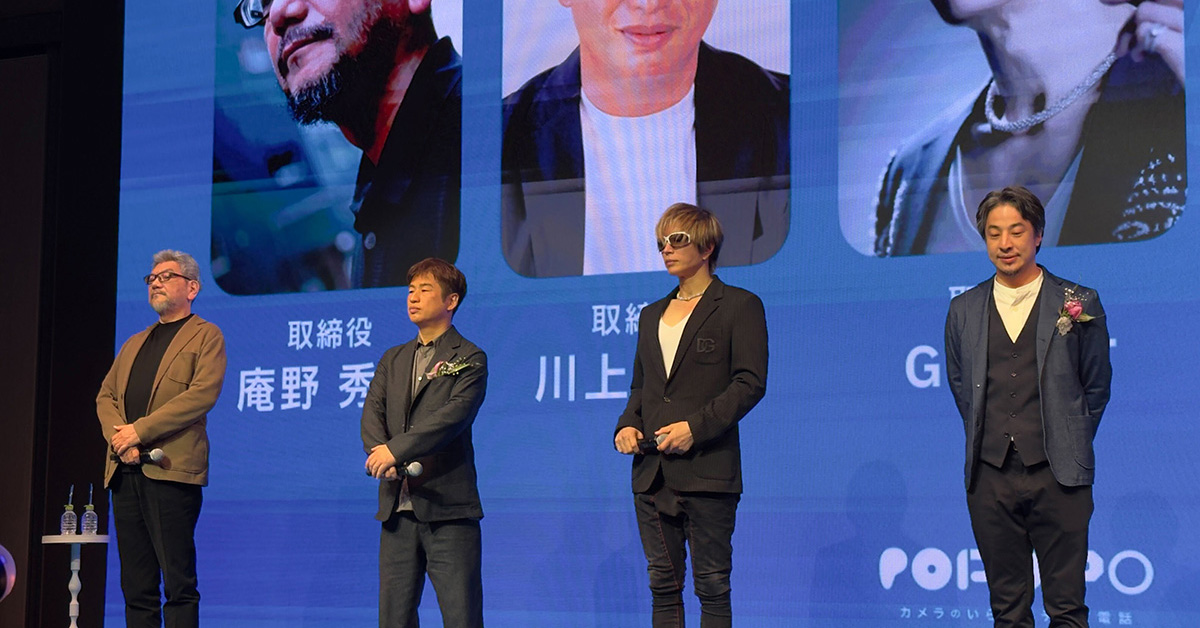
On March 18, POPOPO—fully funded by Dwango chairman 川上量生 (Kawakami Nobuo)—revealed the full details of its new communication service, also called 「POPOPO」 (POPOPO). The smartphone-only calling app lets users talk through 3D avatars without showing their real faces on camera.
The service becomes available the same day at 3 p.m. for smartphones equipped with iOS 18以上 (iOS juu-hachi ijō, iOS 18 or higher) or Android 13以上 (Android jū-san ijō, Android 13 or higher).
A Calling App Where Your Avatar Becomes the Star
At the heart of POPOPO is the アバター (abatā, avatar). Instead of appearing on video yourself, you communicate through a 3D digital character.
One of its most eye-catching features is automatic scene generation. Based on the conversation—通話内容を基に (tsūwa naiyō o moto ni, based on the call content)—the app automatically creates cinematic scenes of the avatars talking. According to the announcement, “Just by talking, everyday conversations become like a scene from a movie,” complete with professionally supervised “craft-level” camera work.
Up to 30 people can participate in a single call simultaneously.
At launch, 400 different avatars will be available. In the future, avatars from popular IPs—「新世紀エヴァンゲリオン」 (Shin Seiki Evangelion), 「東方project」 (Tōhō Project), and 「すとぷり」 (Sutopuri)—といった (to itta, such as) titles will also be added.
Live Streaming and Music Features
POPOPO doesn’t stop at private calls. Conversations and avatar-generated visuals can be broadcast as ライブ配信 (raibu haishin, live streaming) in real time.
Users can also set BGM (bī jī emu, background music) during calls. Some songs from Asobisystem—the entertainment agency that represents artists such as 「新しい学校のリーダーズ」 (Atarashii Gakkō no Rīdāzu, Atarashii Gakko!)—will be available.
Another feature allows users to talk not only with friends but also, through a 抽選 (chūsen, lottery drawing), with famous people they follow.
A Star-Studded Leadership Team
POPOPO’s board of directors includes Kawakami Nobuo, film director 庵野秀明 (Anno Hideaki), musician GACKT, and 西村博之 (Nishimura Hiroyuki), widely known as ひろゆき (Hiroyuki).
Actor 佐藤健 (Satō Takeru) appeared as a guest at the launch event.
A 100 Million Yen Campaign
From March 18 to April 19, POPOPO is running a bold キャンペーン (kyanpēn, promotional campaign): one randomly selected user will receive 100 million yen.
Anyone who makes a call lasting at least one minute during the campaign period will be entered into the lottery.
Cultural Context: Why Avatars and IP Matter in Japan
Japan has long embraced digital personas—from VTubers to anime-inspired profile icons. The idea of communicating through an アバター (abatā) fits naturally into a culture where character identity and fictional worlds are deeply integrated into daily life.
The mention of major IPs like Evangelion and Tōhō Project is significant. Collaborations with well-known franchises are a powerful draw in Japan’s tech and entertainment industries. Apps often grow rapidly when they connect users with beloved characters.
Learn Japanese from This Article
Let’s break down the key language used in this tech announcement.
Key Vocabulary
| Japanese | Romaji | Meaning |
|---|---|---|
| アバター | abatā | avatar (digital character) |
| ライブ配信 | raibu haishin | live streaming |
| BGM | bī jī emu | background music |
| OS | ō esu | operating system |
| 搭載する | tōsai suru | to equip with, to install |
| 抽選 | chūsen | lottery, drawing |
| キャンペーン | kyanpēn | promotional campaign |
| 通話内容 | tsūwa naiyō | call content |
Notice how many of these are written in katakana. Tech and business news in Japan frequently uses katakana for borrowed words like OS and キャンペーン.
Grammar Spotlight 1: 〜を基に (o moto ni) — “based on”
Structure: Noun + を基に
Example from the article:
- 通話内容を基に、アバター同士の会話シーンを自動生成する。 Tsūwa naiyō o moto ni, abatā dōshi no kaiwa shīn o jidō seisei suru. The app automatically generates conversation scenes between avatars based on the call content.
You’ll see 〜を基に often in formal writing, reports, and news articles.
Grammar Spotlight 2: 〜といった (to itta) — “such as”
Structure: Noun + といった + noun
Example from the article:
- 「新世紀エヴァンゲリオン」などといったIPのアバターも追加する。 “Shin Seiki Evangelion” nado to itta IP no abatā mo tsuika suru. Avatars from IPs such as “Neon Genesis Evangelion” will also be added.
This pattern is useful when giving representative examples.
Useful Expression
- 最大30人が同時に参加できる。 Saidai sanjū-nin ga dōji ni sanka dekiru. Up to 30 people can participate at the same time.
The word 最大 (saidai, maximum) appears frequently in product descriptions and advertisements.
Continue Learning
Working on your reading skills? Our Katakana Essentials: Adapting Global Words to Japanese lesson is a great next step.
Curious about the Japanese used here? Our Basic Vocabulary Building: Embracing Words Without Latin Ties lesson covers this in depth.
Ready to dive deeper? Our lesson on Reading and Writing in Japanese II: Hiragana and Katakana will help you master these concepts.
Tech news in Japanese is full of loanwords, formal grammar, and compact expressions. Articles like this are excellent practice for real-world reading—the kind native speakers encounter every day.
これからもよろしくお願いします。 Kore kara mo yoroshiku onegaishimasu.