
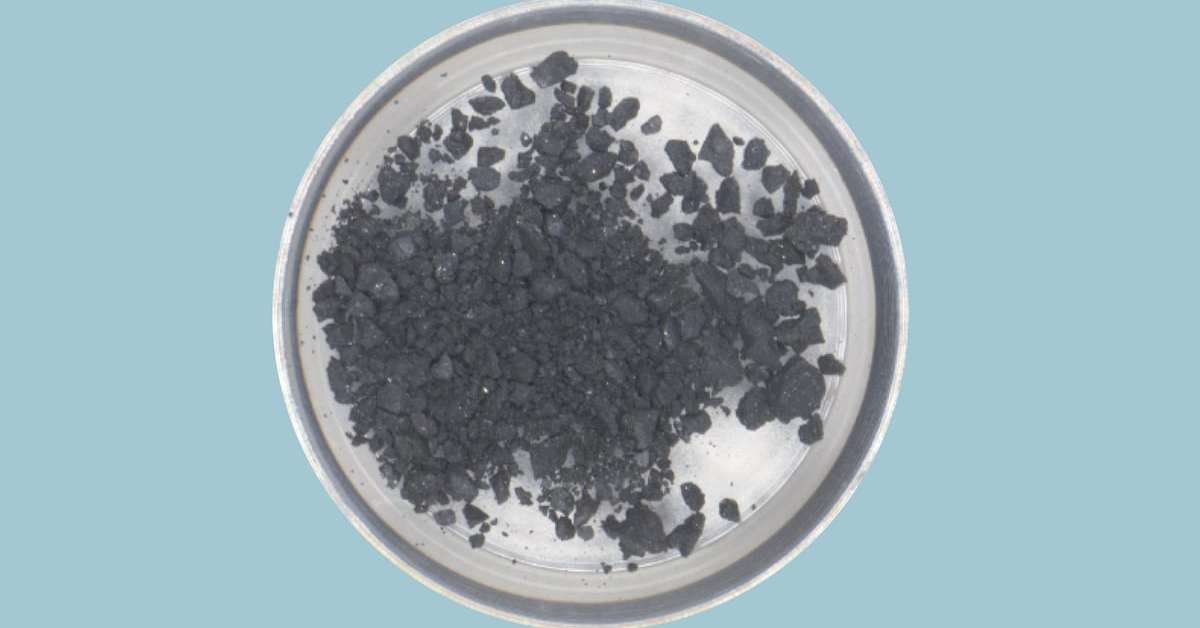
On March 17, a Japanese research team announced that all five 塩基 (enki)—the chemical “letters” that make up the genetic material of life—have been discovered in samples brought back from the asteroid Ryugu by Japan’s 探査機 (tansaki), Hayabusa2.
The discovery strengthens a long-standing 仮説 (kasetsu): that the building blocks of life were formed in space and later delivered to the early Earth.
All Five Bases Found in Ryugu Samples
The research team, led by the Japan Agency for Marine-Earth Science and Technology, analyzed sand-like 試料 (shiryou) collected from the asteroid Ryugu.
These samples contained all five types of 塩基 (enki) that form 核酸 (kakusan)—nucleic acids such as DNA and RNA.
In simple terms:
- DNA and RNA store genetic information.
- That information is written using five chemical “letters.”
- Those letters are called bases (塩基, enki).
Until now, only one type of base had been detected in Ryugu samples. With more detailed analysis, the remaining four were confirmed.
That means the fundamental ingredients needed to build the blueprint of life existed on an asteroid.
In Japanese, the article explains this with:
生命の設計図を形づくる基本材料が、小惑星に存在していたことになる。 Seimei no sekkeizu o katazukuru kihon zairyō ga, shōwakusei ni sonzai shite ita koto ni naru. “It means that the basic materials forming life’s blueprint existed on an asteroid.”
Notice the phrase 〜ことになる (~koto ni naru) — we’ll break that down later.
Not Just Ryugu: Bennu Shows the Same Result
This isn’t an isolated finding.
Last year, NASA’s space probe collected samples from another asteroid, Bennu. Those samples also contained the same five types of bases.
Both Ryugu and Bennu are believed to preserve materials from the early days of the solar system. Because the same five bases were found on both asteroids, the idea that life’s ingredients were widely present in space during the solar system’s formation is now more strongly 裏付ける (urazukeru) — supported by evidence.
In Japanese, the key hypothesis is described as:
地球の生命の源となる材料は宇宙で作られ、原始の地球に飛来したとする仮説 Chikyū no seimei no minamoto to naru zairyō wa uchū de tsukurare, genshi no chikyū ni hirai shita to suru kasetsu “The hypothesis that the materials that became the source of life on Earth were created in space and flew to the primitive Earth.”
The phrase 〜とする仮説 (~to suru kasetsu) means “a hypothesis that says/assumes that ~.”
With matching results from two separate asteroids, this hypothesis has gained stronger scientific backing.
What Comes Next?
The research team plans to continue investigating how these substances were formed in space and how they may have led to the birth of life. Their goal is further 解明 (kaimei) — clarification or elucidation — of the origins of life itself.
This is not yet a final answer to how life began. But it is a powerful piece of the puzzle.
Cultural Context: Hayabusa2 and Japan’s Space Exploration
Japan’s 探査機 (tansaki), Hayabusa2, is a source of national pride. It successfully collected asteroid material and returned it to Earth, something only a handful of missions worldwide have accomplished.
In Japanese news, you’ll often see careful, evidence-based phrasing like:
- 裏付ける (urazukeru) — to support with evidence
- 仮説 (kasetsu) — hypothesis
- 解明 (kaimei) — clarification
Science reporting in Japan tends to emphasize cautious confirmation rather than dramatic claims. This style reflects the broader Japanese communication preference for precision and incremental proof.
Understanding these nuance-heavy words will greatly improve your ability to read real Japanese news.
Learn Japanese from This Article
Key Vocabulary
| Japanese | Romaji | Meaning |
|---|---|---|
| 探査機 | tansaki | space probe |
| 試料 | shiryou | sample (for research) |
| 核酸 | kakusan | nucleic acid |
| 塩基 | enki | base (chemical base) |
| 仮説 | kasetsu | hypothesis |
| 裏付ける | urazukeru | to support with evidence |
| 解明 | kaimei | elucidation, clarification |
| 小惑星 | shōwakusei | asteroid |
Try reading this sentence again:
小惑星リュウグウの試料から塩基が発見された。 Shōwakusei Ryūgū no shiryou kara enki ga hakken sareta. “Bases were discovered in samples from the asteroid Ryugu.”
Notice how から (kara) marks the source.
Grammar Spotlight
1️⃣ 〜とする仮説
Structure: Clause (plain form) + とする + 仮説
Meaning: “A hypothesis that says/assumes that ~”
Example from the article:
宇宙で作られ、地球に飛来したとする仮説 Uchū de tsukurare, chikyū ni hirai shita to suru kasetsu “The hypothesis that (they) were created in space and came to Earth”
You’ll see 〜とする used to define ideas, claims, or positions.
2️⃣ 〜ことになる
Structure: Verb (plain form) + ことになる
Meaning: “It means that…” / “It turns out that…”
Example:
基本材料が存在していたことになる。 Kihon zairyō ga sonzai shite ita koto ni naru. “It means that the basic materials existed.”
This pattern is often used to explain the implication or conclusion of facts.
Useful Scientific Expressions
| Japanese | Romaji | Meaning |
|---|---|---|
| 発見する | hakken suru | to discover |
| 確認する | kakunin suru | to confirm |
| 存在する | sonzai suru | to exist |
| 分析する | bunseki suru | to analyze |
These verbs appear constantly in Japanese science and tech articles.
Continue Learning
Want to expand your science and tech vocabulary?
- Want to learn more about tech? Check out our lesson on Basic Vocabulary Building: Embracing Words Without Latin Ties.
- Want to learn more about tech? Check out our lesson on Reading and Writing in Japanese II: Hiragana and Katakana.
- Working on your reading skills? Our Katakana Essentials: Adapting Global Words to Japanese lesson is a great next step.
Space exploration, cutting-edge chemistry, and the origins of life—all in one Japanese news article. By reading real-world science reporting like this, you’re not just learning vocabulary. You’re learning how Japanese communicates evidence, uncertainty, and discovery.
これからもよろしくお願いします。 Kore kara mo yoroshiku onegaishimasu.