
Nearly 60% of IT professionals in Japan say they do not want to become managers. That’s the headline result from a survey released on March 10 by Levtech.
The study targeted IT人材 (IT jinzai), or IT professionals, and reveals a clear shift in how many people view leadership roles inside tech companies.
Most IT Professionals Don’t Want a Managerial Role
Levtech asked 2,118 IT professionals who are not currently in 管理職 (kanrishoku), meaning managerial positions, whether they want to become managers.
Here’s how they responded:
- 35.6% said they “do not want to at all”
- 21.4% said they “mostly do not want to”
- 24.5% were neutral
- 14.3% said they “somewhat want to”
- 4.2% said they “strongly want to”
In total, 57% expressed negative feelings about becoming managers.
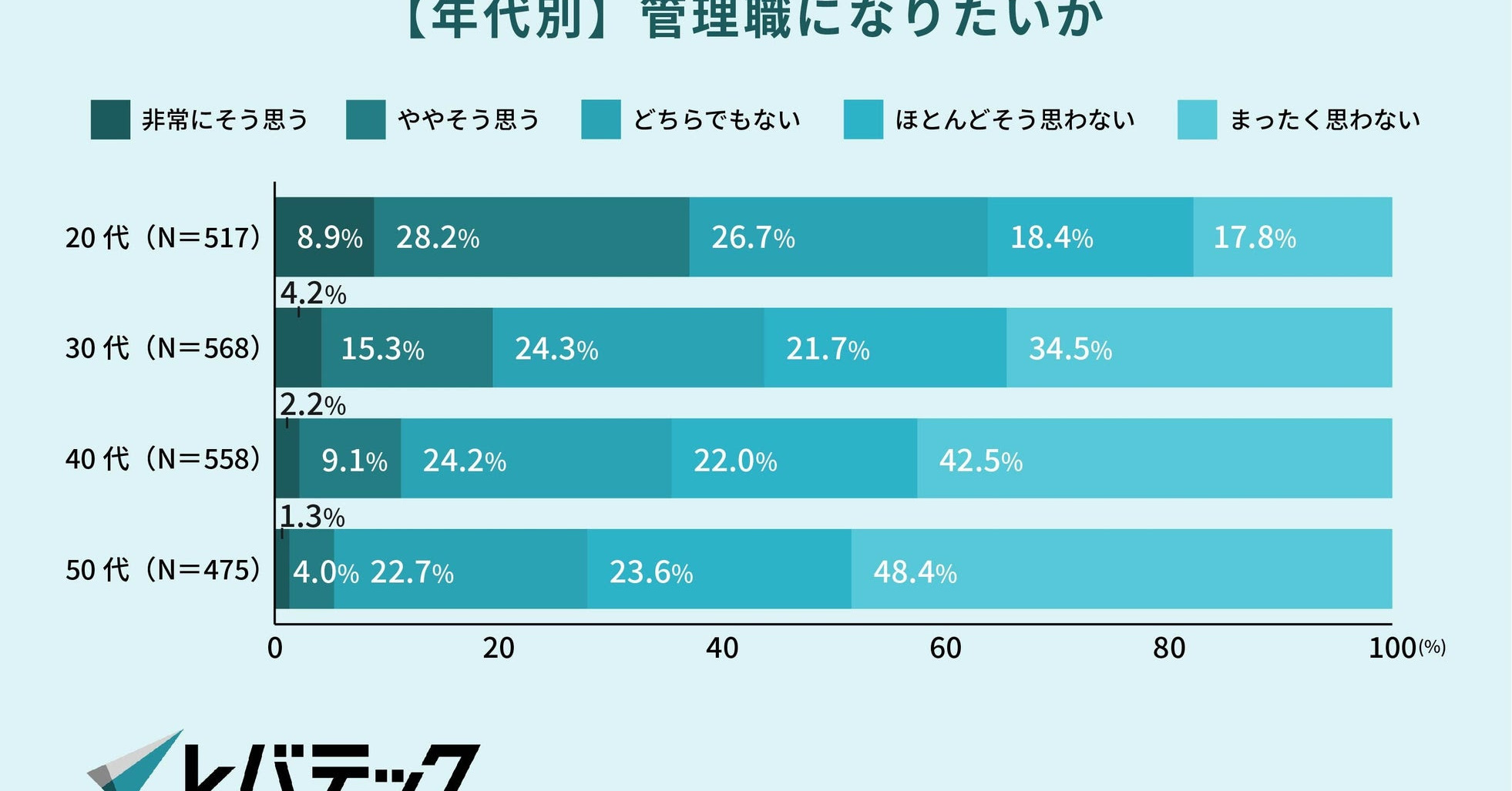
When broken down by age, the results become even more interesting:
- In their 20s: those who want to become managers (37.1%) and those who don’t (36.2%) were almost equal.
- From their 30s onward: the percentage who do not want to become managers increases.
- In their 50s: 72.0% said they do not want to become managers.
This generational shift suggests that as careers progress, many IT professionals grow less interested in leadership roles.
Why Don’t They Want to Become Managers?
Among the 1,208 people who said they did not want to become managers, Levtech asked for their reasons (multiple answers allowed).
The most common answer, chosen by 44.7%, was:
- “Because responsibility and stress would likely increase.”
Other reasons included:
- “I feel I don’t have the aptitude” (15.4%)
- “I want to improve my technical expertise as an engineer” (12.8%)
- “I don’t feel there is enough financial benefit” (10.2%)
- “Workload and overtime would likely increase” (4.6%)
- “It seems difficult to balance with private life” (5.0%)
- “I’m not interested in developing others” (3.8%)
- “I don’t plan to stay long in my current organization” (2.6%)
For many IT人材 (IT jinzai), the desire to remain a specialist rather than shift into management stands out. The role of engineer in Japan often carries strong professional identity, and technical mastery can be seen as just as valuable—if not more so—than climbing the corporate ladder.
Why Some Do Want to Become Managers
On the other hand, 391 respondents said they do want to become managers. Their top reason?
- “Because I want to increase my salary and compensation” (47.8%)
Other motivations included:
- “Because I can have authority in 意思決定 (ishi kettei)” — decision-making (15.9%)
- “I want to expand my influence within the organization” (14.8%)
- “I want to improve or demonstrate my マネジメント力 (manejimento-ryoku)” — management skills (9.2%)
- “I’m interested in developing human resources” (6.9%)
The contrast is clear: those who want management roles often focus on compensation and influence, while those who don’t focus on stress, responsibility, and maintaining technical expertise.
Turning to Freelancing Instead?
Another notable trend involves interest in フリーランス (furiiransu), or freelancing.
Levtech also surveyed 2,794 people working as full-time employees, contract employees, or part-timers. When asked about their interest in freelancing:
- 29.8% (908 people) said they were “very interested” or “somewhat interested.”
Among those interested in freelancing, 19.8% listed “because I don’t want to become a manager” as one of their reasons.
In other words, avoiding a 管理職 (kanrishoku) role is, for some, a motivation to consider independent work.
About the Survey
The アンケート (ankeeto), or questionnaire, was conducted ネット上 (netto-jou), online, from November 12 to 19, 2025.
It targeted 3,000 IT professionals between the ages of 20 and 59. Depending on the question, only respondents who fit certain criteria were asked to answer.
Cultural Context: Management in Japanese Companies
In traditional Japanese companies, becoming a 管理職 (kanrishoku) has often been seen as the natural next step in a long-term career. Promotion typically means:
- More responsibility
- Longer working hours
- Greater accountability
- Leadership over subordinates
However, in the tech industry—where specialized skills are highly valued—many professionals may prefer deepening technical expertise rather than shifting into people management.
This survey reflects a broader conversation happening in Japan about work-life balance, stress, and alternative career paths such as フリーランス (furiiransu).
Learn Japanese from This Article
Let’s break down key vocabulary and grammar you can take directly from this news story.
Key Vocabulary
| Japanese | Romaji | Meaning |
|---|---|---|
| IT人材 | IT jinzai | IT talent; IT professionals |
| 管理職 | kanrishoku | managerial position |
| マネジメント力 | manejimento-ryoku | management skills |
| 意思決定 | ishi kettei | decision-making |
| フリーランス | furiiransu | freelancer |
| アンケート | ankeeto | survey; questionnaire |
| ネット上 | netto-jou | online; on the internet |
Notice how many of these words are written in katakana, especially business and tech terms like フリーランス and マネジメント力.
Working on your reading skills? Our Katakana Essentials: Adapting Global Words to Japanese lesson is a great next step.
Grammar Spotlight
1️⃣ 〜に対し (ni taishi) — “toward,” “to,” “regarding”
This is a formal expression often used in news articles.
Structure: > Noun + に対し
Example from the article:
- 現在管理職でないIT人材2118人に対し、管理職になりたいか聞いた。 Genzai kanrishoku de nai IT jinzai 2118-nin ni taishi, kanrishoku ni naritai ka kiita. “They asked 2,118 IT professionals who are not currently managers whether they want to become managers.”
This pattern adds a formal, objective tone—very common in written Japanese.
2️⃣ 〜を理由に (o riyuu ni) — “for the reason of,” “on the grounds of”
Structure: > Noun + を理由に
Example:
- 管理職になりたくないことを理由に、フリーランスに関心を寄せる人もいる。 Kanrishoku ni naritakunai koto o riyuu ni, furiiransu ni kanshin o yoseru hito mo iru. “Some people are interested in freelancing for the reason that they don’t want to become managers.”
You’ll often see this in news articles explaining causes or motivations.
Useful Expressions
- どちらでもない (dochira demo nai) — “neither” / “neutral”
- 全く思わない (mattaku omowanai) — “do not think so at all”
- ややそう思う (yaya sou omou) — “somewhat agree”
- 責任やストレスが増えそう (sekinin ya sutoresu ga fuesou) — “responsibility and stress seem likely to increase”
These phrases are common in surveys and opinion polls.
Continue Learning
- Working on your reading skills? Our Katakana Essentials: Adapting Global Words to Japanese lesson is a great next step.
- Ready to dive deeper? Our lesson on Basic Vocabulary Building: Embracing Words Without Latin Ties will help you master these concepts.
- Want to learn more about tech? Check out our lesson on Reading and Writing in Japanese II: Hiragana and Katakana.
Understanding real news like this helps you see how Japanese is actually used—formal structures, survey language, and modern business vocabulary included.
これからもよろしくお願いします。 Kore kara mo yoroshiku onegaishimasu.