
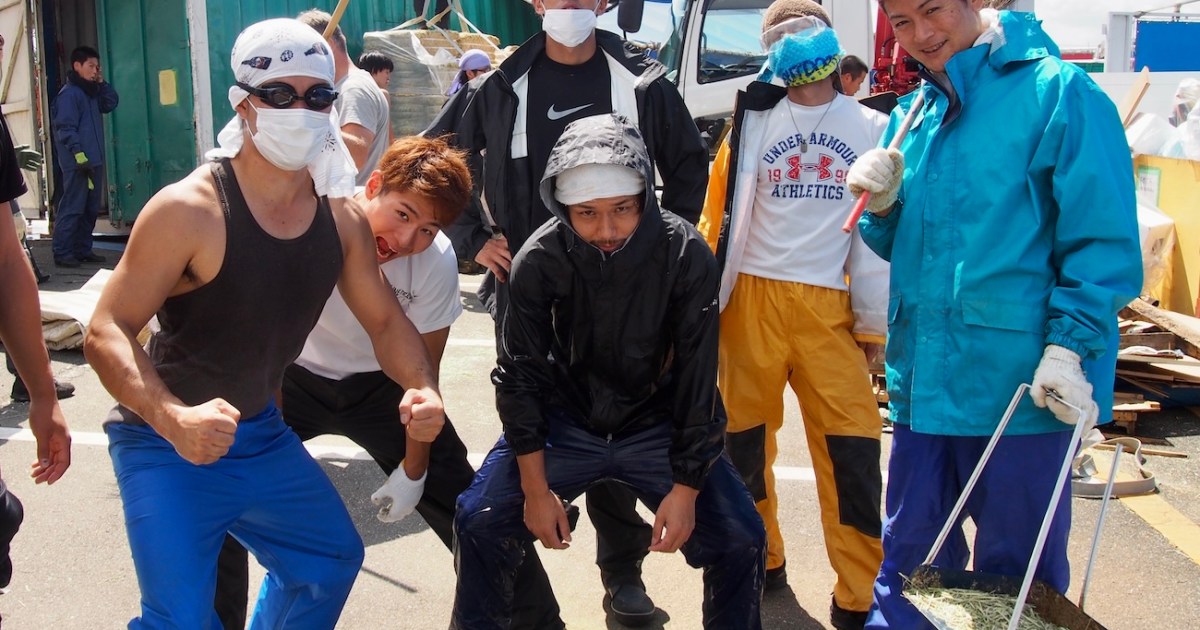
“After the show, the alfalfa is arriving. Put on your raincoat and wait at the back.”
With that single sentence, the atmosphere changes.
Kinoshita Circus has just finished its run in Tachikawa, Tokyo, and is now setting up in Iwata, Shizuoka. While audiences see dazzling lights and smiling performers during each 公演 (kouen, performance), there’s another side to circus life—one so exhausting the writer calls it “hell.”
Let’s step behind the curtain.
Before the Curtain Rises: The Real Hard Work
Between cities, circus members go through what’s called a 場越し期間—a relocation and setup period. They 設営(する) (setsuei (suru)), meaning they build everything themselves: the tent, the seating, the electrical wiring, even the water system.
They must pass fire inspections and endure strict rehearsals. In roughly two weeks before opening day, their physical strength is “completely drained.” This period, we’re told, is the hardest of all.
Once the show begins, life is actually more fulfilling. There are cheers from the crowd, children’s smiles, endless applause. The performers present what they’ve built through practice, and the audience responds. After work, they can even explore the city and 堪能(する) (tannou (suru)) local gourmet food.
Contrary to what you might read online, the writer insists: once the show starts, it’s not harder—far from it.
But there is one exception.
The One Job Everyone Fears
There’s exactly one task during the performance period that makes circus members brace themselves.
Alfalfa.
アルファルファ (arufarufa) is a highly nutritious grass used as feed for herbivores like giraffes, zebras, and elephants. It’s even called the “king of pasture grass.” Another type of grass, チモシー (chimoshii, timothy grass), which is high in fiber and low in protein, arrives as well.
Of course, the animals are stars of the circus—and family. Naturally, the members want them to eat well.
The problem?
The delivery is sudden. And the volume is overwhelming.
Each compressed bale weighs about 25 kilograms (55 pounds). More than 100 of them arrive stacked on a truck. The amount is described as 圧倒的(な) (attouteki (na)), overwhelming enough to bring quiet tears to circus members’ eyes.
When this happens, the male members are 総動員(される) (soudouin (sareru)), mobilized all at once. There’s no option to say, “I’m busy with something else.” That’s simply not possible.
Rain or shine, summer or winter, they put on raincoats, masks, and even goggles. Why such full protection?
The moment you lift a 25kg bale, fine grass fibers explode into the air and slip inside your raincoat. And then they prick your skin. Constantly.
Fighting 25kg at a Time
The truck pulls in as close as possible to the property. From there, members carry the 25kg bales to a storage container. Inside, they must stack them neatly—lifting, turning, pushing them into place—then head back to the truck.
Again and again.
It’s a monotonous task with no visible end. You’re covered in grass. In summer, the inside of the raincoat becomes a sauna. Sweat pours down like a waterfall.
After finishing, everyone washes their raincoats together using a high-pressure washer, spraying each other down in a chaotic, splash-filled cleanup.
They may complain beforehand—but once the work begins, they 団結(する) (danketsu (suru)), unite.
Behind the scenes, after the applause fades, there are men in raincoats 格闘(する) (kakutou (suru)), struggling against 25kg blocks of grass for the sake of the animals.
That, too, is circus life.
Cultural Context: The “Invisible” Work in Japan
Japanese storytelling often highlights the unseen effort behind polished results. Whether it’s a perfectly wrapped gift, a spotless train platform, or a circus performance, there is pride in the hard, invisible labor supporting it.
Here, the animals aren’t just performers—they’re described as family. Taking care of them properly isn’t optional. It’s a responsibility.
And that’s why saying, “I can’t do it,” simply isn’t acceptable.
The Iwata Show Begins March 7
The Kinoshita Circus Shizuoka–Iwata performance begins on March 7, 2026, at a special venue in the Lalaport Iwata North parking lot.
If you see a pony or elephant inside the tent, remember: somewhere behind the stage, circus members in raincoats are battling stacks of 25kg hay.
That’s another side of the circus you’ll never see from your seat.
Learn Japanese from This Article
Key Vocabulary
| Japanese | Romaji | Meaning |
|---|---|---|
| 設営(する) | setsuei (suru) | to set up (a venue, tent, event space) |
| 公演 | kouen | performance, show |
| 団結(する) | danketsu (suru) | to unite, to band together |
| 総動員(される) | soudouin (sareru) | to mobilize everyone |
| 圧倒的(な) | attouteki (na) | overwhelming |
| 格闘(する) | kakutou (suru) | to struggle with, to fight against |
| 堪能(する) | tannou (suru) | to fully enjoy, to savor |
Grammar Spotlight
1️⃣ 〜どころか
Meaning: Far from…, instead of…
Structure: Plain form + どころか
Example:
- 楽になるどころか、本当の闘いが始まる。 Raku ni naru dokoro ka, hontou no tatakai ga hajimaru. Far from getting easier, the real battle begins.
This pattern emphasizes that reality is the opposite of what might be expected.
2️⃣ 〜わけにはいかない
Meaning: Cannot (do something) because it would be inappropriate or impossible
Structure: Verb (dictionary form) + わけにはいかない
Example:
- 今、別の作業があると言うわけにはいかない。 Ima, betsu no sagyou ga aru to iu wake ni wa ikanai. You can’t say you have other work to do.
This expression is very common in Japanese workplace and social situations where responsibility comes first.
Useful Expressions
草まみれになる Kusa mamire ni naru To be covered in grass (or something)
汗が滝のように流れる Ase ga taki no you ni nagareru Sweat pours like a waterfall
These vivid expressions are typical of Japanese narrative writing.
Continue Learning
Curious about how Japanese handles time references like “March 7” or “after the show” without always changing tense the way English does?
The next time you watch a circus performance in Japan, remember the unseen work that makes it possible. Sometimes the real story isn’t in the spotlight—it’s backstage, lifting 25 kilograms at a time.
これからもよろしくお願いします。 Kore kara mo yoroshiku onegaishimasu.