
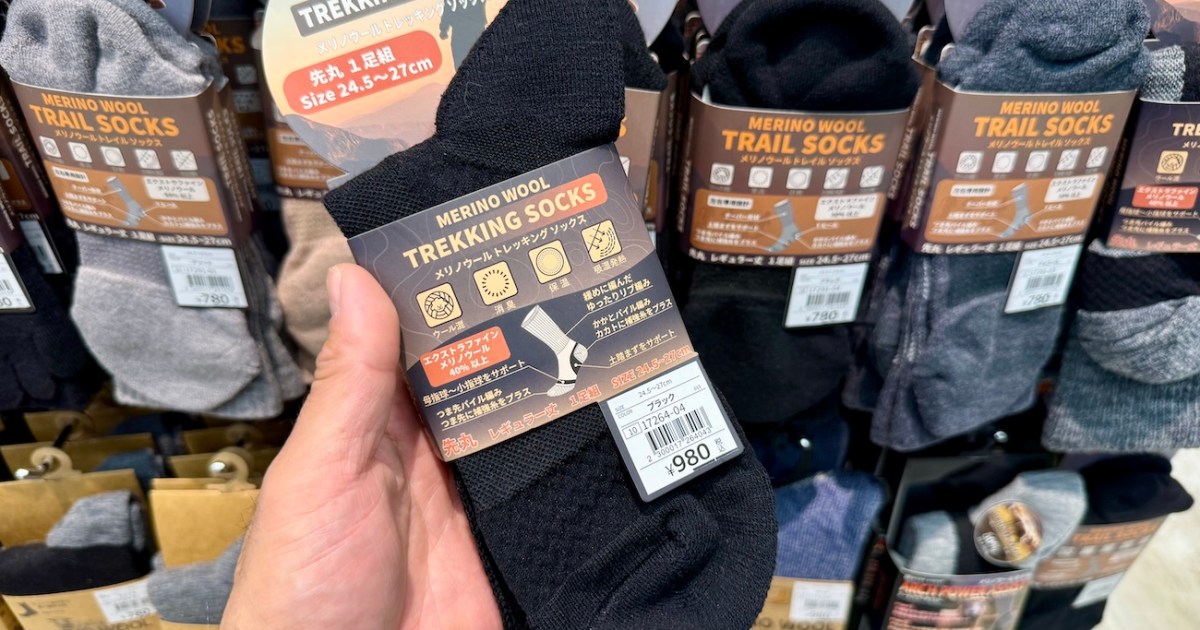
Are 980-Yen Socks Worth It? Unpacking Japan's Merino Wool Trend
Imagine spending nearly 1,000 yen—about $7—on a single pair of socks. Sounds like a lot for something so ordinary, doesn’t it? Yet, in Japan, Workman’s メリノウールトレッキングソックス (merino ūru torekkingu sokkusu)—Merino Wool Trekking Socks—priced at 980 yen, have been turning heads. This isn’t just about socks; it’s a window into how Japanese people think about value, quality, and practicality, even for the smallest everyday items. Let’s dive into this trend and see what it can teach us about Japanese culture and language.
The Buzz Around Workman’s 980-Yen Socks
Workman, a well-known Japanese brand for affordable workwear and outdoor gear, has sparked curiosity with these premium socks. At 980 yen for just one pair, they’re a stark contrast to deals like their 福袋 (fukubukuro)—a lucky bag promotion where you could grab 11 pairs of socks for the same price. So, the big question is: can one pair of socks really hold the same value as 11? A reviewer from Rocket News decided to find out, buying a pair to test as a “foreign ace player” to save their freezing toes during winter outdoor work.
The socks themselves are impressive on paper. Made with 40% extra-fine メリノウール (merino ūru)—Merino wool—they promise odor resistance, moisture retention, heat generation through absorption, and even reinforced toe and heel areas with pile knitting. They’ve got arch support to keep your 足元 (ashimoto)—footing—secure. For someone wearing 27cm shoes, the fit (available in 24.5-27cm) felt a bit tight but snug, with no slipping during use.
Do They Really Keep You Warm?
Now, the real test: do these socks provide enough 防寒 (bōkan)—protection against the cold? The honest answer is… sort of. Don’t expect a dramatic burst of warmth like you might get from Workman’s Merino wool innerwear. Instead, the effect is subtle. You’ll notice your toes aren’t as icy as usual, but it’s hard to say if that’s thanks to the socks or just a milder day. The reviewer compared them to a steady veteran baseball player—not flashy, but reliable for 作業 (sagyō)—manual work—in cold conditions.
Ultimately, while they don’t have the “wow” factor of 11 socks for 980 yen, they’ve earned their place for specific situations. The plan? Use the 福袋 (fukubukuro) lucky bag socks for everyday wear and save these Merino wool ones for tougher, chillier days.
Cultural Context: Value and Functionality in Japan
In Japan, there’s a unique way of looking at purchases, even for something as mundane as 靴下 (kutsushita)—socks. The idea of コスパ (kosupa), shorthand for “cost-performance,” is central to how people evaluate what they buy. A 980-yen pair of socks might seem pricey compared to cheaper options, but if they deliver on warmth and durability for outdoor tasks, they’re considered a worthwhile investment. This reflects a broader cultural value of practicality—Japanese consumers often prioritize quality tailored to specific needs over sheer quantity.
Brands like Workman cater to this mindset, originally targeting blue-collar workers but now appealing to outdoor enthusiasts and everyday shoppers. Their 福袋 (fukubukuro) lucky bags, especially popular during New Year’s sales, tie into another cultural tradition—a fun, hopeful way to start the year with discounted mystery bundles. Understanding these ideas not only helps you grasp why socks can spark such debate but also gives you insight into the Japanese approach to life and shopping.
Learn Japanese from This Article
If you’ve ever wondered how to talk about value or describe your impressions in Japanese, this story offers some great starting points. Let’s break down key vocabulary and grammar to help you express yourself like a native speaker.
Key Vocabulary
| Japanese | Romaji | Meaning |
|---|---|---|
| 靴下 | kutsushita | socks |
| 福袋 | fukubukuro | lucky bag (discount bag with unknown contents, often sold at New Year) |
| コスパ | kosupa | cost-performance (value for money) |
| 防寒 | bōkan | protection against cold, cold-weather gear |
| 足元 | ashimoto | at one’s feet, footing |
| メリノウール | merino ūru | Merino wool |
| 作業 | sagyō | work, operation (often manual or physical work) |
Grammar Spotlight: 〜気がする (to feel like, to think subjectively)
The structure 〜気がする (ki ga suru) is used to express a subjective feeling or impression—perfect for sharing personal thoughts about something like socks! It often follows a verb in plain form or a noun + の.
- Structure: [Verb (plain form) / Noun + の] + 気がする
- Example 1: この靴下、暖かい気がする。(Kono kutsushita, atatakai ki ga suru.) - These socks feel warm to me.
- Example 2: 980円は高い気がする。(Kyūhyaku hachijū en wa takai ki ga suru.) - 980 yen feels expensive to me.
- Example 3: 福袋の方がお得な気がする。(Fukubukuro no hō ga otoku na ki ga suru.) - I feel like the lucky bag is a better deal.
Use this when you’re sharing a personal hunch or sensation, not a definitive fact. It’s a natural way to talk about subtle impressions, like the warmth of socks on a chilly day.
Grammar Spotlight: 〜より…の方が (compared to …, … is more/better)
The pattern 〜より…の方が (yori… no hō ga) lets you compare two things, emphasizing which one you prefer or find better. It’s great for discussing value, like comparing socks or deals.
- Structure: [Item A] より [Item B] の方が [adjective/quality]
- Example 1: 福袋よりこの靴下の方が暖かい。(Fukubukuro yori kono kutsushita no hō ga atatakai.) - Compared to the lucky bag, these socks are warmer.
- Example 2: 安い靴下より高い靴下の方が長持ちする。(Yasui kutsushita yori takai kutsushita no hō ga nagamochi suru.) - Compared to cheap socks, expensive socks last longer.
- Example 3: 量より質の方が大事だ。(Ryō yori shitsu no hō ga daiji da.) - Compared to quantity, quality is more important.
This pattern is super useful for everyday conversations, especially when debating purchases or preferences in Japan.
Continue Learning
Want to build on what you’ve learned here? Check out these lessons to deepen your understanding of Japanese grammar and usage:
- Wa vs. Ga: Emphasizing Importance in Sentences: Ready to dive deeper? Our lesson on Wa vs. Ga: Emphasizing Importance in Sentences will help you master these concepts.
- Ni, De, and E: Mapping Directions and Locations: Ready to dive deeper? Our lesson on Ni, De, and E: Mapping Directions and Locations will help you master these concepts.
- Nai Form: Negating Without Auxiliary Words: Want to understand the verb forms used here? Check out Nai Form: Negating Without Auxiliary Words.
Learning Japanese the way it’s taught in Japan means connecting language to real-life contexts like this. Keep exploring, and you’ll be chatting about コスパ (kosupa) and more in no time!
これからもよろしくお願いします。 Kore kara mo yoroshiku onegaishimasu.