
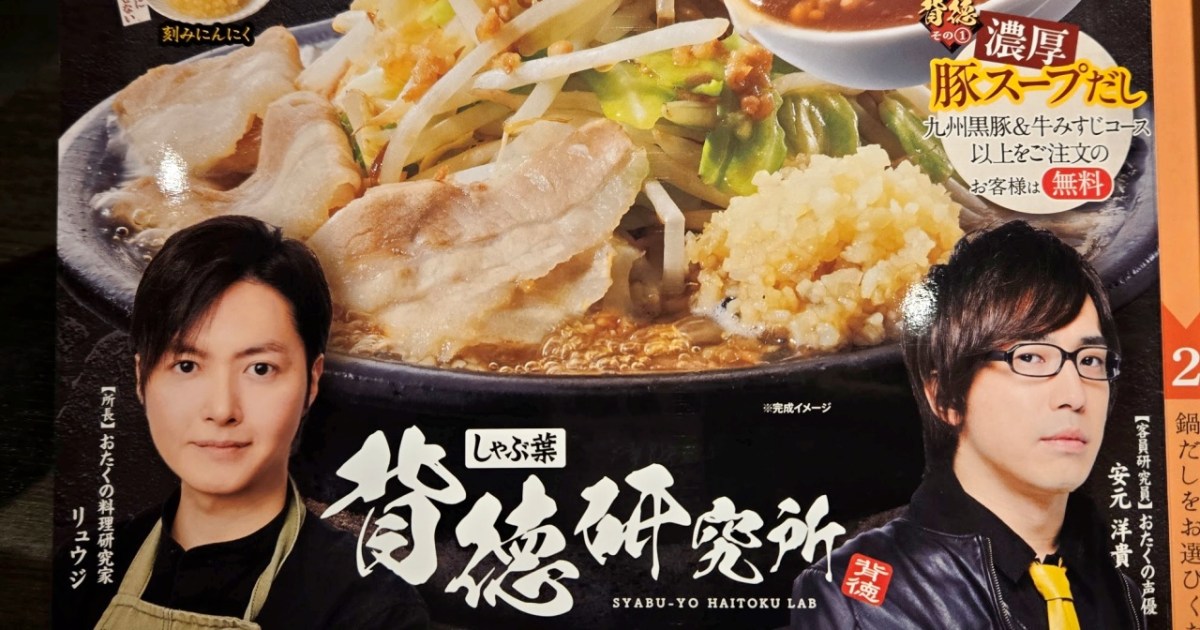
Shabuyo’s Sinful Gourmet Fair: A Japanese Food Experience You Can’t Miss
Imagine walking into a bustling restaurant in Japan, the air thick with the tantalizing scent of garlic and rich pork broth. If you’ve ever craved an authentic Japanese dining experience that’s both indulgent and culturally immersive, then しゃぶ葉 (Shabuyo), a popular shabu-shabu chain, has something extraordinary for you. On January 22, 2026, they unveiled their latest seasonal event, the 背徳 至高のグルメフェア (Haitoku Shiko no Gurume Fea), or “Sinful Supreme Gourmet Fair.” This isn’t just a meal—it’s a bold celebration of flavor, creativity, and Japanese food culture. Let’s dive into what makes this fair so special and how you can learn some authentic Japanese along the way.
A Rebellious Twist on Shabu-Shabu at Shabuyo
Shabuyo is a household name in Japan for affordable, family-friendly shabu-shabu—a hot pot dish where you swish thinly sliced meat and veggies in steaming broth. But their latest fair pushes boundaries with a name that hints at indulgence: 背徳 (haitoku), meaning “sin” or “immorality,” paired with 至高 (shikou), meaning “supreme” or “ultimate.” This event, a collaboration between celebrity chef Ryuji and popular voice actor Yasumoto Hiroki, introduces a 濃厚豚スープだし (Noko Ton Supu Dashi), or “Rich Pork Broth,” so intense with garlic and 旨味 (umami)—that savory depth of flavor—that it rivals the boldest ramen.
The fair doesn’t stop there. You’ll get three new dipping condiments, including the addictive おたマヨ風マヨネーズソース (Ota Mayo-fu Mayonezu Sosu), a mayonnaise-based “Otaku Mayo” sauce. For the final course, try the ワシワシ麺 (Washi Washi Men), thick, chewy noodles that soak up every drop of that sinful broth. Want the full experience? Go for the 九州黒豚&牛みすじ食べ放題コース (Kyushu Kurobuta & Gyu Misuji Tabehodai Kosu), the “Kyushu Black Pork & Beef Misuji All-You-Can-Eat Course,” starting at 2,639 yen for weekday lunch. If that’s too much, just add the special broth to any course for an extra 110 yen and still taste the hype.
Testers raved about the 濃厚 (noukou)—rich and intense—flavor of the broth, especially when paired with premium 九州黒豚 (Kyushu Kurobuta), a tender black pork from southern Japan. But they also warned it might be 強すぎる (tsuyosugiru), or “too strong,” for some palates. If you’re not ready for such a punch, balance it with a milder broth option. Either way, this fair is a delicious way to experience Japan’s trend-driven food scene without breaking the bank.
Cultural Layers Behind the Sinful Gourmet Fair
Shabu-shabu, named for the sound しゃぶしゃぶ (shabushabu) of meat swishing in broth, embodies Japan’s love for communal dining. It’s interactive, fresh, and often a casual gathering spot for families and friends at chains like Shabuyo. Seasonal events like this フェア (fea), or “fair,” reflect Japan’s dynamic food culture, where novelty and collaborations—like pairing a chef with an anime voice actor—create excitement. The term 背徳 (haitoku) plays into a modern trend of marketing indulgent foods as “forbidden” pleasures, especially appealing to younger diners and pop culture fans.
Then there’s the regional pride in ingredients like 九州黒豚 (Kyushu Kurobuta), a premium black pork celebrated for its tenderness, much like Japan celebrates local specialties nationwide. Understanding these nuances—why a broth is “sinful” or why a pork breed matters—connects you to the heartbeat of everyday Japanese life. It’s not just about eating; it’s about experiencing the creativity and community woven into every bite.
Learn Japanese from This Article
Ready to pick up some authentic Japanese from this mouthwatering event? Here, we’ll break down key vocabulary and grammar patterns straight from the context of Shabuyo’s fair. This is how native speakers learn—through real-life usage, not just textbook drills.
Key Vocabulary
| Japanese | Romaji | Meaning |
|---|---|---|
| フェア | fea | fair, event (often promotional) |
| 背徳 | haitoku | sin, immorality, indulgence |
| 至高 | shikou | supreme, ultimate |
| 濃厚 | noukou | rich, thick, intense (flavor) |
| 食べ放題 | tabehoudai | all-you-can-eat |
| 旨味 | umami | savory taste, umami |
| しゃぶしゃぶ | shabushabu | shabu-shabu (Japanese hot pot) |
These words aren’t just useful for food contexts—they pop up in daily conversations, from describing flavors to discussing events. For instance, 食べ放題 (tabehoudai) is a must-know for any buffet or dining deal in Japan!
Grammar Spotlight: 〜すぎる (Too Much, Excessively)
Let’s look at a grammar pattern that came up naturally in reviews of this broth: 〜すぎる (-sugiru), meaning “too much” or “excessively.” You attach it to the stem of a verb or adjective to express something is overdone.
- Pattern: Verb (stem) + すぎる / Adjective (drop い) + すぎる
- Examples:
- 濃すぎる (nou-sugiru) - “Too rich/thick” (from 濃い (noi), meaning rich or strong)
- このスープは濃すぎるかもしれません。(Kono supu wa nou-sugiru kamoshiremasen.) - “This soup might be too rich.”
- 食べすぎる (tabe-sugiru) - “Eat too much” (from 食べる (taberu), to eat)
- 食べ放題で食べすぎないようにね。(Tabehoudai de tabe-sugiru na you ni ne.) - “Don’t eat too much at the all-you-can-eat, okay?”
- 辛すぎる (kara-sugiru) - “Too spicy” (from 辛い (karai), spicy)
- このソースは辛すぎる!(Kono sosu wa kara-sugiru!) - “This sauce is too spicy!”
- 濃すぎる (nou-sugiru) - “Too rich/thick” (from 濃い (noi), meaning rich or strong)
Use 〜すぎる when you want to caution someone or describe something overwhelming, like the intense flavors at Shabuyo. It’s a casual, versatile pattern you’ll hear often.
Grammar Spotlight: 〜たら (If, When - Hypothetical or Sequential)
Another useful pattern is 〜たら (-tara), used for “if” or “when” to express hypothetical situations or sequences of events. It’s great for planning or giving advice, like deciding whether to try this fair.
- Pattern: Verb (past tense form) + ら
- Examples:
- 行ったら (ittara) - “If/When (you) go” (from 行く (iku), to go)
- しゃぶ葉に行ったら、このスープを試してみて。(Shabuyo ni ittara, kono supu o tameshite mite.) - “If you go to Shabuyo, try this soup.”
- 食べたら (tabetara) - “If/When (you) eat”
- 濃厚なスープを食べたら、軽い飲み物が欲しい。(Noukou na supu o tabetara, karui nomimono ga hoshii.) - “If you eat the rich soup, you’ll want a light drink.”
- 頼んだら (tanondara) - “If/When (you) order”
- 食べ放題を頼んだら、時間を気にしないで。(Tabehoudai o tanondara, jikan o ki ni shinaide.) - “If you order the all-you-can-eat, don’t worry about time.”
- 行ったら (ittara) - “If/When (you) go” (from 行く (iku), to go)
This pattern is perfect for casual suggestions or imagining scenarios, like planning a meal at Shabuyo. It’s a natural way to connect actions or conditions in conversation.
Continue Learning
Want to dive deeper into the language behind this article? Check out these lessons from “Japanese from Japan” to build your skills authentically:
- Basic Vocabulary Building: Embracing Words Without Latin Ties: Curious about the Japanese used here? Our Basic Vocabulary Building: Embracing Words Without Latin Ties lesson covers this in depth.
- Nai Form: Negating Without Auxiliary Words: Want to understand the verb forms used here? Check out Nai Form: Negating Without Auxiliary Words.
- Ni, De, and E: Mapping Directions and Locations: To understand more about に, explore our Ni, De, and E: Mapping Directions and Locations lesson.
These resources will help you grasp the nuances of Japanese as it’s truly spoken and used in contexts like dining out.
これからもよろしくお願いします。 Kore kara mo yoroshiku onegaishimasu.