
First Cabin at Haneda: A Traveler’s Hack for Early Flights
Imagine this: it’s past midnight, you’ve just arrived at Haneda Airport, and you’ve got a brutally early flight to catch. You’re exhausted, but the idea of navigating pre-dawn transport or risking oversleeping at a far-off hotel is stressing you out. If you’ve ever found yourself in this bind, I’ve got a game-changer for you—ファーストキャビン (Fāsuto Kyabin), or First Cabin, a unique lodging right inside Haneda Airport’s Terminal 1. I recently stayed there while covering the vibrant Kitakyushu Coming-of-Age Ceremony, and it turned out to be a lifesaver. Let’s dive into why this spot is perfect for travelers and how it offers a glimpse into Japan’s incredible knack for blending practicality with hospitality.
A Strategic Stay for Early Departures
Every year, I report on the 成人式 (seijin-shiki), the Coming-of-Age Ceremony, in Kitakyushu—a city famous for its new adults who go all out with elaborate 着物 (kimono) and bold hairstyles, often starting their 着付け (kitsuke)—kimono dressing—before dawn. To capture the event, I needed to be there by 10 AM, which meant catching a 7:30 AM flight from Haneda. Living in northern Kanto, getting to the airport at such an 早朝 (souchou)—early morning—hour was a logistical nightmare. That’s where First Cabin came in.
Located directly inside Terminal 1 with a 直結 (chokketsu)—direct connection—to the airport, this place is built for travelers who need rest without the hassle. I left home after 9 PM, rolled into Haneda past 11:30 PM, and found most of the terminal shuttered. Convenience stores close at 11 PM, and main areas lock down after 12:30 AM (though a night entrance exists for guests). Still, the ease of 宿泊 (shukuhaku)—staying overnight—right at the airport gave me 余裕 (yoyuu)—leeway or composure—that I desperately needed. With a web check-in already done on the train, I settled in without a hitch.
Inside First Cabin: Comfort in a Compact Space
Walking into First Cabin felt like stepping into a quiet haven amidst the usual airport chaos. The lounge was a calm spot where I saw travelers working on laptops or mapping out their plans. After a late journey, I was starving, so I grabbed some instant noodles from the shared area. A nice perk? Free specialty coffee for guests—though I skipped it given the hour. Wi-Fi was also on point, keeping me connected even at midnight.
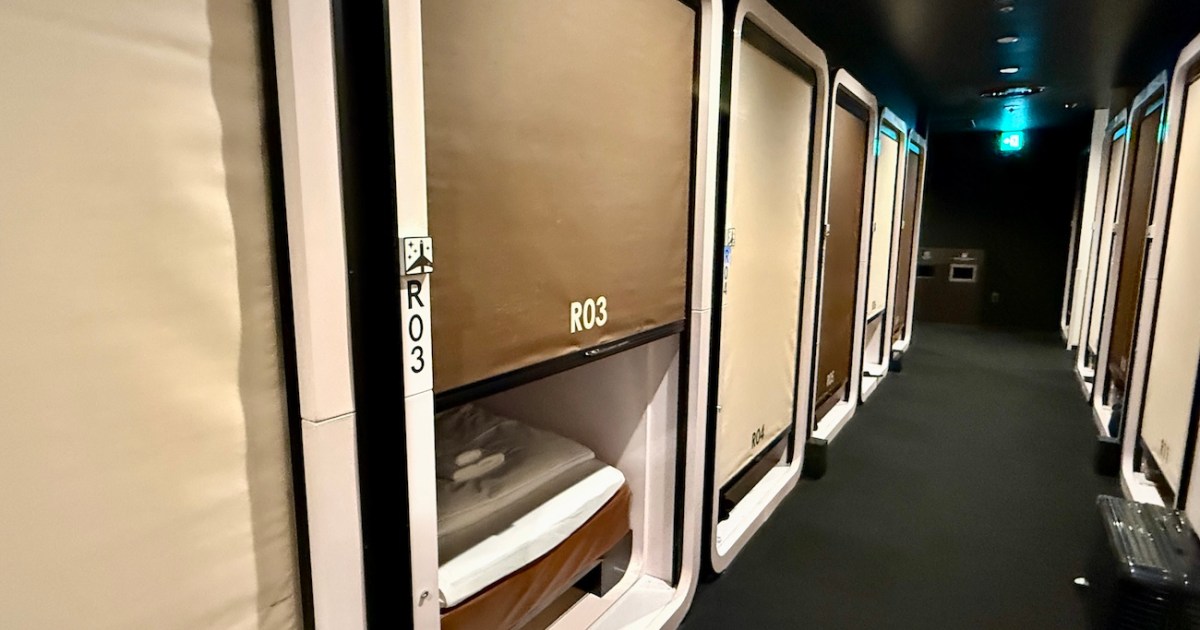
The real highlight, though, was the 大浴場 (daiyokujō)—large public bath. On a rushed travel night, soaking in a hot bath was a luxury that melted away my stress. I knew a quick shower wouldn’t cut it for the demanding day ahead; this moment of relaxation was essential to stay sharp for the ceremony. Then, I retreated to my “Business Class” cabin—a step up from a typical capsule hotel. The ceiling was high enough to sit up comfortably, the bed was plush, and despite it being past 1 AM, I felt at ease knowing I was just steps from my departure gate. I woke at 5:30 AM, took another quick bath to refresh, and headed out with no commute stress. If early mornings haunt you, this setup is a dream.
Why Direct Access Changes Everything
Early flights often bring the dread of oversleeping or scrambling through pre-dawn transport. Staying at First Cabin erased those worries entirely. Both physically and mentally, I had that 余裕 (yoyuu)—breathing room—that’s crucial for high-stakes days like covering 成人式 (seijin-shiki). At around 7,500 yen via Rakuten Travel, the price is reasonable for the location and peace of mind. Honestly, for a night before an important trip, it’s a powerful option to keep in your arsenal.
Quick tip for navigating Haneda: remember the number of “A”s in the airline name. JAL (one “A”) uses Terminal 1, while ANA (two “A”s) operates from Terminal 2. It’s a quirky mnemonic, though exceptions exist—my ANA flight to Kitakyushu, a codeshare with Starflyer, actually departed from Terminal 1. Double-check to avoid a mix-up! In the end, I boarded smoothly, landed on time, and made it to Kokura Station right as the ceremony kicked off with its festival-like energy. First Cabin proved itself a reliable ally.
Cultural Context: Japan’s Thoughtful Hospitality
Travel in Japan, especially for major events like 成人式 (seijin-shiki), often involves meticulous planning. Held annually on the second Monday of January, this ceremony celebrates the transition to adulthood at age 20 (though legally lowered to 18 recently, the event still targets 20-year-olds). It’s a huge milestone, marked by traditional 着物 (kimono) and, in Kitakyushu, some of the flashiest, most individualistic styles you’ll ever see.
Places like First Cabin also reflect Japan’s cultural focus on convenience and おもてなし (omotenashi)—hospitality that anticipates your needs. From offering a 大浴場 (daiyokujō) to unwind, to direct airport access that cuts stress, to small touches like free coffee, it’s all about making travelers feel cared for. Public baths, deeply rooted in Japanese life, aren’t just about cleanliness—they’re a communal way to relax, even in a modern, transient space like an airport hotel. Understanding these elements helps you see how everyday spaces in Japan are designed with both practicality and heart.
Learn Japanese from This Article
If you’ve been following along, you’ve already picked up some useful Japanese terms and concepts tied to travel and culture. Let’s break them down further so you can use them in your own conversations, just like native speakers do in Japan.
Key Vocabulary
| Japanese | Romaji | Meaning |
|---|---|---|
| 成人式 | seijin-shiki | Coming-of-Age Ceremony |
| 早朝 | souchou | early morning |
| 宿泊 | shukuhaku | lodging, staying overnight |
| 直結 | chokketsu | direct connection |
| 着付け | kitsuke | dressing (in kimono) |
| 余裕 | yoyuu | leeway, margin, composure |
Grammar Spotlight: 〜なければならない (Must, Have to)
When planning travel or events in Japan, you’ll often hear or need to express obligation. The structure 〜なければならない (~nakereba naranai) means “must” or “have to” and is a formal way to state necessity. It’s commonly used in written instructions or serious situations.
- Structure: Verb (negative stem) + ければならない
- Example 1: 早朝に起きなければならない。 (Souchou ni okinakereba naranai.) – I must wake up early in the morning.
- Example 2: 空港に早く行かなければならない。 (Kuukou ni hayaku ikanakereba naranai.) – I have to go to the airport early.
- Example 3: 成人式のために着物を着付けなければならない。 (Seijin-shiki no tame ni kimono o kitsukenakereba naranai.) – I must dress in a kimono for the Coming-of-Age Ceremony.
Use this when something is non-negotiable, like catching a flight or attending an important event. It carries a stronger, more formal tone than casual alternatives like 〜ないと (~nai to).
Grammar Spotlight: 〜次第 (As Soon As, Depending On)
Another useful pattern for travel scenarios is 〜次第 (~shidai), which can mean “as soon as” or “depending on” based on context. It’s great for expressing sequences or conditions.
- Structure: Verb (dictionary form) + 次第
- Example 1: 空港に着き次第、チェックインします。 (Kuukou ni tsuki shidai, chekku-in shimasu.) – As soon as I arrive at the airport, I’ll check in.
- Example 2: 飛行機の時間次第で宿泊を決めます。 (Hikouki no jikan shidai de shukuhaku o kimemasu.) – I’ll decide on lodging depending on the flight time.
This pattern is handy for planning or discussing travel logistics, a common topic in Japan where timing is everything.
Continue Learning
Want to build on what you’ve learned here? Check out these lessons to dive deeper into Japanese language concepts related to travel and time:
- Ni, De, and E: Mapping Directions and Locations: To understand more about に, explore our Ni, De, and E: Mapping Directions and Locations lesson.
- Time and Dates: Tense-Free Expressions: Want to learn more about time? Check out our lesson on Time and Dates: Tense-Free Expressions.
- Wa vs. Ga: Emphasizing Importance in Sentences: Ready to dive deeper? Our lesson on Wa vs. Ga: Emphasizing Importance in Sentences will help you master these concepts.
これからもよろしくお願いします。 Kore kara mo yoroshiku onegaishimasu.