
A Quieter Miyajima: How Travel Advisories Changed a Japanese Icon
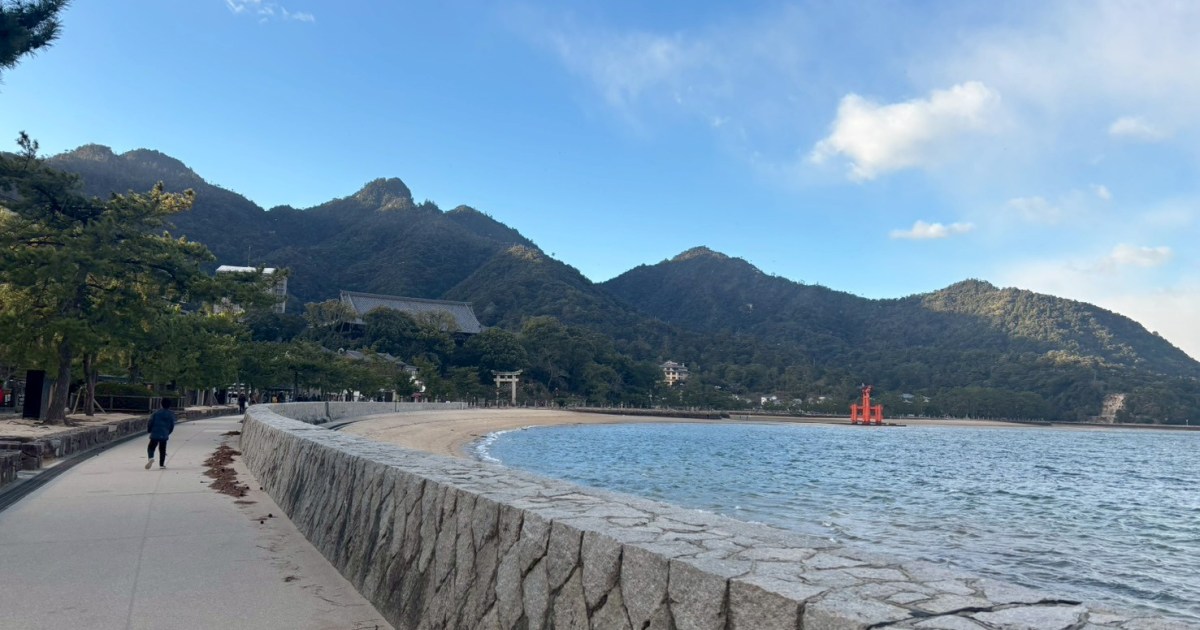
Imagine standing on a chilly ferry deck at 8 a.m., the winter wind biting at your skin, as you catch your first glimpse of 宮島 (Miyajima), a UNESCO World Heritage Site near Hiroshima. The iconic red torii gate of 厳島神社 (Itsukushima Jinja) glows in the morning light, half-submerged in the sea—or not, depending on the tide. This serene, almost surreal scene, captured in a recent Rocket News report from January 2026, reveals a side of one of Japan’s most famous destinations that few get to see. With a travel advisory from China discouraging visits to Japan, the island’s usual hustle has shifted in unexpected ways. Let’s dive into what they discovered—and how it can help you learn authentic Japanese along the way.
A Quieter Miyajima: The Impact of Travel Advisories
Two months after China’s foreign ministry urged its citizens to practice 渡航自粛 (tokou jishuku, refraining from travel) to Japan, the effects are stark in popular 観光地 (kankouchi, tourist spots) like 宮島 (Miyajima). Often called Japan’s “floating shrine island,” this sacred spot off Hiroshima’s coast was the latest stop for the Rocket News team. Arriving early on a holiday weekend during a harsh 寒波 (kanpa, cold wave), they found the フェリー (ferii, ferry) nearly empty, with only Japanese conversations breaking the silence. Stepping ashore, the streets and shops felt deserted compared to the typical crowds.
While some stores were still closed at this hour, the few tourists wandering around were mostly Westerners. The reporter noted a striking absence of Mandarin Chinese—a big change from pre-advisory days when Chinese tourists were a major presence. Despite the quiet and the cold, the sight of 厳島神社 (Itsukushima Jinja) at 干潮 (kanchou, low tide) was unforgettable, allowing a rare chance to walk right up to the base of its grand torii gate—a moment tied to nature’s rhythm.
Changing Faces: Who’s Visiting Miyajima Now?
By 9:30 a.m., 宮島 (Miyajima) started waking up. Shops opened, and more 来島者 (raijousha, visitors to the island) trickled in, though navigating the island was still easy. The crowd’s makeup began to shift—some Middle Eastern and Korean tourists appeared, but Western visitors and Japanese domestic travelers dominated. A local café owner, chatting during a snow flurry, shared that while the cold snap had kept numbers low that day, Miyajima’s overall visitor count hasn’t dropped much. Instead, the “face” of the crowd has changed, with fewer Chinese tourists but others filling the gap.
By midday, as the snow cleared and the sun emerged, the island’s energy flipped. Crowds grew, lines formed at popular spots, and the atmosphere turned lively. The reporter couldn’t help but wonder how chaotic 宮島 (Miyajima) must be during peak season if an off-season, bad-weather day still drew such numbers. This dynamic ebb and flow, tied to time and weather, shows the island’s unique character—one that adapts to whoever steps ashore.
Hidden Gems: Deer, Desserts, and Local Charm
Beyond the iconic shrine, the reporter uncovered smaller treasures that make 宮島 (Miyajima) special. A local deer—famous on the island—seemed to “guide” them to a cozy 純喫茶 (jun kissa, retro-style Japanese café), where they warmed up with coffee and conversation. They also stumbled upon the island’s love for もみじ饅頭 (momiji manju), a maple leaf-shaped pastry filled with sweet bean paste. Many shops showcase their production through glass windows, turning a simple snack into a mini-attraction.
Over five hours, from the quiet dawn to the bustling early afternoon, the reporter saw 宮島 (Miyajima) in all its moods—snow-dusted torii, sunny seaside views, and everything in between. Even the return フェリー (ferii, ferry) was packed, a sharp contrast to the empty morning ride. Conversations with fellow passengers, including Taiwanese tourists, confirmed the travel advisory’s impact on the island’s usual demographic.
Cultural Context: Understanding Miyajima’s Significance
If you’re new to Japanese culture, 宮島 (Miyajima), officially named 厳島 (Itsukushima), is far more than a scenic spot—it’s a sacred space with deep roots. 厳島神社 (Itsukushima Jinja), dating back to the 6th century, is a cornerstone of Shinto worship. Its “floating” torii gate, which seems to hover over the sea at high tide, marks a boundary between the everyday and the divine, reflecting Japan’s reverence for nature where the sea itself is part of the shrine’s design.
The island also embodies 共存 (kyōson, coexistence), seen in how deer roam freely as “messengers of the gods.” This harmony extends to the blend of tourism and tradition—vendors selling もみじ饅頭 (momiji manju) or grilled oysters honor local flavors while welcoming modern visitors. Grasping these layers helps you see why 宮島 (Miyajima) isn’t just a destination; it’s a living piece of Japan’s spiritual and cultural heart.
Learn Japanese from This Article
Let’s turn this journey into a learning opportunity! Here, you’ll find key vocabulary, grammar patterns, and expressions pulled straight from the context of 宮島 (Miyajima) and its story. These are taught the way Japanese children learn—through real-life usage and cultural nuance, not just textbook rules.
Key Vocabulary
| Japanese | Romaji | Meaning |
|---|---|---|
| 観光地 | kankouchi | tourist spot, sightseeing area |
| 渡航自粛 | tokou jishuku | refraining from travel |
| 寒波 | kanpa | cold wave, cold snap |
| 干潮 | kanchou | low tide |
| 厳島神社 | Itsukushima Jinja | Itsukushima Shrine |
| フェリー | ferii | ferry |
| 来島者 | raijousha | visitors to the island |
Grammar Spotlight: 〜ている (Ongoing Action or State)
The 〜ている form describes an ongoing action or a current state. It’s like adding “-ing” in English or indicating something that’s still in effect. You’ll hear this all the time in Japan when describing what’s happening right now or a situation that persists.
- Structure: Verb (stem form) + ている
Examples:
- フェリーに乗っている。 (Ferii ni notte iru.) - I’m riding the ferry.
- 宮島で鹿が歩いている。 (Miyajima de shika ga aruite iru.) - Deer are walking around Miyajima.
- 寒波が来ている。 (Kanpa ga kite iru.) - A cold wave is coming (happening now).
When to Use: Use 〜ている to describe actions in progress or states that are currently true. It’s perfect for travel scenarios like describing what you’re seeing or doing at a 観光地 (kankouchi, tourist spot).
Grammar Spotlight: 〜ながら (While Doing Something)
The 〜ながら form lets you express doing two actions at the same time, similar to “while” in English. It’s a handy way to sound natural when describing multitasking or simultaneous events.
- Structure: Verb (stem form) + ながら
- Examples:
- フェリーに乗っているながら、宮島を見た。 (Ferii ni notte iru nagara, Miyajima o mita.) - While riding the ferry, I saw Miyajima.
- コーヒーを飲みながら、話をした。 (Koohii o nomi nagara, hanashi o shita.) - While drinking coffee, I talked.
- When to Use: Use 〜ながら to connect two actions happening at once. It’s great for describing experiences like enjoying もみじ饅頭 (momiji manju) while exploring 宮島 (Miyajima). Note that the subject must be the same for both actions.
Useful Expression
Here’s a phrase you’ll hear often in travel contexts:
- いかがですか? (Ikaga desu ka?) - How is it? / Would you like some?
- Often used by shopkeepers or locals offering something, like もみじ饅頭 (momiji manju), or asking for your thoughts on a place like 厳島神社 (Itsukushima Jinja).
Continue Learning
Ready to build on what you’ve learned? Check out these lessons to deepen your understanding of Japanese as it’s used in real-life contexts like travel and directions:
- Ni, De, and E: Mapping Directions and Locations: Ready to dive deeper? Our lesson on Ni, De, and E: Mapping Directions and Locations will help you master these concepts.
- Wa vs. Ga: Emphasizing Importance in Sentences: Curious about the Japanese used here? Our Wa vs. Ga: Emphasizing Importance in Sentences lesson covers this in depth.
- Numbers and Counters: Contextual Counting Systems: To understand more about numbers, explore our Numbers and Counters: Contextual Counting Systems lesson.
これからもよろしくお願いします。 Kore kara mo yoroshiku onegaishimasu.