
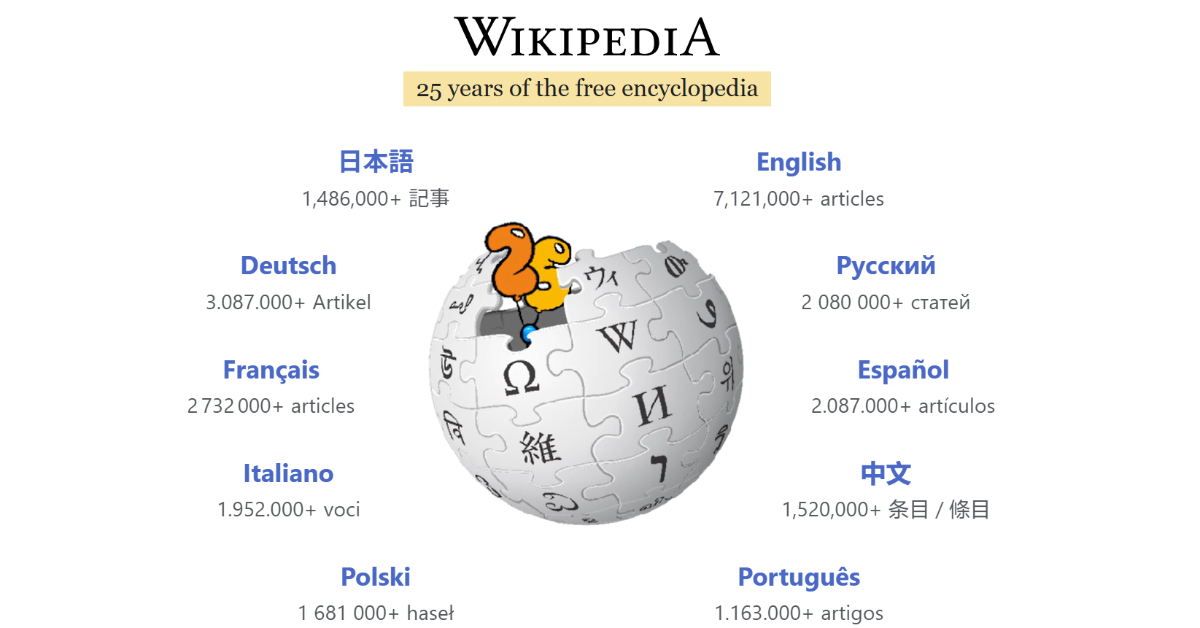
Wikipedia Turns 25: Celebrating Shared Knowledge and Learning Japanese
Imagine a world where knowledge is free, accessible to anyone with an internet connection, and built by people just like you. That’s the dream Wikipedia brought to life, and on January 15, 2026, this digital giant celebrated its 25th anniversary. For those of us learning Japanese, this milestone isn’t just a tech story—it’s a gateway to understanding Japan’s deep connection to community and shared learning. Let’s dive into Wikipedia’s incredible journey, explore its cultural resonance in Japan, and pick up some authentic Japanese along the way.
Wikipedia’s 25-Year Milestone
Wikipedia started in 2001 with a bold idea from founders Jimmy Wales and Larry Sanger: create an オンライン (onrain, online) encyclopedia that anyone could edit and access for free. What began as a risky experiment has grown into the world’s largest 百科事典 (hyakka jiten, encyclopedia), boasting over 65 million articles in more than 300 languages. Powered by ボランティア (borantia, volunteers) and supported through 寄付 (kifu, donations), Wikipedia remains a non-profit beacon of ad-free knowledge. Reflecting on this journey, Wales noted that the true success lies in the spirit of 協働 (kyōdō, collaboration) among people worldwide to build a reliable ナレッジベース (narejji bēsu, knowledge base).
For its 25th 記念 (kinen, commemoration or anniversary), Wikipedia launched the “Wikipedia 25” campaign. This includes YouTube Shorts highlighting inspiring volunteer editors—like Yuriko Kadokura, a Tokyo librarian contributing to Japanese content—and virtual time capsule exhibits to honor the community’s efforts. These initiatives don’t just celebrate the past; they invite us to think about the future of shared knowledge.
Shaping the Next Chapter
Wikipedia isn’t just looking back—it’s calling on everyone to help shape the next 25 years. Whether by editing articles, making a small 寄付 (kifu, donation), or even buying “Wikipedia 25” merchandise, there are countless ways to contribute. This call to action reflects a direction 未来への (mirai e no, toward the future), emphasizing that we’re all part of this global project. For Japanese learners, contributing to or even just reading Japanese Wikipedia articles can be a fantastic way to immerse yourself in authentic language and perspectives.
Cultural Context: Japan’s Harmony with Shared Knowledge
In Japan, Wikipedia’s mission of collaborative learning strikes a powerful chord with the cultural value of 和 (wa, harmony). Historically, Japan has cherished communal knowledge, from ancient compilations like the 万葉集 (Manyōshū, an 8th-century poetry anthology) to modern group-oriented education systems. The dedication of Japanese ボランティア (borantia, volunteers) like Yuriko Kadokura mirrors this spirit of contributing to the greater good. For learners, exploring Japanese Wikipedia offers a direct look at how native speakers document everything from 茶道 (sadō, tea ceremony) to cutting-edge tech. It’s like having a living textbook, shaped コミュニティによって (komyuniti ni yotte, by the community), right at your fingertips.
Learn Japanese from This Article
Ready to pick up some authentic Japanese from this milestone story? Let’s break down key vocabulary, grammar, and expressions you can use to talk about tech, collaboration, and anniversaries in Japanese.
Key Vocabulary
| Japanese | Romaji | Meaning |
|---|---|---|
| オンライン | onrain | online |
| 百科事典 | hyakka jiten | encyclopedia |
| ボランティア | borantia | volunteer |
| 寄付 | kifu | donation |
| ナレッジベース | narejji bēsu | knowledge base |
| 協働 | kyōdō | collaboration |
| 記念 | kinen | commemoration, anniversary |
Grammar Spotlight
Let’s focus on two useful grammar patterns that popped up in this context: 〜によって (ni yotte, by means of, due to) and 〜への (e no, toward, for).
〜によって (ni yotte): This pattern indicates the means or cause of something, often used in formal or written contexts like news or discussions about contributions.
- Example 1: ボランティアによって、Wikipediaは成長しました。 (Borantia ni yotte, Wikipedia wa seichō shimashita.) - Thanks to volunteers, Wikipedia has grown.
- Example 2: 寄付によって、プロジェクトが続けられます。 (Kifu ni yotte, purojekuto ga tsudzukeraremasu.) - Due to donations, the project can continue.
- When to use: Use this to explain how or by what means something is achieved, especially in formal discussions.
〜への (e no): This indicates direction or purpose, often paired with nouns to show a target or goal.
- Example 1: 未来への貢献が大切です。 (Mirai e no kōken ga taisetsu desu.) - Contribution toward the future is important.
- Example 2: Wikipediaへの支援をお願いします。 (Wikipedia e no shien o onegaishimasu.) - Please support Wikipedia.
- When to use: Perfect for expressing purpose or direction, especially in motivational or goal-oriented contexts.
Useful Expression
Here’s a handy phrase to celebrate milestones or anniversaries like Wikipedia’s 25th:
- 記念おめでとうございます! (Kinen omedetō gozaimasu!) - Congratulations on the anniversary!
- Use this to acknowledge special occasions formally, whether it’s a personal milestone or a public event.
Continue Learning
Want to dive deeper into the Japanese language used in this article? Check out these lessons for more insights:
- Wa vs. Ga: Emphasizing Importance in Sentences: To understand more about は, explore our Wa vs. Ga: Emphasizing Importance in Sentences lesson.
- Ni, De, and E: Mapping Directions and Locations: Curious about the Japanese used here? Our Ni, De, and E: Mapping Directions and Locations lesson covers this in depth.
- Greetings and Self-Introductions: Authentic Entry Phrases: Curious about the Japanese used here? Our Greetings and Self-Introductions: Authentic Entry Phrases lesson covers this in depth.
これからもよろしくお願いします。 Kore kara mo yoroshiku onegaishimasu.