
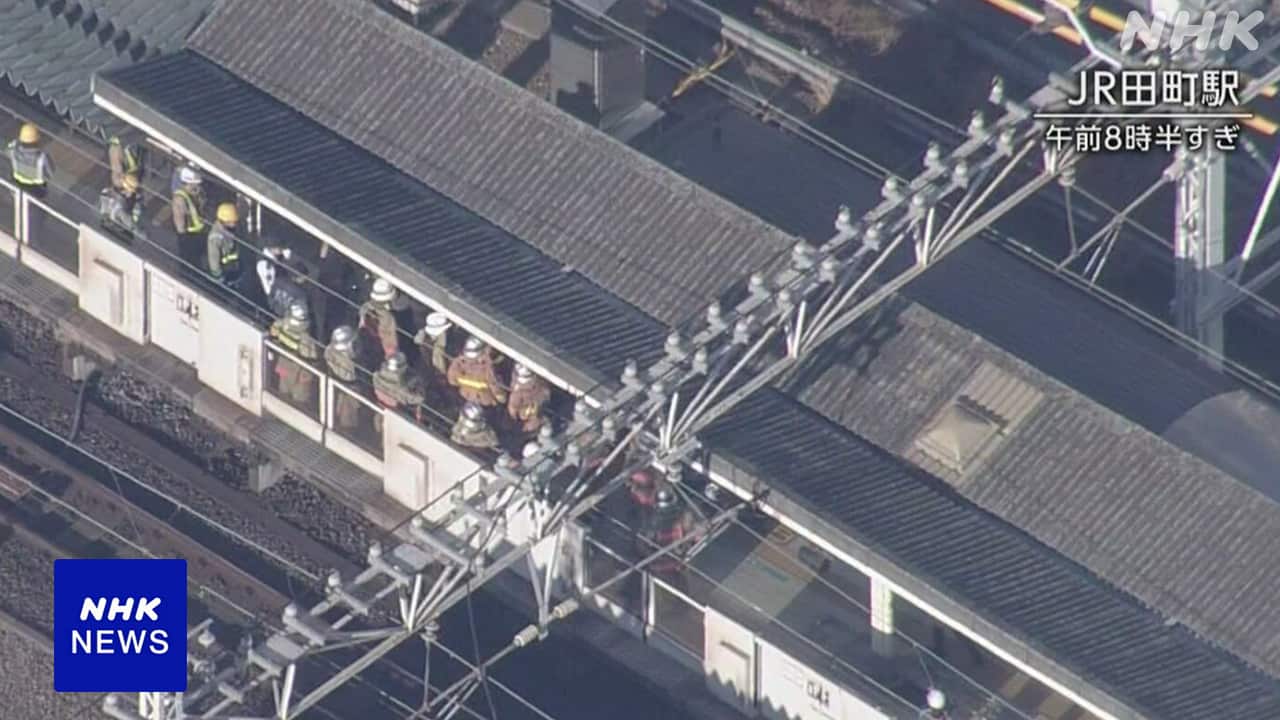
Tokyo Train Chaos: Power Outage Disrupts JR Lines
Imagine being one of over 670,000 commuters in Tokyo, rushing to work or school, only to find yourself stranded on a packed platform as the city’s lifeline grinds to a halt. On January 16, 2026, a sudden power outage struck two of Tokyo’s busiest train lines, the JR山手線 (JR Yamanote-sen) and the 京浜東北線 (Keihin-Tōhoku-sen), exposing a critical equipment failure and leaving five people hospitalized. If you’ve ever wondered how deeply Japan’s culture of precision and reliability shapes daily life, this incident offers a unique window into the chaos—and the language—that unfolds when things go wrong. Let’s dive into what happened, why it matters, and how you can learn authentic Japanese from this real-world event.
Power Outage Halts Tokyo’s Heartbeat
A massive 停電 (teiden, power outage) hit the 山手線 (Yamanote-sen), Tokyo’s iconic loop line encircling the city, and the 京浜東北線 (Keihin-Tōhoku-sen), a crucial route linking central Tokyo to surrounding areas. The cause? A malfunction in the electric shock prevention device, a piece of 設備 (setsubi, equipment) designed to ensure 安全 (anzen, safety). This wasn’t just a small delay; trains stopped completely, creating 混乱 (konran, confusion or chaos) on platforms as thousands of 通勤者 (tsuukisha, commuters) were left stranded.
According to NHK, the 影響 (eikyou, impact) was staggering, affecting over 670,000 people who rely on these lines for their daily routines. Five individuals felt unwell amid the chaos and were taken to the hospital, though details on their conditions remain unclear. For a system known for its flawless 運行 (unkou, operation), this breakdown was a rare and shocking disruption.
Why This Incident Shakes Japan
In Japan, train delays aren’t just an inconvenience—they’re a breach of an unspoken social contract. The JR東日本 (JR Higashi-Nihon), or East Japan Railway Company, which operates these lines, is now under intense scrutiny for the equipment failure. Punctuality and reliability are so ingrained in Japanese society that even a minor hiccup can make national news, often accompanied by public apologies from companies. This event raises bigger questions about maintenance and safety in a rail network that millions depend on every day.
Cultural Context: Trains as Japan’s Lifeline
To truly grasp the weight of this incident, you need to understand the role trains play in Japanese life. The 山手線 (Yamanote-sen) isn’t just a way to get around; it’s a cultural symbol, looping through iconic hubs like Shinjuku and Shibuya, connecting the beating heart of Tokyo. A delay here doesn’t just mess with schedules—it disrupts the rhythm of life itself. Then there’s the concept of 通勤ラッシュ (tsūkin rasshu, commuter rush), the intense crowding during peak hours where personal space is sacrificed for collective efficiency. When this system fails, it’s a big deal.
This incident also shines a light on the Japanese value of 安全第一 (anzen daiichi, safety first). Safety isn’t just a guideline in Japan; it’s a core principle that shapes everything from school rules to public infrastructure. A failure in safety equipment, as seen here, isn’t just a technical issue—it’s a challenge to a deeply held societal norm.
Learn Japanese from This Article
If you’re learning Japanese, real-world events like this are a goldmine for picking up practical vocabulary and grammar. Let’s break down some key words and patterns from this story that you’ll encounter in everyday conversations or news in Japan.
Key Vocabulary
| Japanese | Romaji | Meaning |
|---|---|---|
| 停電 | teiden | power outage |
| 運行 | unkou | operation (of trains, buses, etc.) |
| 混乱 | konran | confusion, chaos |
| 安全 | anzen | safety |
| 設備 | setsubi | equipment, facilities |
| 影響 | eikyou | influence, impact |
| 通勤者 | tsuukisha | commuter |
These words aren’t just tied to this incident—they’re part of daily life in Japan. For example, you might hear 停電 (teiden) during weather reports about typhoons, or 安全 (anzen) in workplace announcements. Try using them in your own sentences to get comfortable with their nuances!
Grammar Spotlight: 〜による and 〜ため
Let’s look at two useful grammar patterns that often appear in news or explanations of cause and effect, both of which relate directly to this train outage story.
1. 〜による (due to, caused by)
This pattern is used to indicate the cause or reason for something, often in formal or written contexts like news reports.
- Structure: Noun + による
- Example 1: 設備の不具合による停電が発生しました。 (Setsubi no fugai ni yoru teiden ga hassei shimashita.) - A power outage occurred due to equipment malfunction.
- Example 2: 天候による遅延があります。 (Tenkou ni yoru chien ga arimasu.) - There are delays due to the weather.
Use this when you want to sound precise or formal, especially when explaining reasons for events or issues.
2. 〜ため (because of, due to)
This pattern also explains reasons or purposes but can be used in both formal and casual speech. It often connects directly to the result or consequence.
- Structure: Noun + のため / Verb (plain form) + ため
- Example 1: 停電のため、電車が止まりました。 (Teiden no tame, densha ga tomarimashita.) - Because of the power outage, the train stopped.
- Example 2: 通勤者の安全のため、運行を停止しました。 (Tsuukisha no anzen no tame, unkou o teishi shimashita.) - For the safety of commuters, operations were halted.
This is a versatile pattern you’ll hear often, whether in apologies, explanations, or even personal conversations about why something happened.
Useful Expression: 安全第一 (anzen daiichi)
This phrase, meaning “safety first,” is a cultural staple in Japan. You’ll see it on signs, hear it in announcements, and encounter it in workplaces or schools. It reflects the priority placed on preventing harm, and in the context of this train outage, it underscores why equipment failure is such a serious issue. Try using it to remind someone to prioritize safety: 安全第一で行きましょう! (Anzen daiichi de ikimashou!) - Let’s go with safety first!
Continue Learning
Ready to build on what you’ve learned here? Check out these lessons to deepen your understanding of Japanese language and culture:
- Chinese Influence on Japanese: Kanji and Borrowed Vocabulary: Working on your reading skills? Our Chinese Influence on Japanese: Kanji and Borrowed Vocabulary lesson is a great next step.
- Evolution of Hiragana and Katakana: From Women to Foreign Adaptations: Working on your reading skills? Our Evolution of Hiragana and Katakana: From Women to Foreign Adaptations lesson is a great next step.
- Vocabulary Through Kanji Compounds: Lego-Like Word Building: Working on your reading skills? Our Vocabulary Through Kanji Compounds: Lego-Like Word Building lesson is a great next step.
Learning Japanese isn’t just about memorizing words—it’s about connecting with the culture and context behind them. Keep exploring with us, and you’ll be amazed at how much you can pick up from real-life stories like this one.
これからもよろしくお願いします。 Kore kara mo yoroshiku onegaishimasu.