

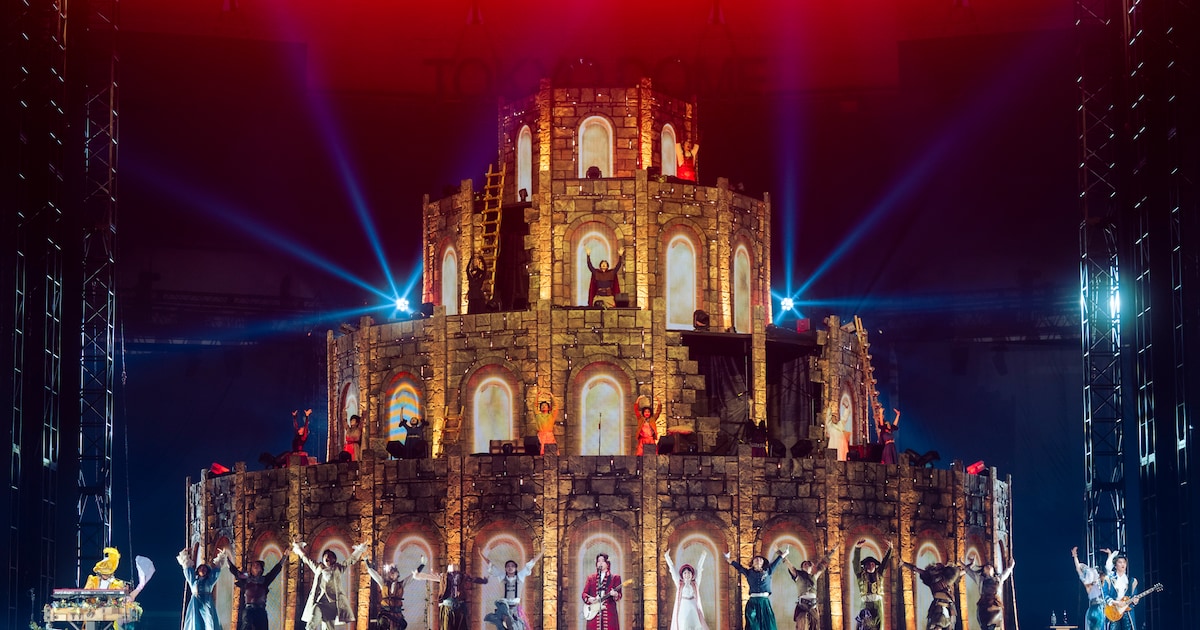
Mrs. GREEN APPLE’s Epic Dome Tour: A Babel-Inspired Journey
Imagine standing shoulder to shoulder with 50,000 fans in the iconic Tokyo Dome, the energy buzzing as the final notes of a breathtaking performance linger in the air. On December 20, 2025, Mrs. GREEN APPLE closed their first-ever 5大ドームツアー (godai dōmu tsuā, "Five Major Dome Tour") with a finale that left an indelible mark on a total of 550,000 attendees across Japan. This wasn’t just a concert—it was a mythical journey inspired by the Tower of Babel, weaving music, theater, and raw emotion into an unforgettable experience. Let’s dive into this grand spectacle and uncover some authentic Japanese language and culture along the way.
The Grand Finale at Tokyo Dome
The tour, named Mrs. GREEN APPLE DOME TOUR 2025 “BABEL no TOH” (Baberu no Tō, "Tower of Babel"), took fans through five of Japan’s most iconic dome stadiums, from Nagoya to Fukuoka, culminating in a four-day finale at Tokyo Dome. Over 12 公演 (kōen, "performances"), the band transformed each venue into the ancient city of Babylon, drawing on biblical and mythological themes for a narrative-driven experience. With elaborate sets and costumes, lead vocalist 大森元貴 (Ōmori Motoki) and bandmates 若井滉斗 (Wakai Hiroto, guitarist) and 藤澤涼架 (Fujisawa Ryōka, keyboardist) emerged as regal figures, opening with vibrant tracks like “Love me, Love you.” The crowd sang and danced as if they were true citizens of Babylon, swept up in a 壮大 (sōdai, "grand, magnificent") celebration.
A Story of Ambition and Chaos
At the heart of the concert was the construction of the Tower of Babel, a universal symbol of human ambition. The show’s narrative, revolving around this モチーフ (mochīfu, "motif, theme"), guided the audience—cast as the “people of Babylon”—through the tower’s rise and fall. Songs transitioned from joyous anthems to intense rock numbers like パブリック (Paburikku, "Public"), mirroring the shift from hope to 混沌 (konton, "chaos, disorder"). The stage design even divided the ドーム (dōmu, "dome") into 22 distinct “professions” like knights and sages, with actors mingling among the 観客 (kankyaku, "audience, spectators") before the show to create a living, breathing ancient city. This immersive “ストーリーライン” (sutōrīrain, "storyline") is a signature of Mrs. GREEN APPLE, making each performance feel like stepping into a larger-than-life tale.
Cultural Context: Babel in a Japanese Lens
If you’re familiar with Western stories, the Tower of Babel might immediately bring to mind themes of human overreach and divine intervention from the Bible. In Japan, however, such biblical references aren’t as deeply embedded in daily life, given the country’s Shinto and Buddhist cultural foundation. So why did Mrs. GREEN APPLE choose this theme? It reflects a growing trend among Japanese artists to explore universal myths, blending Western narratives with local creativity to craft something both exotic and relatable. Moreover, achieving a dome tour in Japan is a monumental milestone, akin to selling out massive venues like Wembley Stadium in the UK or Madison Square Garden in the US. For Mrs. GREEN APPLE, reaching this level just over a decade after their 2013 debut—despite a hiatus—underscores their meteoric rise, propelled by hits like ケセラセラ (Keserasera, "Que Sera Sera"), which clinched the Japan Record Award in 2023.
Learn Japanese from This Article
If you’ve ever wondered how to talk about events like concerts or grand stories in Japanese, this tour offers the perfect opportunity to pick up some authentic language. Let’s break down key vocabulary and grammar patterns inspired by this epic event, just as native speakers would learn them in Japan.
Key Vocabulary
Here are some essential words tied to the concert and its themes that you’ll hear in real-life Japanese contexts:
| Japanese | Romaji | Meaning |
|---|---|---|
| 動員 | dōin | mobilization, gathering (of people) |
| 公演 | kōen | performance, show |
| 壮大 | sōdai | grand, magnificent |
| ドーム | dōmu | dome (stadium) |
| モチーフ | mochīfu | motif, theme (often artistic) |
| 混沌 | konton | chaos, disorder |
| 観客 | kankyaku | audience, spectators |
These terms aren’t just for concerts—they pop up in discussions about events, art, and even history. Try using 壮大 (sōdai) to describe something awe-inspiring or 観客 (kankyaku) when talking about any crowd!
Grammar Spotlight: 〜を経て and 〜を巡る
Let’s spotlight two grammar patterns that capture the journey and themes of this tour.
〜を経て (o hete, "after going through, via") This pattern indicates a process or journey leading to a result, often used for physical or metaphorical paths.
- Structure: [Verb (た-form)] + 経て + [Result/Next Action]
- Example 1: 多くの苦労を経て、成功した。 (Ōku no kurō o hete, seikō shita.) - "After going through many hardships, I succeeded."
- Example 2: 5つの都市を経て、東京でファイナルを迎えた。 (Itsutsu no toshi o hete, Tōkyō de fainaru o mukaeta.) - "After going through five cities, they held the finale in Tokyo."
- When to use: Perfect for describing tours, personal growth, or any sequential journey, just like Mrs. GREEN APPLE’s dome tour progression.
〜を巡る (o meguru, "revolving around, concerning") This pattern highlights a central theme or issue something revolves around, often used in storytelling or discussions.
- Structure: [Noun] + を巡る + [Description/Action]
- Example 1: バベルの塔を巡る物語が感動的だった。 (Baberu no Tō o meguru monogatari ga kandōteki datta.) - "The story revolving around the Tower of Babel was moving."
- Example 2: 未来を巡る議論が続いている。 (Mirai o meguru giron ga tsuduite iru.) - "Discussions concerning the future are ongoing."
- When to use: Great for talking about central themes or conflicts, like the narrative focus of this concert.
Useful Expression
Here’s a bonus phrase you’ll hear at concerts or events in Japan: 盛り上がる (moriagaru, "to get excited, to liven up")
- Example: コンサートで観客が盛り上がった。 (Konsāto de kankyaku ga moriagatta.) - "The audience got excited at the concert." This is a go-to verb for describing high-energy moments, whether at a live show or a party.
Continue Learning
Ready to dive deeper into Japanese as it’s taught in Japan? Check out these lessons to build on what you’ve learned today:
- Curious about the Japanese used here? Our Wa vs. Ga: Emphasizing Importance in Sentences lesson covers this in depth.
- To understand more about に, explore our Ni, De, and E: Mapping Directions and Locations lesson.
- Working on your reading skills? Our Katakana Essentials: Adapting Global Words to Japanese lesson is a great next step.
Learning Japanese isn’t just about words—it’s about stepping into the culture and stories that shape the language. Keep exploring with us, and you’ll be speaking like a native in no time!
これからもよろしくお願いします。 Kore kara mo yoroshiku onegaishimasu.