
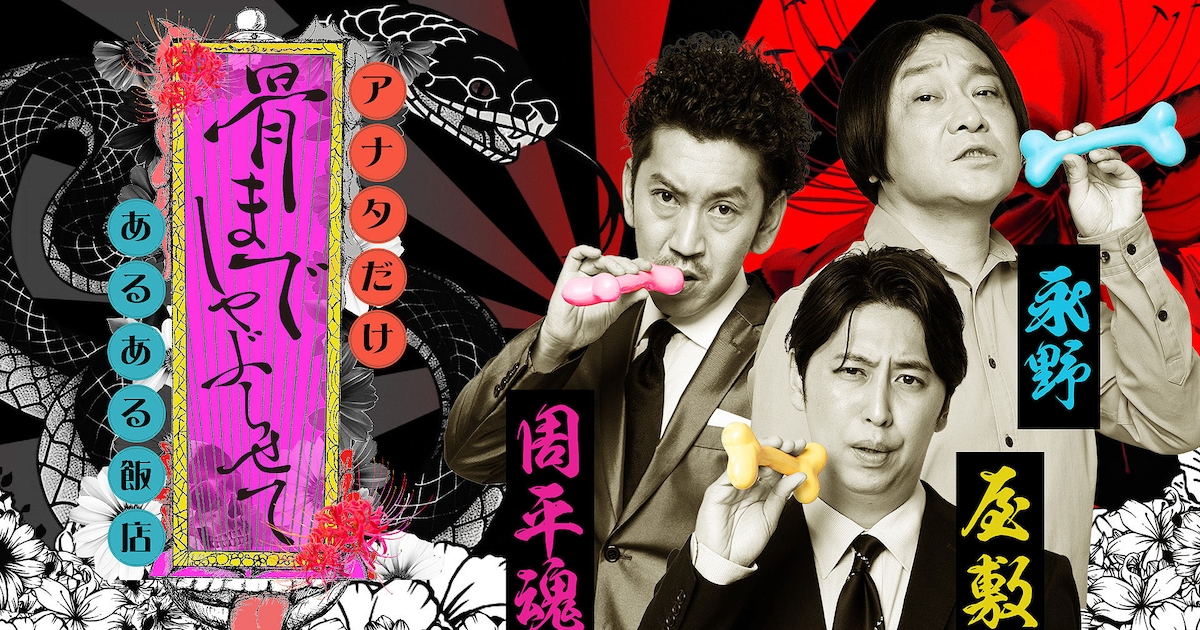
New Japanese Variety Show Brings Raw Humor to Late-Night TV
Imagine yourself tucked into a quirky, dimly lit Chinese diner somewhere in Japan, surrounded by comedians spilling the most bizarre, hyper-personal stories about life. You might not relate to every tale, but you can’t help laughing at the sheer absurdity. That’s the vibe of a brand-new Japanese variety show, 骨までしゃぶらせて アナタだけあるある飯店 (Hone Made Shaburasete Anata Dake Aru Aru Hanten, "Suck It Down to the Bone: Your Own Relatable Diner"), launching on January 12, 2025. If you’ve ever wanted a peek into the unfiltered, late-night humor of Japan, this show—and this article—will be your gateway.
A Fresh Take on Japanese Comedy
Announced on December 27, 2024, by お笑いナタリー (Owarai Natalie), this four-episode series airs every Monday at midnight (24:00-24:30) on ABC Television as part of their "Moon Night Big Bang" slot. Featuring comedians ニューヨーク屋敷 (Nyū Yōku Yashiki), 永野 (Nagano), and ツートライブ周平魂 (Tsūto Raibu Shūhei Tamashii), the show promises to ditch polished TV tropes for raw, chaotic energy. Set in a sketchy-looking Chinese 飯店 (hanten, restaurant), the trio sits around a circular table, sharing あるある (aru aru, relatable experiences)—but with a twist. These aren’t universal quirks; they’re ultra-specific, sometimes weird observations that might leave you puzzled yet cracking up.
The comedians’ dynamic is pure gold. 屋敷 (Yashiki) likened the vibe to a 4 a.m. chat—loopy, energized, and full of disagreement. 永野 (Nagano) embraced the chaos, even getting so frustrated he’d ブチ切れる (buchigireru, snap in anger) at 周平 (Shūhei) for slipping into slick, TV-style quips. Meanwhile, 周平 (Shūhei) couldn’t get over absurd debates, like whether odd or even numbers are cooler. With a rotating guest each episode, the show keeps things fresh and unpredictable. If you’re learning Japanese, this kind of raw banter is a treasure trove of real, unscripted language.
Cultural Context: Why "Aru Aru" and Variety Shows Matter
If you’re new to Japanese entertainment, let’s unpack あるある (aru aru). It’s a comedy staple, referring to shared quirks or everyday moments we all recognize—like forgetting your umbrella right when it starts pouring. But this show focuses on "アナタだけあるある" (Anata Dake Aru Aru, "Only You Relatable"), hyper-personal takes that might not click with everyone but reveal the speaker’s unique perspective. This mirrors a deeper Japanese value of personal storytelling, often seen in casual hangouts at an 居酒屋 (izakaya, pub), where friends share unfiltered thoughts over drinks.
Japanese variety shows, or バラエティ番組 (baraeti bangumi), are a cultural juggernaut. Unlike structured Western talk shows, they thrive on spontaneity, absurd challenges, and raw banter. Airing late at night, they cater to viewers craving something offbeat after a long day. The dodgy Chinese diner setting adds humor, riffing on the "shady eatery" trope in Japanese media, while the title’s imagery of "sucking down to the bone" hints at no-holds-barred conversations. For learners, watching or reading about these shows pulls back the curtain on how humor and personality build social bonds in Japan.
Learn Japanese from This Article
This show isn’t just entertainment—it’s a goldmine for learning authentic Japanese. You’ll hear slang, regional quirks, and unscripted reactions that textbooks skip. Plus, sharing your own あるある (aru aru) is a fantastic way to connect with native speakers. Let’s dive into some key language points inspired by this news.
Key Vocabulary
| Japanese | Romaji | Meaning |
|---|---|---|
| あるある | aru aru | something relatable, common experience |
| 飯店 | hanten | Chinese restaurant |
| 共感 | kyōkan | empathy, sympathy, relating to something |
| テンション | tenshon | energy, excitement, mood (from English 'tension') |
| 香ばしい | kōbashii | fragrant, often slang for 'quirky' or 'oddly appealing' |
| ブチ切れる | buchigireru | to snap, get super angry (slang) |
| とっつきやすい | totsukiyasui | easy to approach, friendly |
Grammar Spotlight: 〜かもしれない (Might, Maybe)
The structure 〜かもしれない (kamoshirenai) expresses possibility or uncertainty, like saying "might" or "maybe" in English. It’s perfect for speculating, which you’ll hear a lot in casual banter like on this show.
- Structure: Verb (plain form) + かもしれない
- Examples:
- この話、面白いかもしれない。 (Kono hanashi, omoshiroi kamoshirenai.
- This story might be funny.)
- 彼、明日来るかもしれない。 (Kare, ashita kuru kamoshirenai.
- He might come tomorrow.)
- その店、香ばしい雰囲気があるかもしれない。 (Sono mise, kōbashii fun’iki ga aru kamoshirenai.
- That place might have a quirky vibe.)
- この話、面白いかもしれない。 (Kono hanashi, omoshiroi kamoshirenai.
- When to Use: Use this when you’re guessing or unsure about something. It softens statements, making them less assertive—a common trait in Japanese communication.
Grammar Spotlight: 〜ちゃった (Did Something, with Regret)
The structure 〜ちゃった (chatta) is a casual contraction of 〜てしまった (te shimatta), used to express doing something unintentionally or with a sense of regret. It’s super common in conversational Japanese, especially in unpolished settings like this variety show.
- Structure: Verb (te-form) + ちゃった
- Examples:
- 忘れちゃった! (Wasurechatta!
- I forgot!)
- 遅刻しちゃった。 (Chikoku shichatta.
- I ended up being late.)
- 言いすぎちゃった。 (Iisugi chatta.
- I said too much.)
- 忘れちゃった! (Wasurechatta!
- When to Use: This adds a layer of emotion—regret, surprise, or oops—to your action. It’s great for casual chats when you’re reflecting on a mistake or unintended outcome.
Useful Expression
When watching shows like this, you might feel a sense of 共感 (kyōkan, empathy) with the stories—or not! A handy phrase to express relatability is:
- わかる! (Wakaru!
- I get it! / I relate!) This simple exclamation can help you jump into conversations, showing you’re on the same wavelength (or at least trying to be).
Continue Learning
Want to dive deeper into Japanese as it’s used in real contexts like this variety show? Check out these lessons:
- Time and Dates: Tense-Free Expressions: Curious about the Japanese used here? Our Time and Dates: Tense-Free Expressions lesson covers this in depth.
- Wa vs. Ga: Emphasizing Importance in Sentences: To understand more about は, explore our Wa vs. Ga: Emphasizing Importance in Sentences lesson.
- Ni, De, and E: Mapping Directions and Locations: Curious about the Japanese used here? Our Ni, De, and E: Mapping Directions and Locations lesson covers this in depth.
Closing Thoughts
Learning Japanese isn’t just about grammar and vocab—it’s about connecting with the culture, humor, and quirks that make the language come alive. Shows like 骨までしゃぶらせて アナタだけあるある飯店 (Hone Made Shaburasete Anata Dake Aru Aru Hanten) offer a window into the unfiltered, late-night soul of Japan. So, whether you’re tuning in on January 12 or just practicing your あるある (aru aru) with friends, keep soaking up the language one laugh at a time.
これからもよろしくお願いします。 Kore kara mo yoroshiku onegaishimasu.